

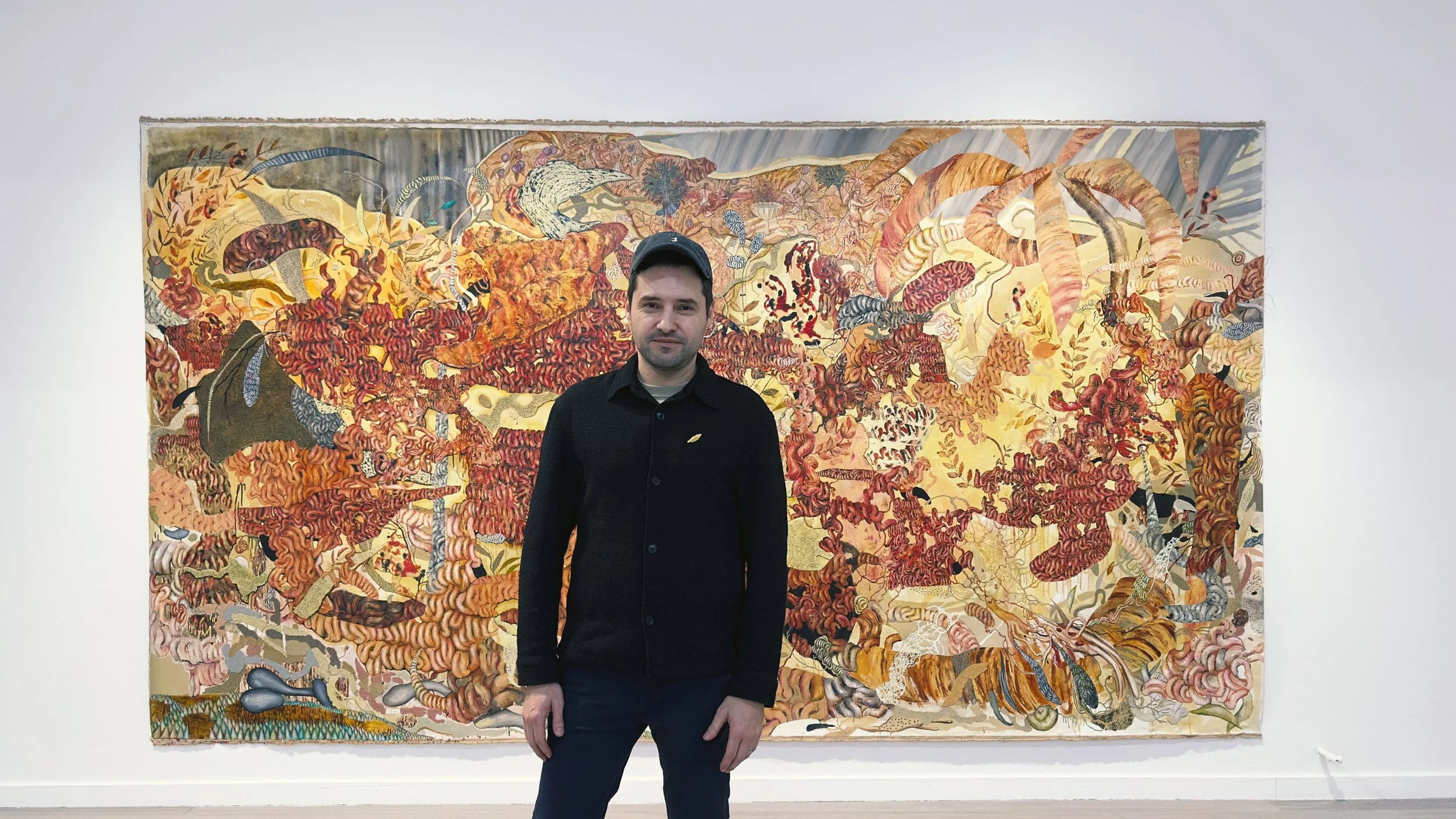
When painting demands too much
Where closeness becomes vertigo and looking turns into labour—an exhibition that tests the limits of attention, devotion, and the exhausted eye.

Beyond the New Fair struggle
The Land of Fire exhibition, curated by Cosmin Costinaș, Mona Vătămanu, and Florin Tudor, revisits overlooked facets of Romania’s colonial past, opening conversations about memory, responsibility, and identity. Through multiple perspectives, it addresses themes such as resistance, complicity, the exploitation of Romani people, and shifting notions of power, urging viewers to reconsider how history continues to shape the present.

transmediale 2025: (near) near but — far
transmediale’s 38th edition, (near) near but — far, examined how digital systems shape our desire for closeness, revealing the intimacies we gain and lose through algorithmic interaction. Opening on 30 January 2025 at silent green and continuing at HKW, the festival unfolded through talks, screenings, performances, and workshops. Curated by Ben Evans James and Elise Misao Hunchuck with an expanded programming team, this edition reconsidered how technology might foster more meaningful forms of connection.

The Tides of Art and Ecology: Exploring Submerged Narratives in Timișoara
META Spațiu Art Gallery in Timișoara opened Submerged Narratives of the Danube and Oslo Fjord – Eco-cultural Tides on January 31, presenting an interdisciplinary exhibition that blends art, environmental research, and cultural history. Curated by Mirela Stoeac-Vlăduți, the show concludes a Romanian–Norwegian collaboration in which artists Marina Oprea, Alex Mirutziu, Cosmin Haiaș, Kristin Bergaust, and Alexis Parra explored the ecological and cultural resonances between the Danube Gorge and the Oslo Fjord. Through works addressing memory, environmental fragility, and water as a carrier of histories, the exhibition reveals the deep, often hidden connections between these two significant landscapes.

The heart is the vital center of the artist - notes on the 'It’s all in your vivid imagination' exhibition by the artist Cătălin Marius Petrișor Heresanu
Parte a unei „generații excesive”, după cum se autodefinește, Cătălin Marius Petrișor Heresanu se distanțează radical de colegii săi prin refuzul de a fetișiza cotidianul sau de a căuta sensuri simbolice imediate. Deranjat de așteptarea capitalistă de a „găsi o idee” în orice lucrare, artistul propune alte direcții în expoziția sa personală It’s all in your vivid imagination de la Elizabeth Xi Bauer (8 decembrie – 20 ianuarie 2024): abstracționism spiritual, romantism pragmatic și introspecție poetică.

59th Venice Biennale
This edition of the Biennale foregrounds politically charged practices, with many artists emphasizing ideology, identity, and activism. The overall tone feels didactic, reinforcing structures it aims to critique by temporarily “granting” visibility to marginalized voices. Echoing earlier curatorial frameworks, the exhibition underscores themes of sovereignty and lived experience while rewarding works tied to explicit political claims, including notable presentations by Great Britain, the United States, France, and others. Running from 23 April to 27 November 2022, the Biennale ultimately highlights how deeply contemporary art remains entangled with questions of race, power, and representation.

A visual pragmatic — Matei Bejenaru at Kunsthalle Bega
Matei Bejenaru is an established artist whose practice critically investigates global distribution systems and the inequalities they produce. Moving fluidly between quantitative analysis and artistic intuition, he challenges conventional ideas of value while blurring the boundaries between art and commerce. His long-term projects—such as Mehr Chancen für unsere Jugend (2002), Strawberry Fields Forever (2002), and Songs for a Better Future (2011)—highlight economic exploitation, resource imbalance, and the need for solidarity. Through these socially engaged initiatives, Bejenaru transforms art into a platform for justice, offering both visibility and concrete support to underserved communities.
Everything will be alright
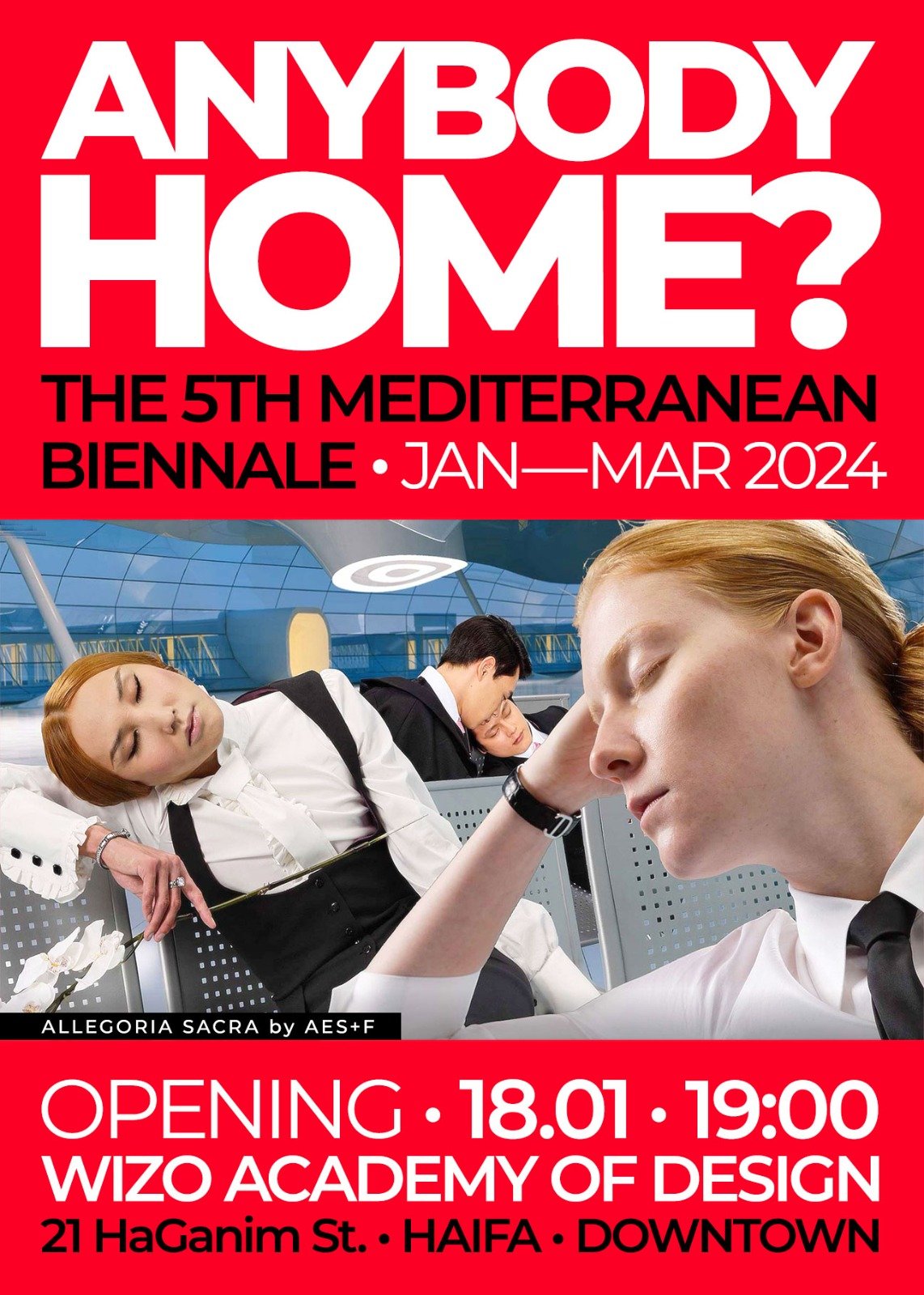
ANYBODY HOME?
The 5th Mediterranean Biennale unfolds against a fraught geopolitical backdrop shaped by stalled diplomatic efforts and enduring regional tensions, asking how communities can rebuild meaning and dignity after violence. Its central exhibition, Anybody Home?, challenges the idea of home as a place of safety, instead revealing it as a site marked by rupture and trauma. Through works that address loss, resilience, and the need for empathy, the Biennale reflects on the values that might guide future generations as they navigate instability, collective suffering, and the search for renewed forms of belonging.