What We Lost, Yet Ultimately Regained: Ciprian Ciobanu and the Trace Before Meaning
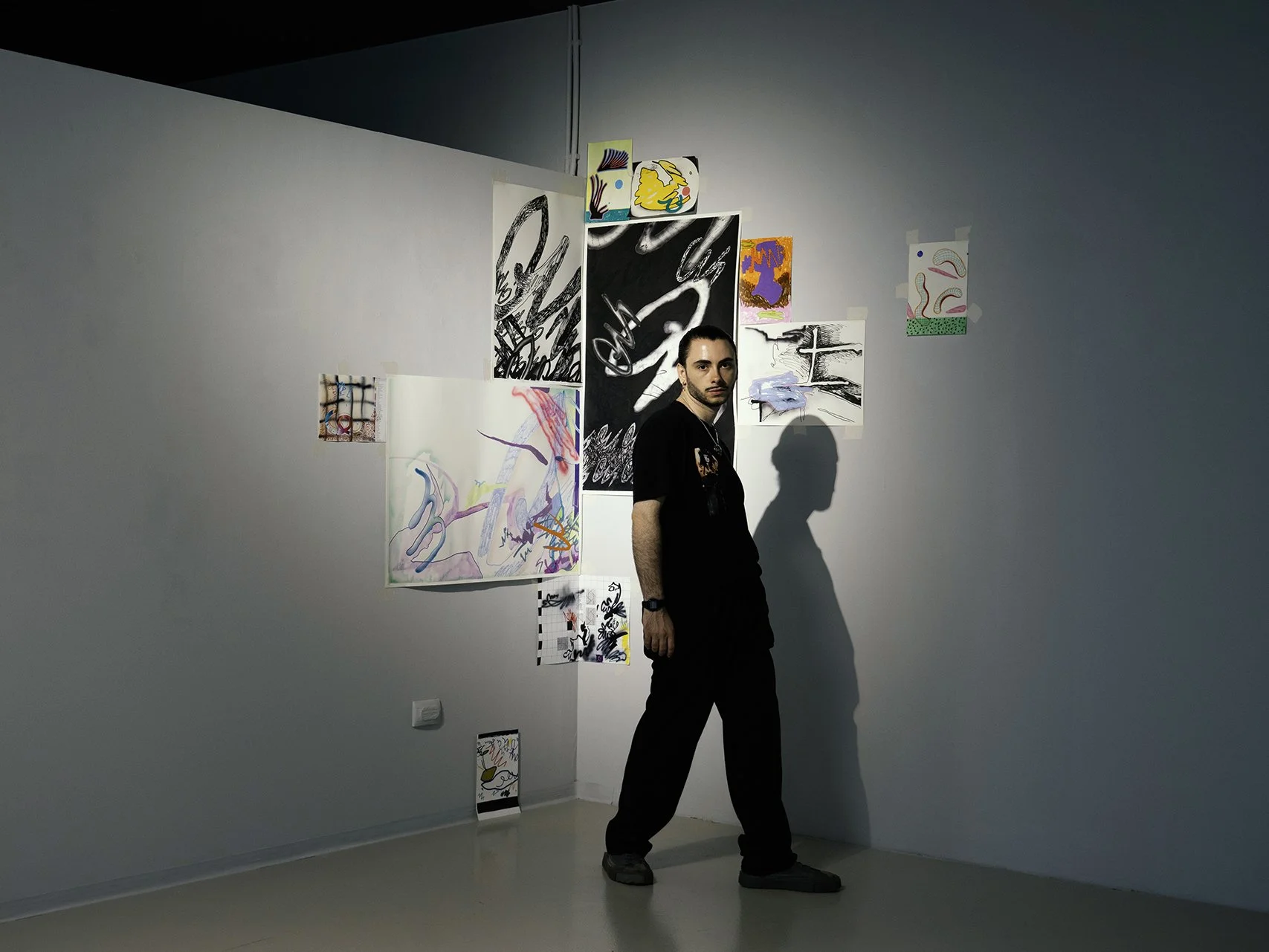
Ciprian Ciobanu in the exhibition space in front of his work, 2026
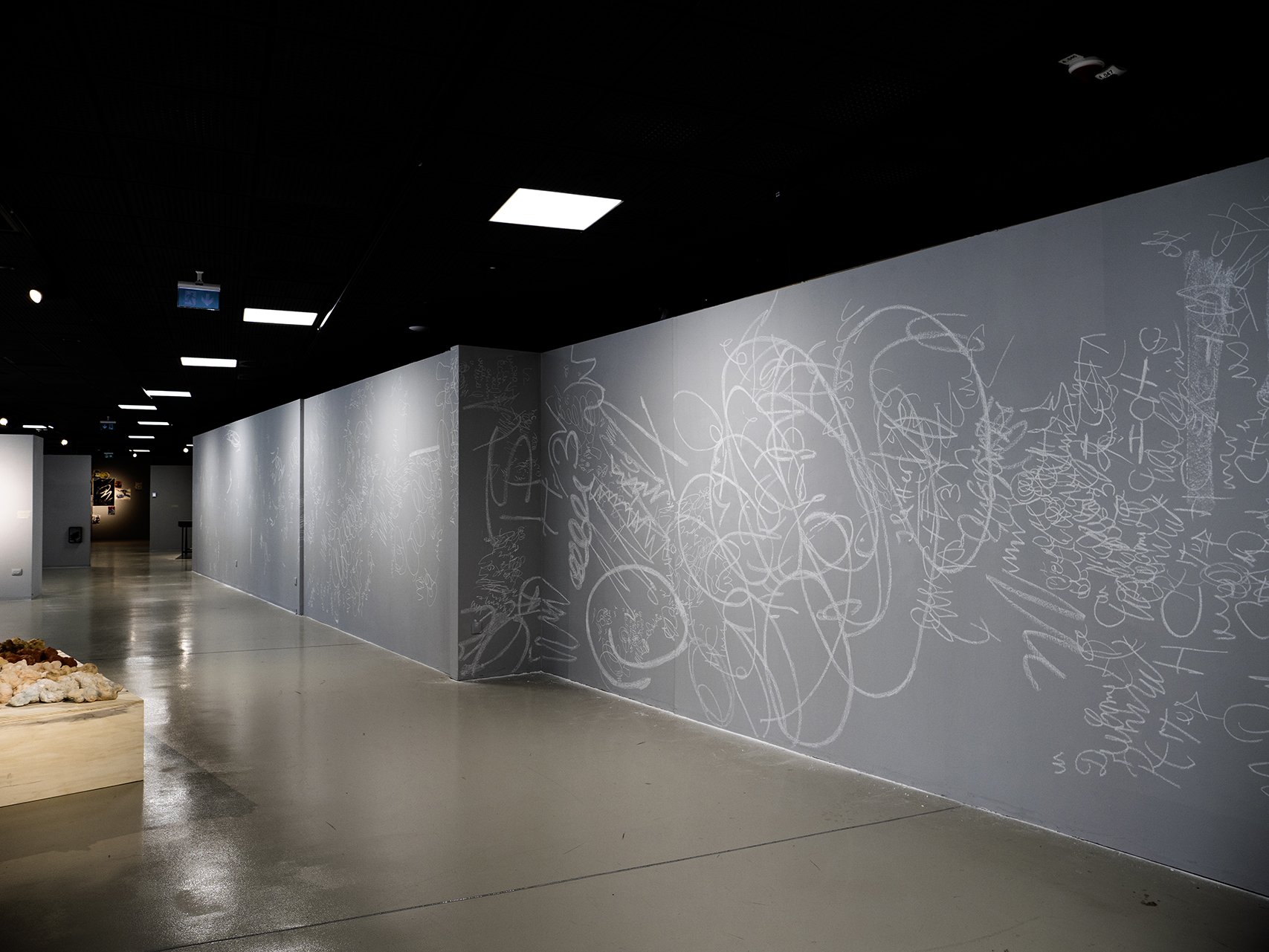
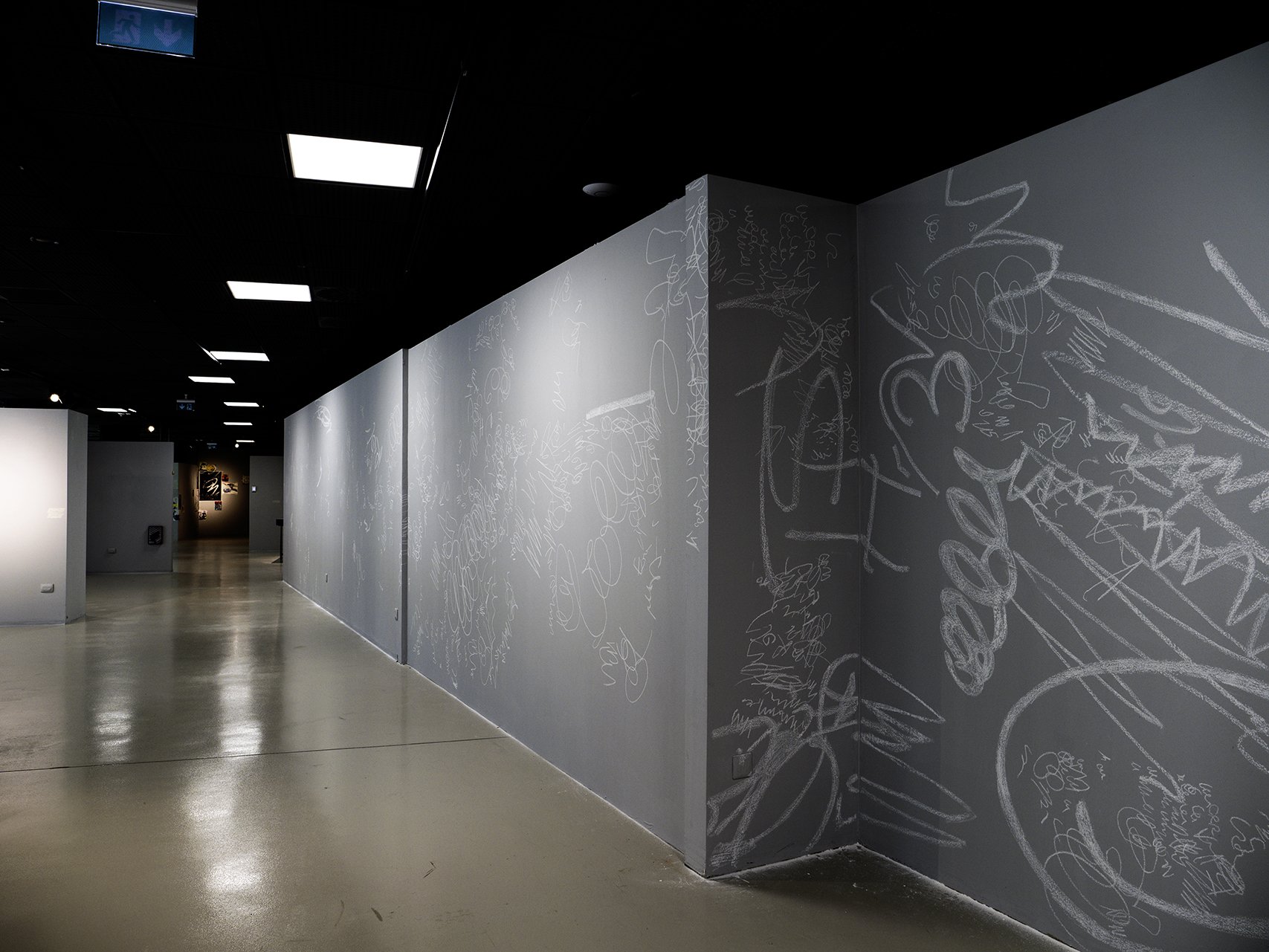
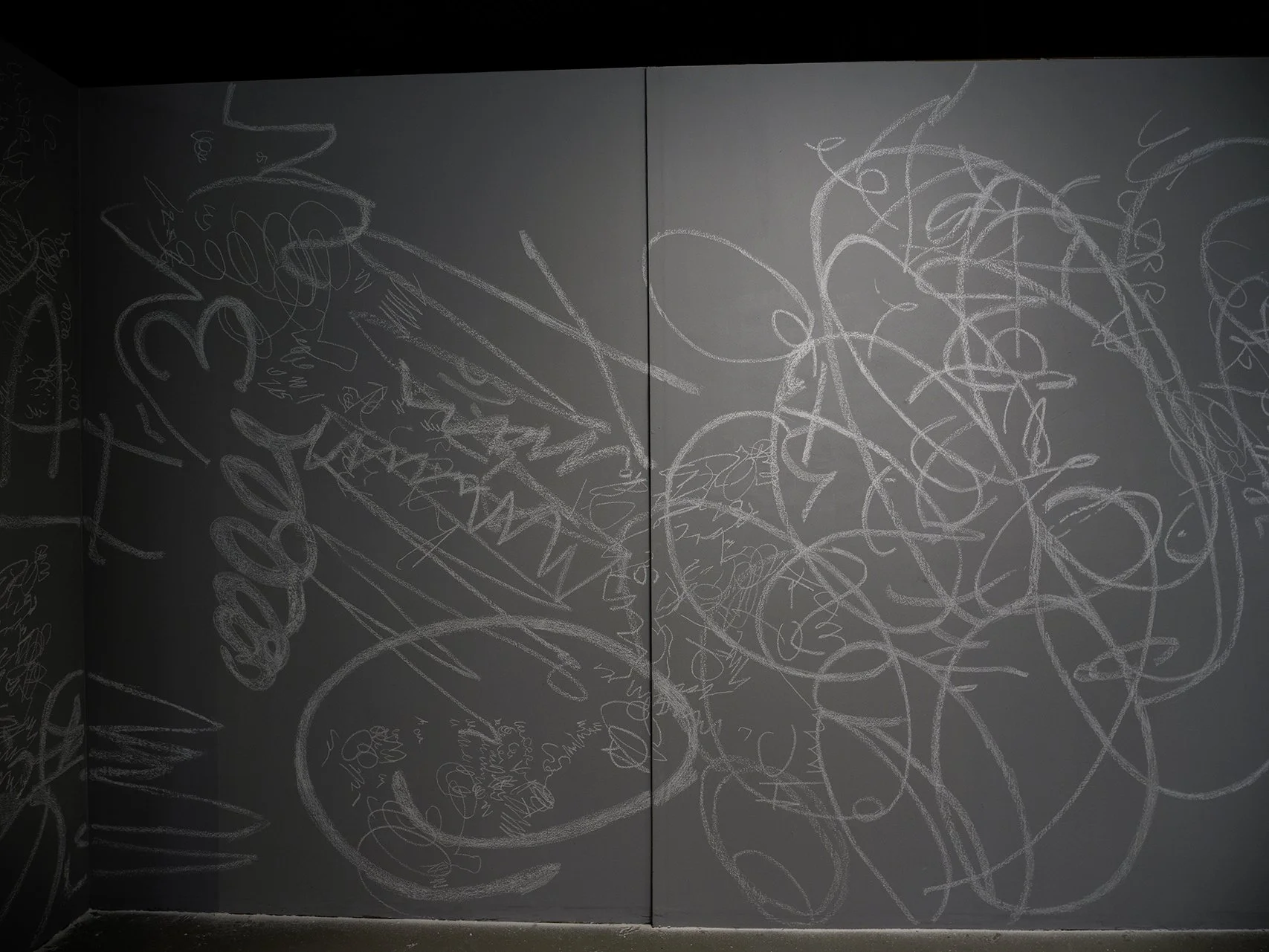
Photos: Alex Mirutziu
Feels Like It Stopped Raining brings together the works of Dan Cebotari, Ciprian Ciobanu, Anca Adina Cojocaru, Gloria Grati, Imminent Detour / Andreea Samoilă, Lucian Indrei, Mirela Ivanciu, Raluca Micula, musz and Szabó Anna-Mária, in an exhibition curated by Diana Marincu and Mihai Toth at Art Encounters Foundation (19.06.202601.08.2026). Rather than proposing a common theme, the exhibition inhabits a condition: the suspended interval between an event and the moment it becomes perceptible. Its title does not describe the weather but a delayed awareness—a reality that has already shifted while perception is still catching up.
Across the exhibition, gestures remain unfinished, materials retain the memory of touch, and images refuse immediate resolution. What binds these practices together is not resemblance but the persistence of traces: subtle displacements, residual actions and fragile encounters that recall Marcel Duchamp's notion of the infra-thin (infra-mince), where meaning emerges through almost imperceptible differences and transitions. Clouds, shadows, footprints, stitches, rivers, mosquito nets, chalk and fleeting performances become carriers of experiences that continue to resonate long after their originating gesture has disappeared.
Within this constellation, Ciprian Ciobanu's installation 024130925 occupies a particularly compelling position. It condenses many of the exhibition's underlying concerns—translation, migration, scale, memory and the material life of the trace—while directing attention toward one of the most overlooked gestures in everyday experience: the testing of a writing instrument before writing begins. What appears as a minor, almost disposable action unfolds into a meditation on hesitation, inscription and the conditions under which a mark comes into being. From this point onward, the exhibition becomes more than a context; it becomes the ground from which Ciobanu's investigation of the trace before meaning can be understood.
What we lost, yet ultimately regained: Ciprian Ciobanu and the trace before meaning
Some images are not born from a single gesture but from a succession of translations. Postcard, scan, projection—each change of support alters not only the image's form but also its mode of existence. The image does not pass through these media intact. With every transition, it loses something and acquires something else. Every crop, every selection, every excision of detail rewrites the relationship between trace and appearance. Technology does not preserve the image; it changes the conditions under which it exists.
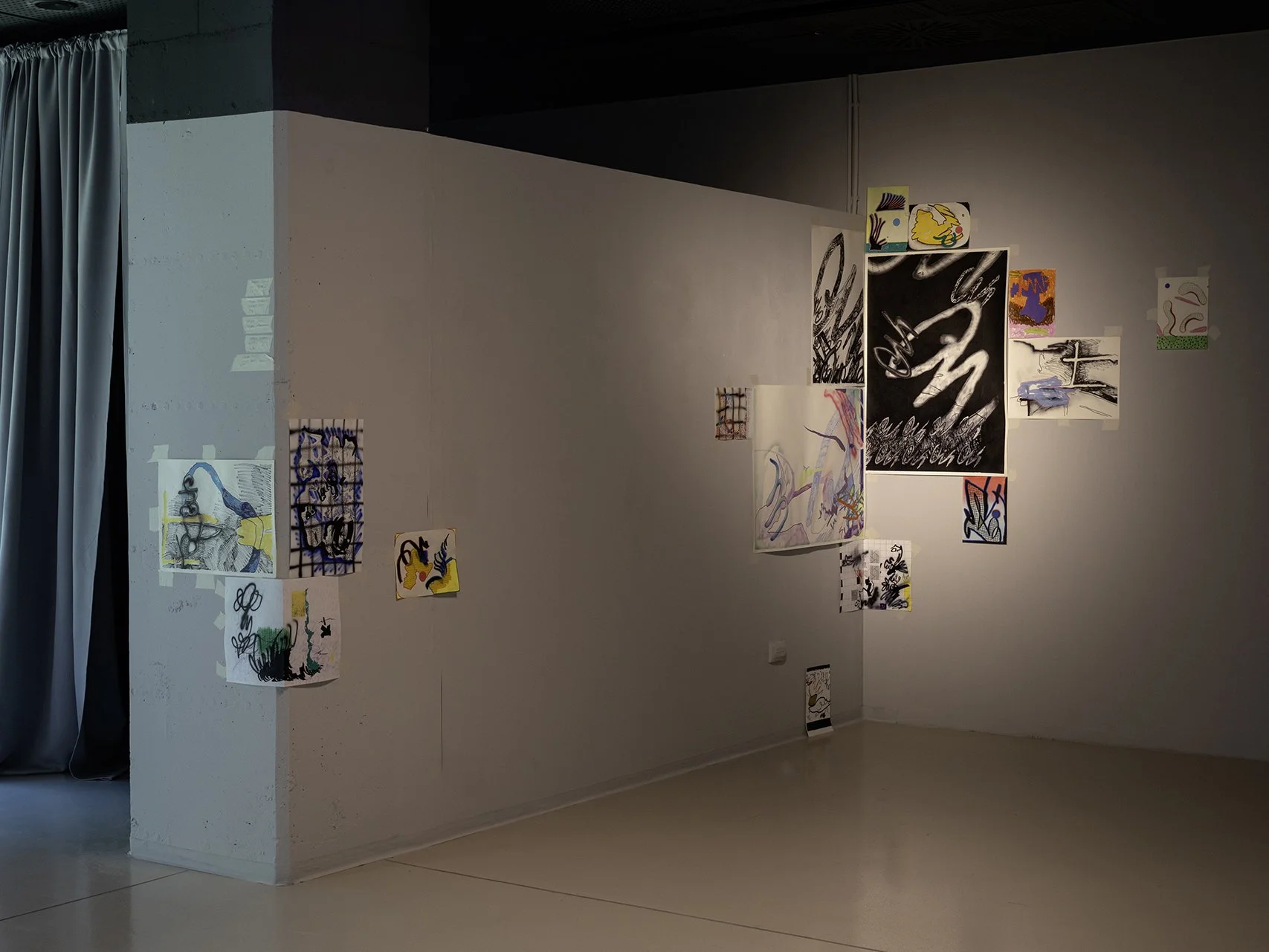
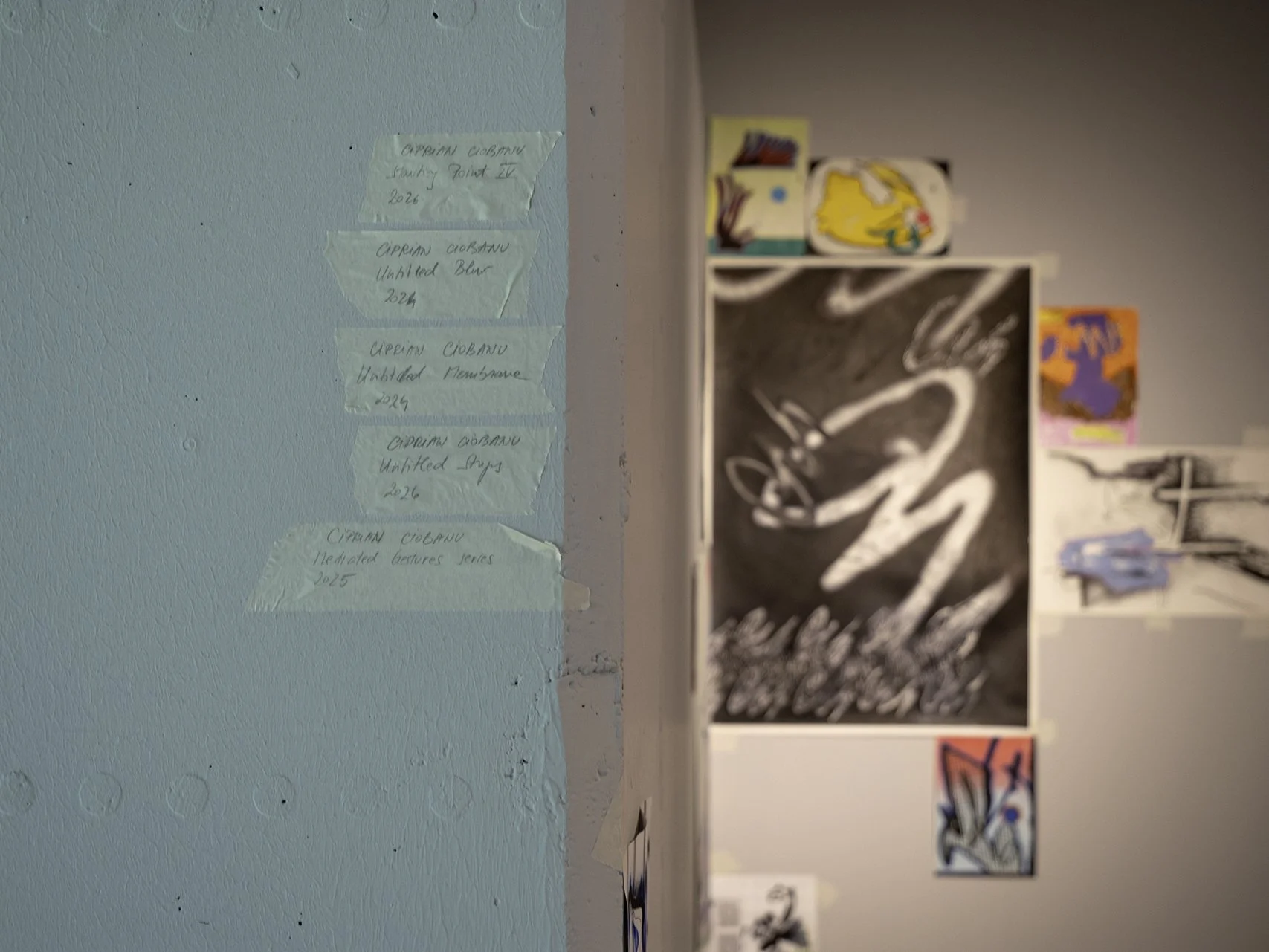
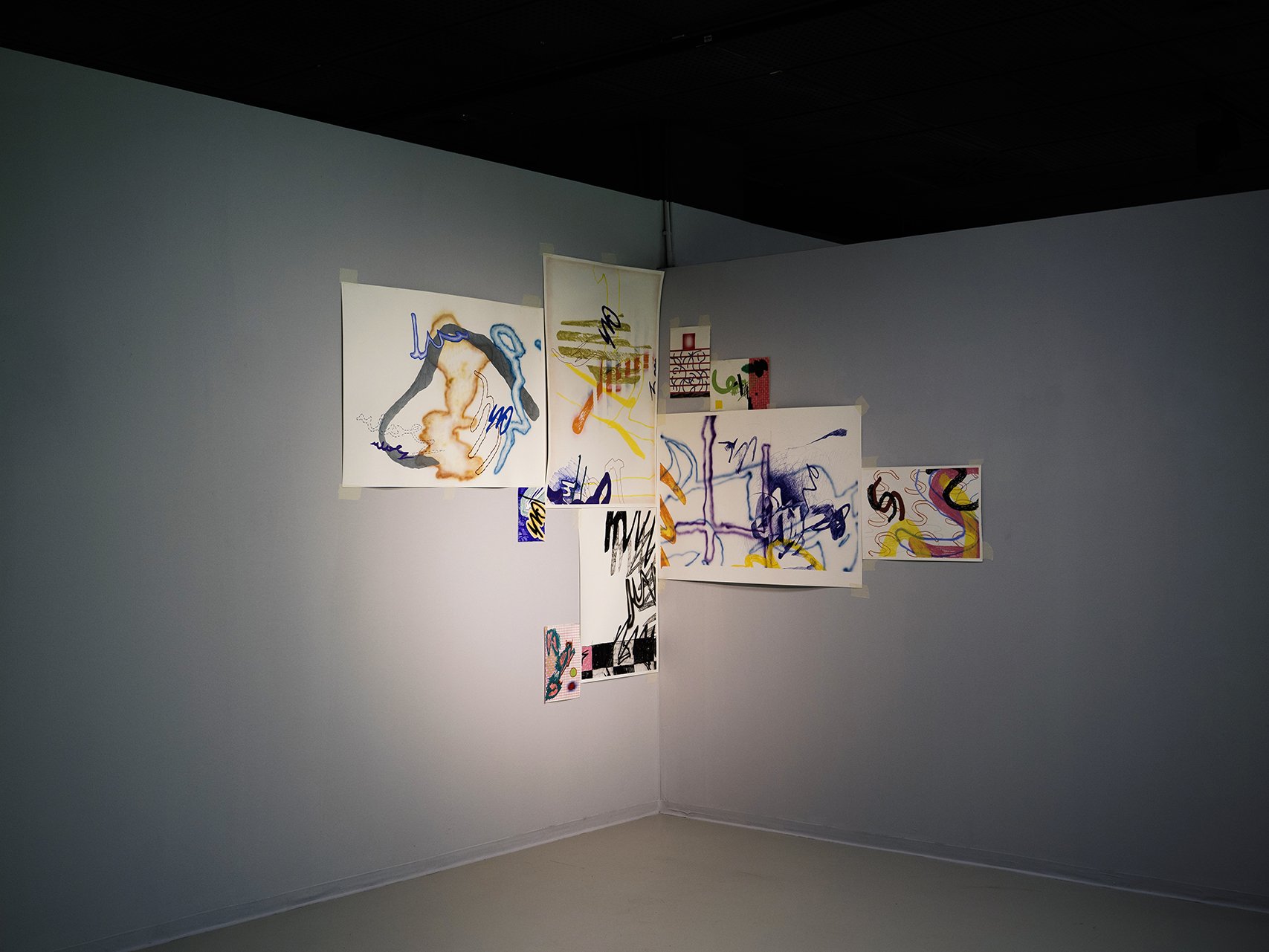
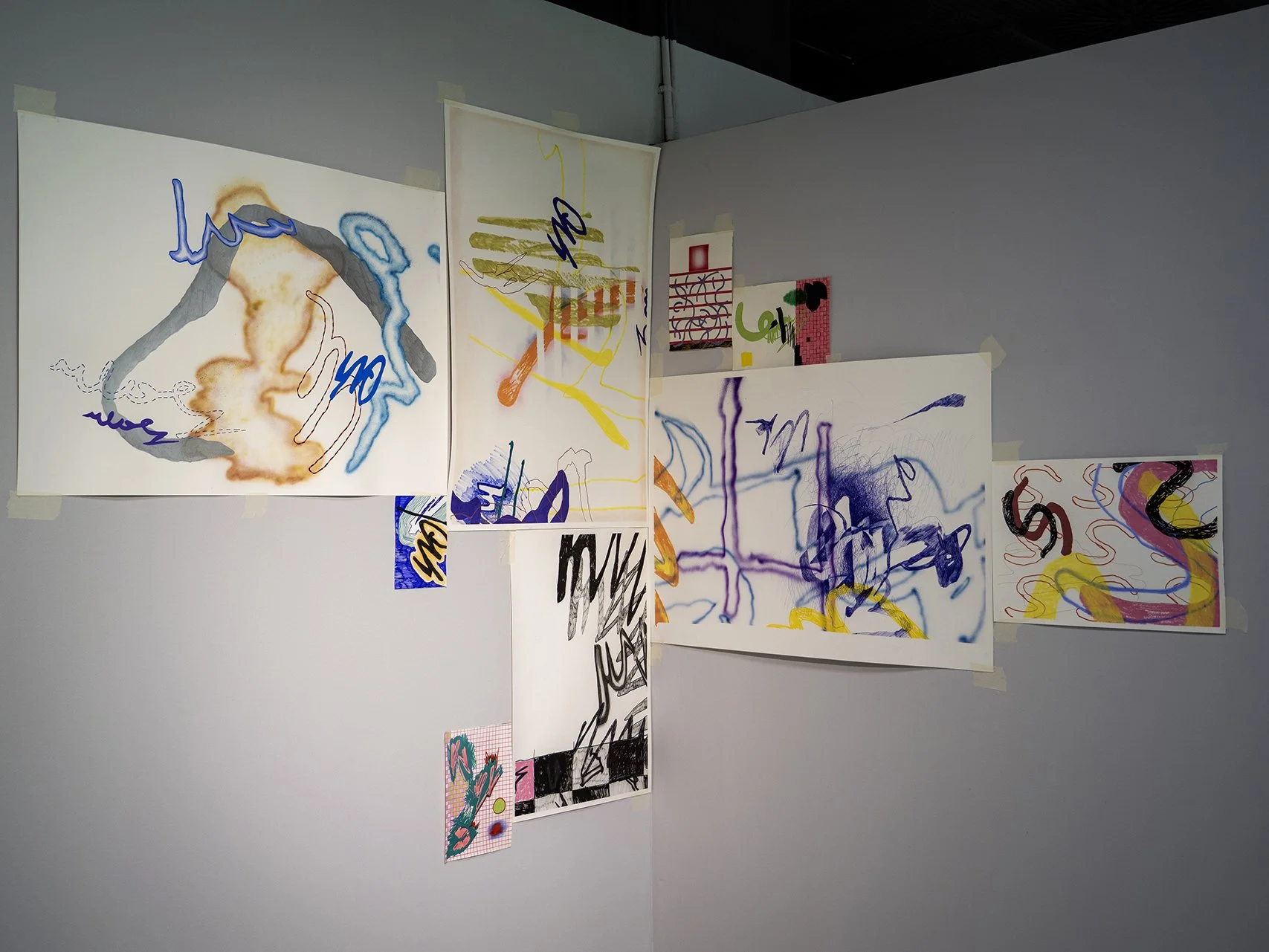
In Ciprian Ciobanu's work, this migration begins in an almost invisible place: the pen-testing card found in stationery shops. An object stripped of prestige, designed for a strictly utilitarian purpose, becomes the point of departure for a reflection on gesture, memory, and transformation. The marks left on these testing cards are extracted from their functional anonymity and relocated into another regime of visibility. What was meant to disappear immediately after testing acquires permanence. What once served merely as a prelude becomes the image itself.
The scan still preserves a direct physical relationship with the testing card. It faithfully records its fibres, scratches, and the pressure of the hand. Projection, however, expands that relationship and pushes it into a territory where the trace no longer functions merely as evidence of a past gesture but as an autonomous presence. Between the testing card and the monumental image there is no simple reproduction but a transformation of status.
The testing card occupies a peculiar position. It precedes the project without fully belonging to it. It is the space where imagination still hesitates, where the hand tests not only a pen or a fountain pen but its own possibility of entering the world through a mark. The friction between instrument and paper, the resistance of the surface, the flow of ink, the pressure of a fountain pen or a gel pen are gestures almost devoid of semantic content and, precisely for that reason, profoundly revealing. They test not only the instrument but also the relationship between the body and the trace.
There is something almost ritualistic about this moment of testing. Almost like a prayer. A moment of rediscovery, of accepting the limits of diversity, perspective, and even utility. It is one of the few graphic gestures entirely free of social obligation. These marks do not enter the circuits of political, cultural, or economic value. They belong exclusively to an intimate dialogue between the hand and the trace it leaves behind. It is precisely this absence of stakes that grants them an unexpected density. The testing card does not seek to define an identity, nor does it attempt to formulate a discourse. It simply searches for the place where a fragile thought begins to acquire consistency. Sometimes the existence of an idea requires no semantic content at all, only the playful glide of a writing instrument across a small piece of cardboard.
Within procedural conceptualism, the work does not reside in the final image but in the chain of operations that makes it possible. The content is not the result but the succession of transformations that produces it. Enlargement therefore becomes a conceptual gesture. A change of scale is never neutral; it generates meaning. It enlarges not only the dimensions of a trace but also the intensity with which that trace can be perceived.
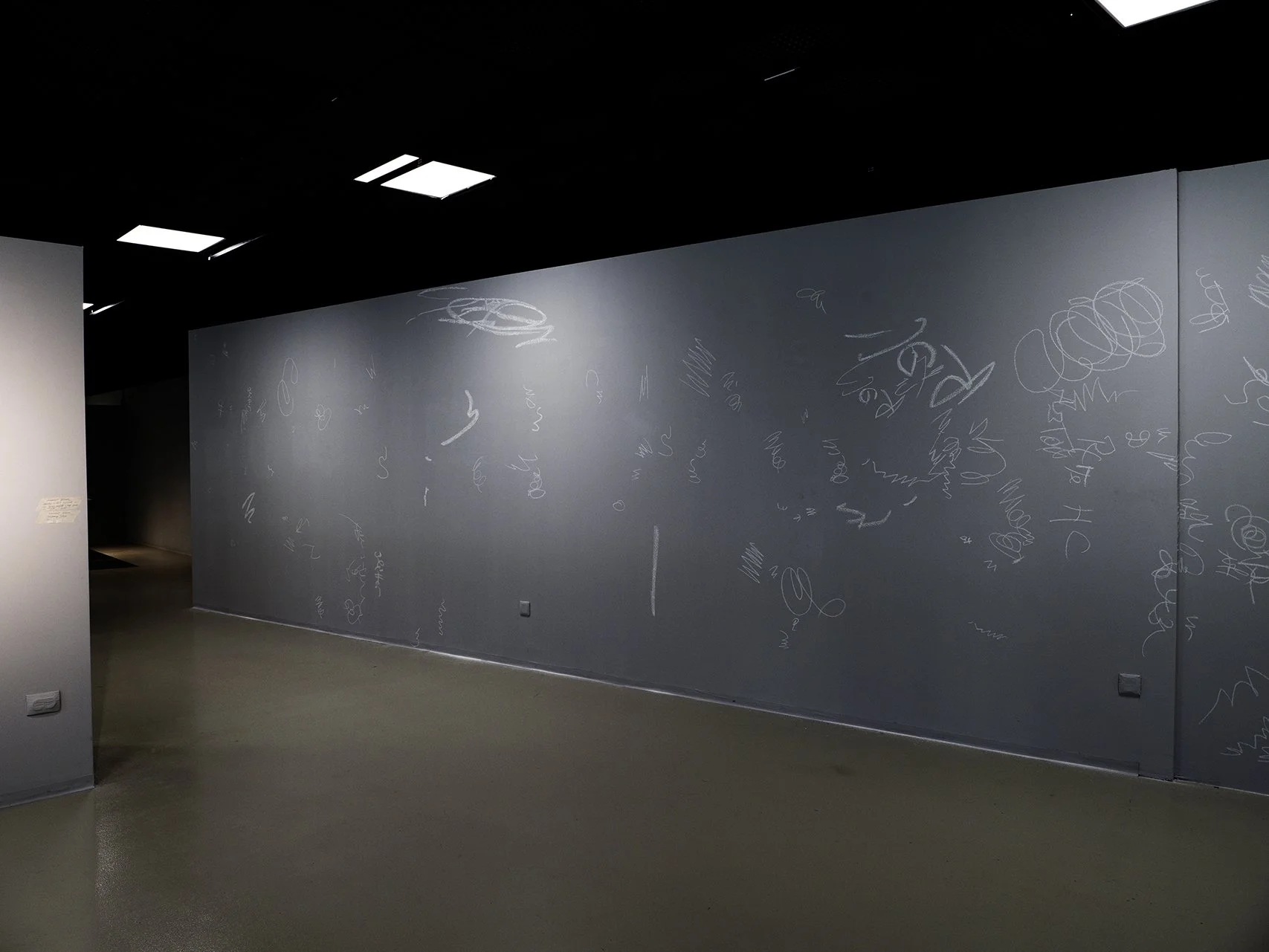
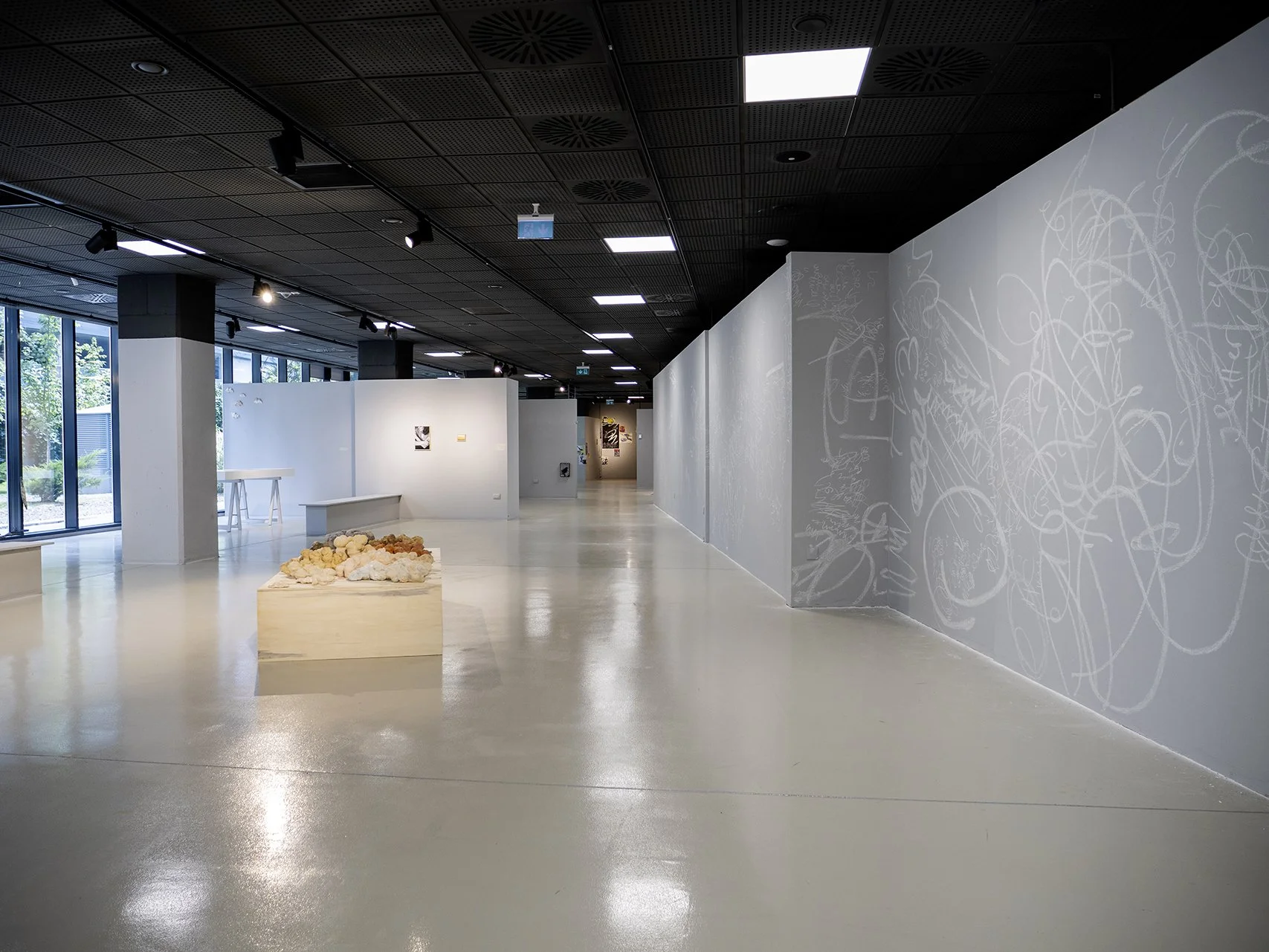
The installation 024130925 shifts this reflection toward one of the most formative tools of childhood: chalk. A tool so decisive and theatrical that every tension of the writer remains inscribed in the marks left upon the blackboard. Yet these marks cannot be read as radiographs of their author. Within the only context that legitimized their existence, they were required to deliver one thing alone: the body of knowledge sanctioned by a political system. The blackboard was never a place where individuality could emerge; it was a surface upon which individuality had to be suspended in favour of a shared and carefully regulated form of knowledge.
Ciobanu detaches chalk from this pedagogical apparatus. Its condensed dust abandons the blackboard and migrates onto the gallery walls. The support loses its discipline, and the mark loses its centre. There is no longer a frontal surface facing pupils, nor a privileged site from which knowledge is transmitted. The trace begins to inhabit edges, corners, and surfaces that the institution never intended for learning.
In doing so, the trace ceases to serve a meaning external to itself and begins instead to speak of its own existence. It no longer accepts the place assigned to it. It claims its own territory. It appears not where it is summoned, but where it decides to exist.
This is the fundamental displacement proposed by Ciprian Ciobanu. He does not alter the nature of the mark but the conditions under which it can appear. What once seemed a technical exercise becomes a reflection on the ways gestures are disciplined, archived, and rendered invisible by the spaces that contain them. Through a shift in scale and a migration of support, the artist does not monumentalize the trace. He monumentalizes the hesitation that made it possible.
more: feels like it stopped raining - ArtEncounters