REVIEW: A Machine as Complex as the World Itself—Bergen Assembly 2028
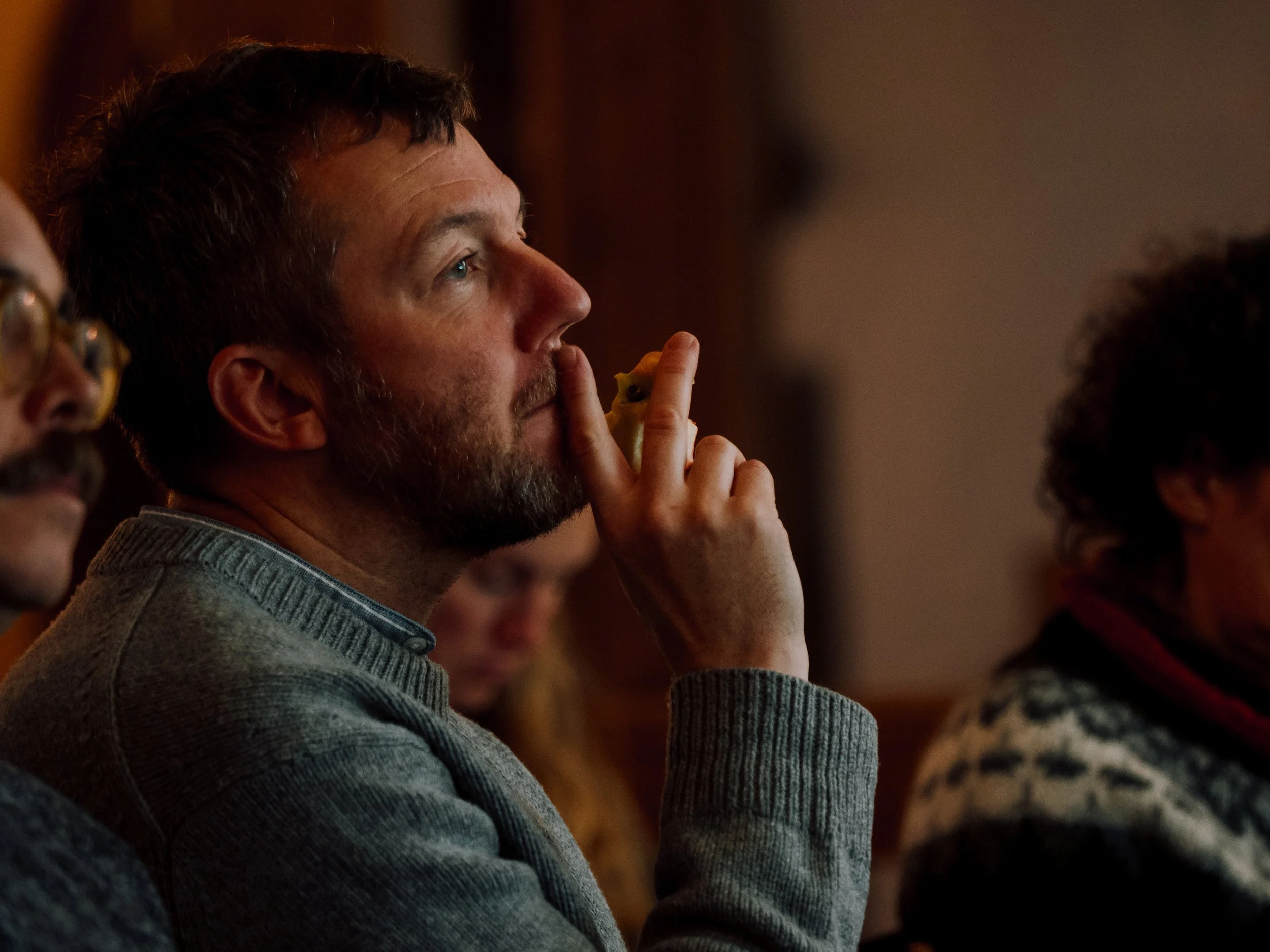
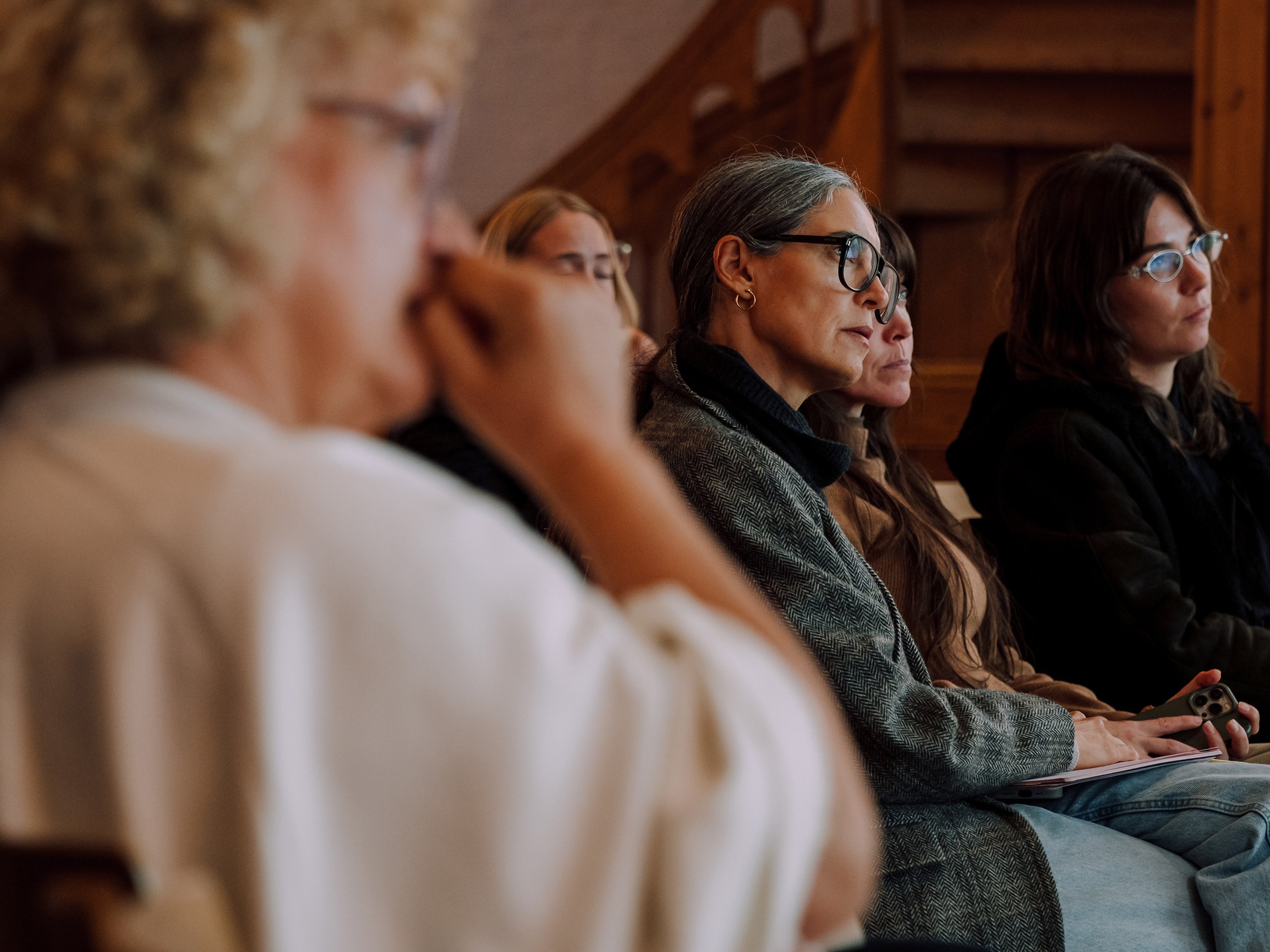
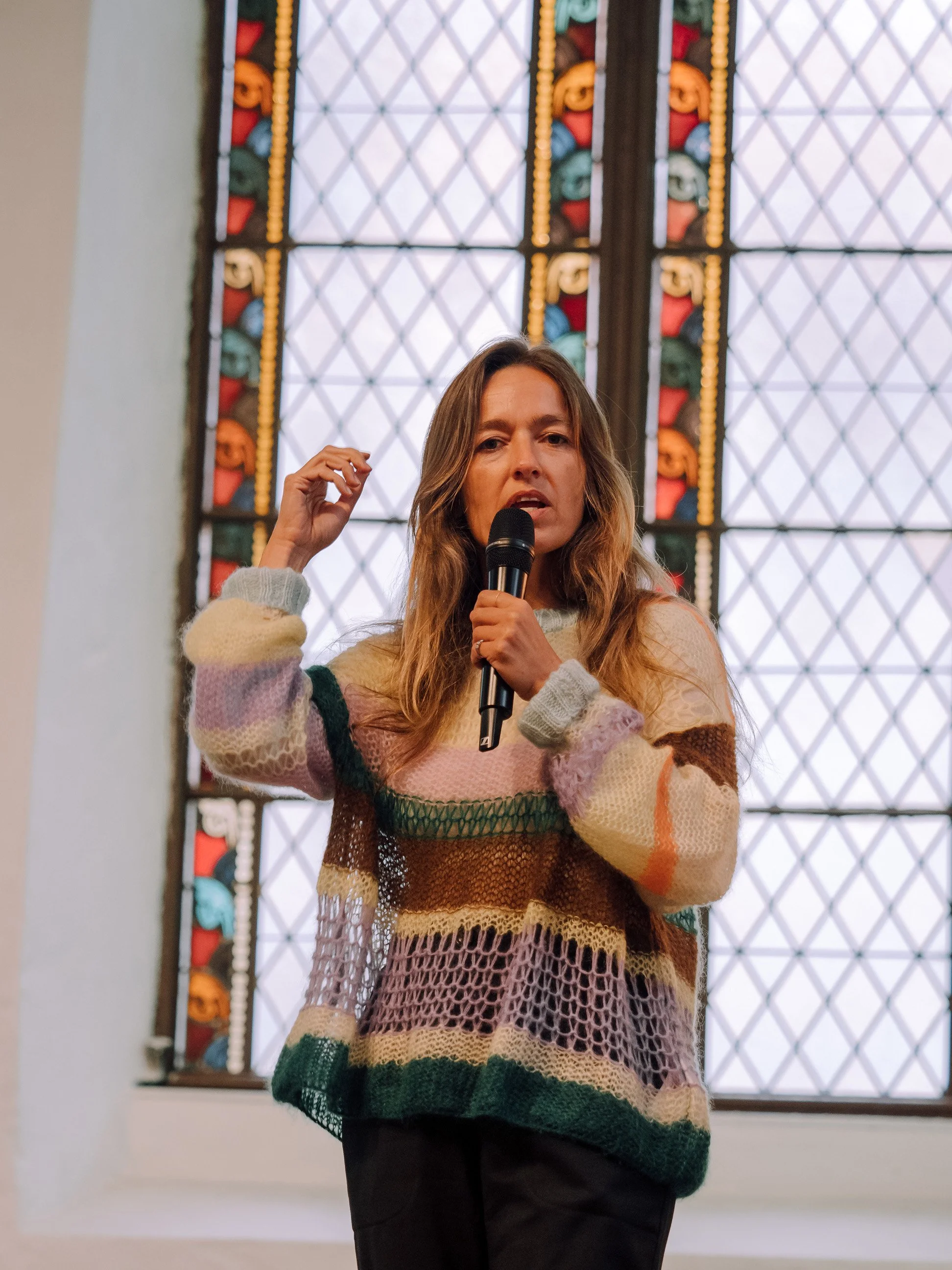
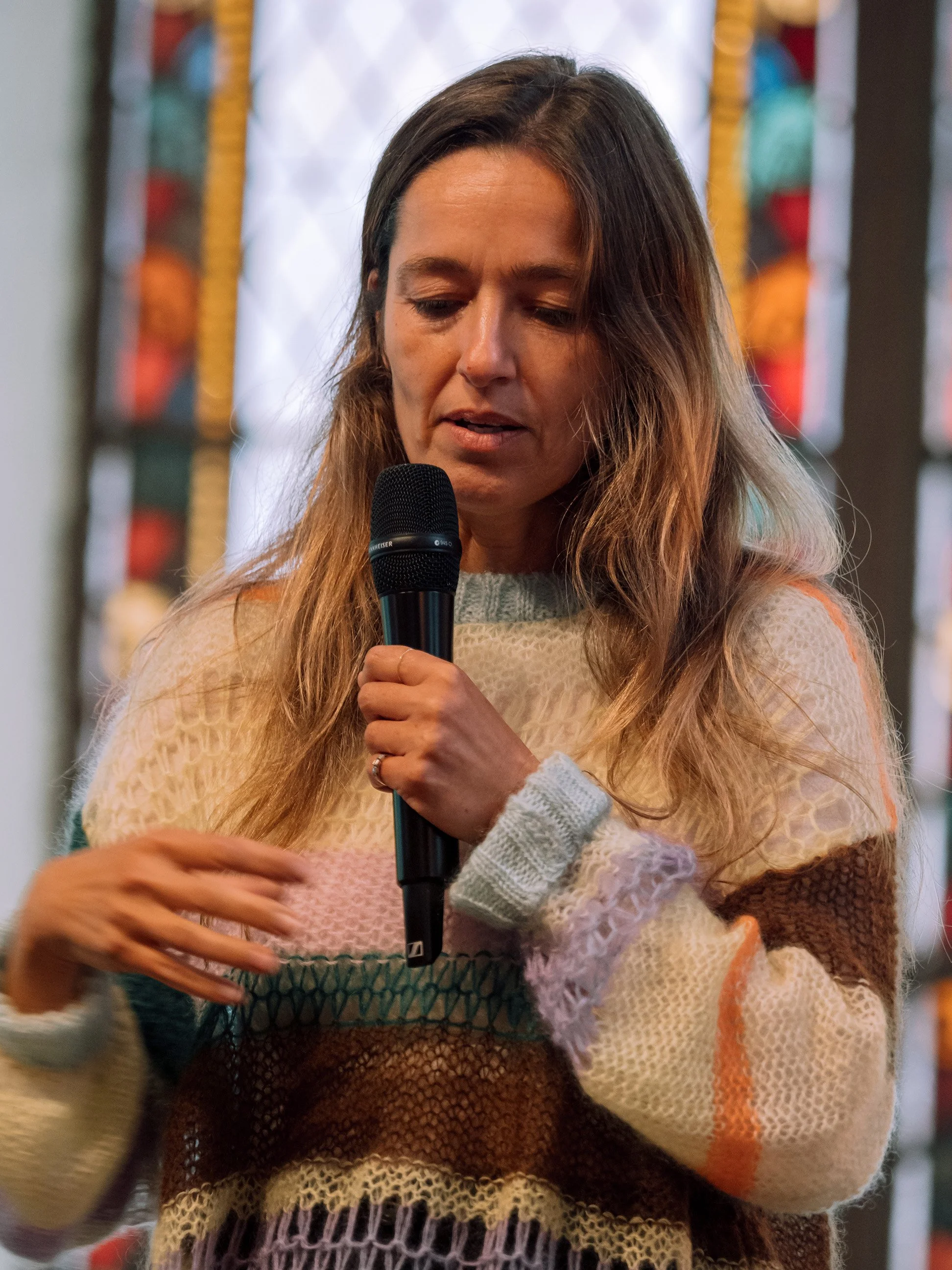
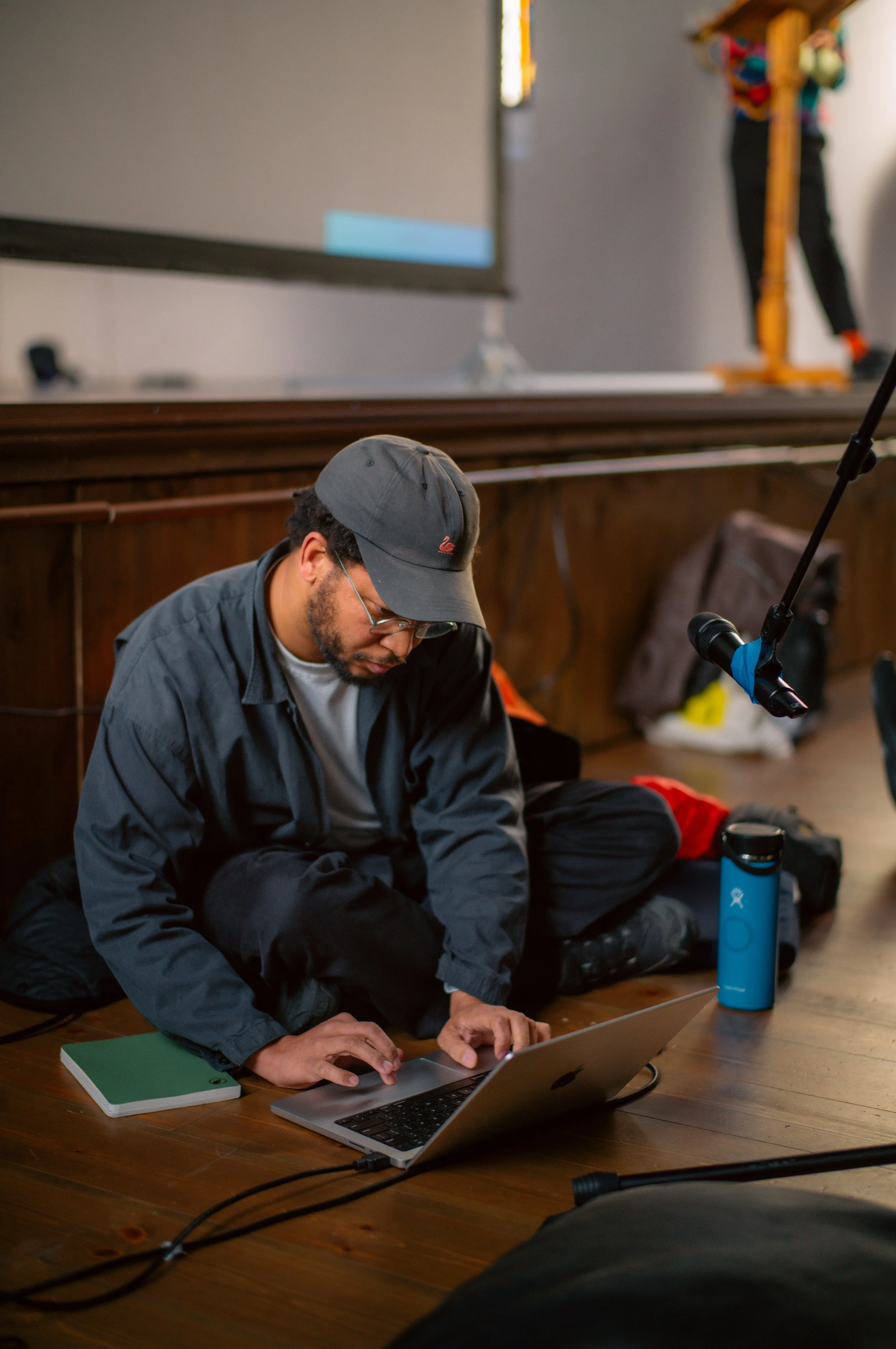
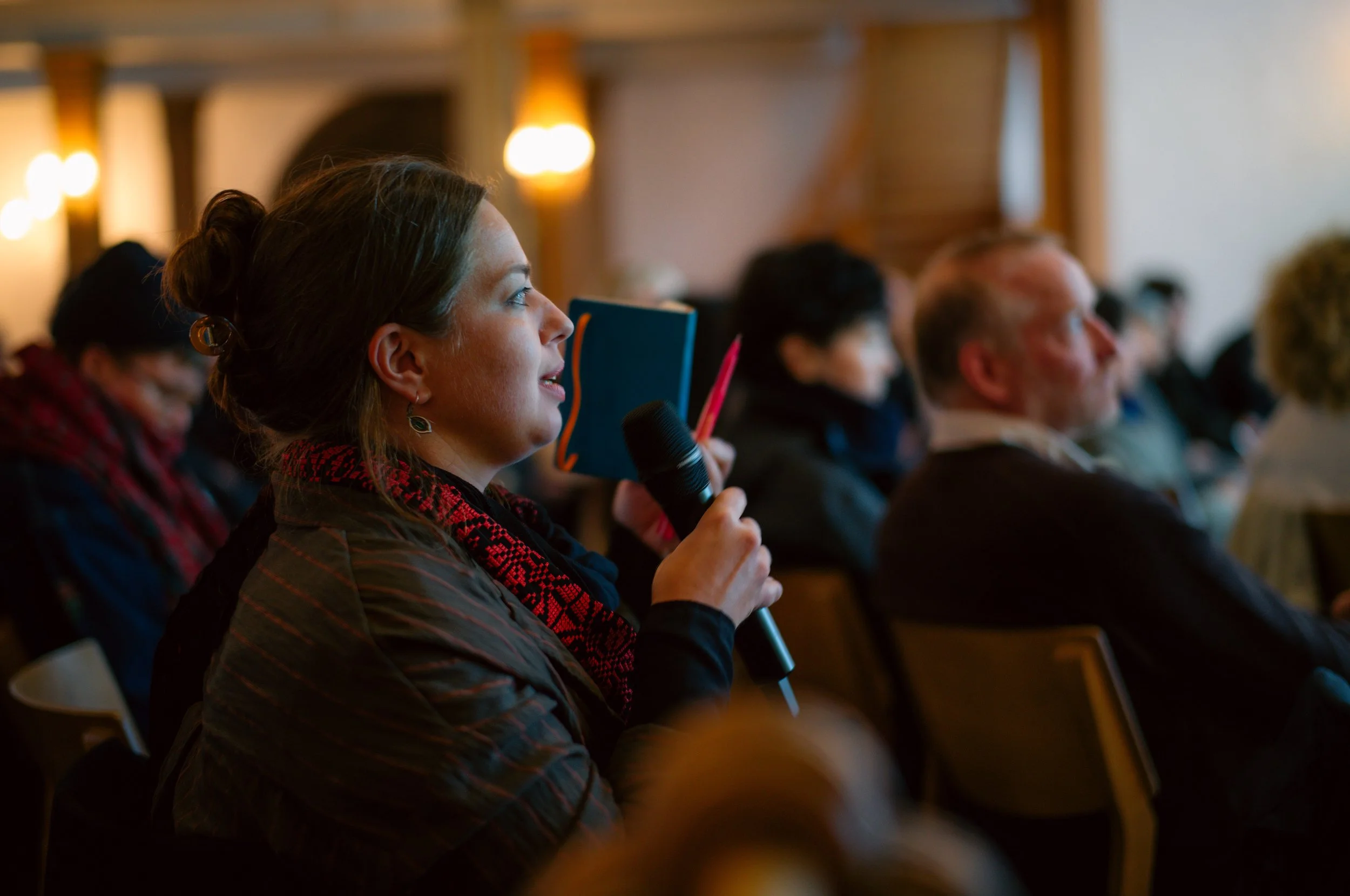
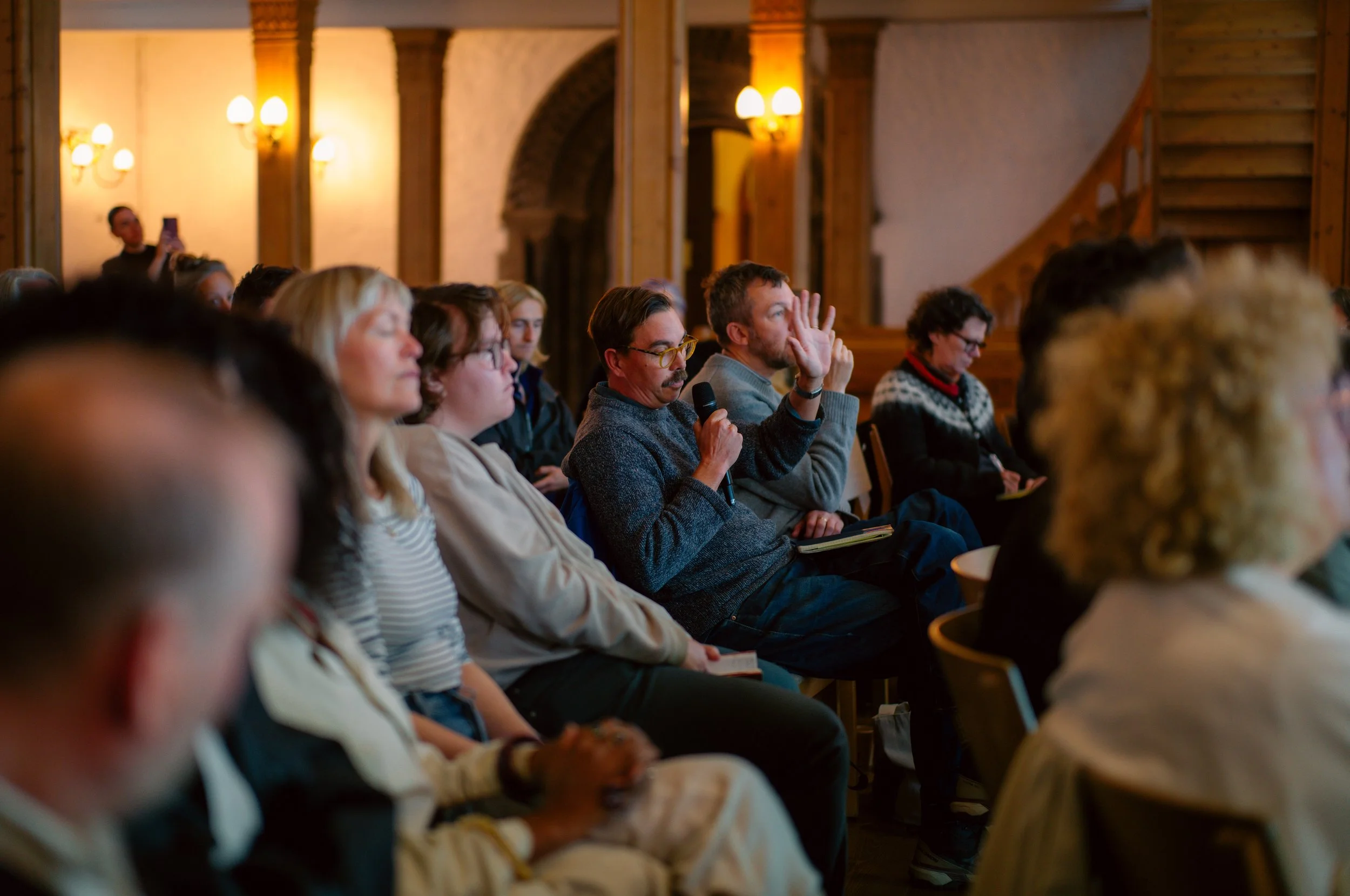
Photos by Astrid Olsson
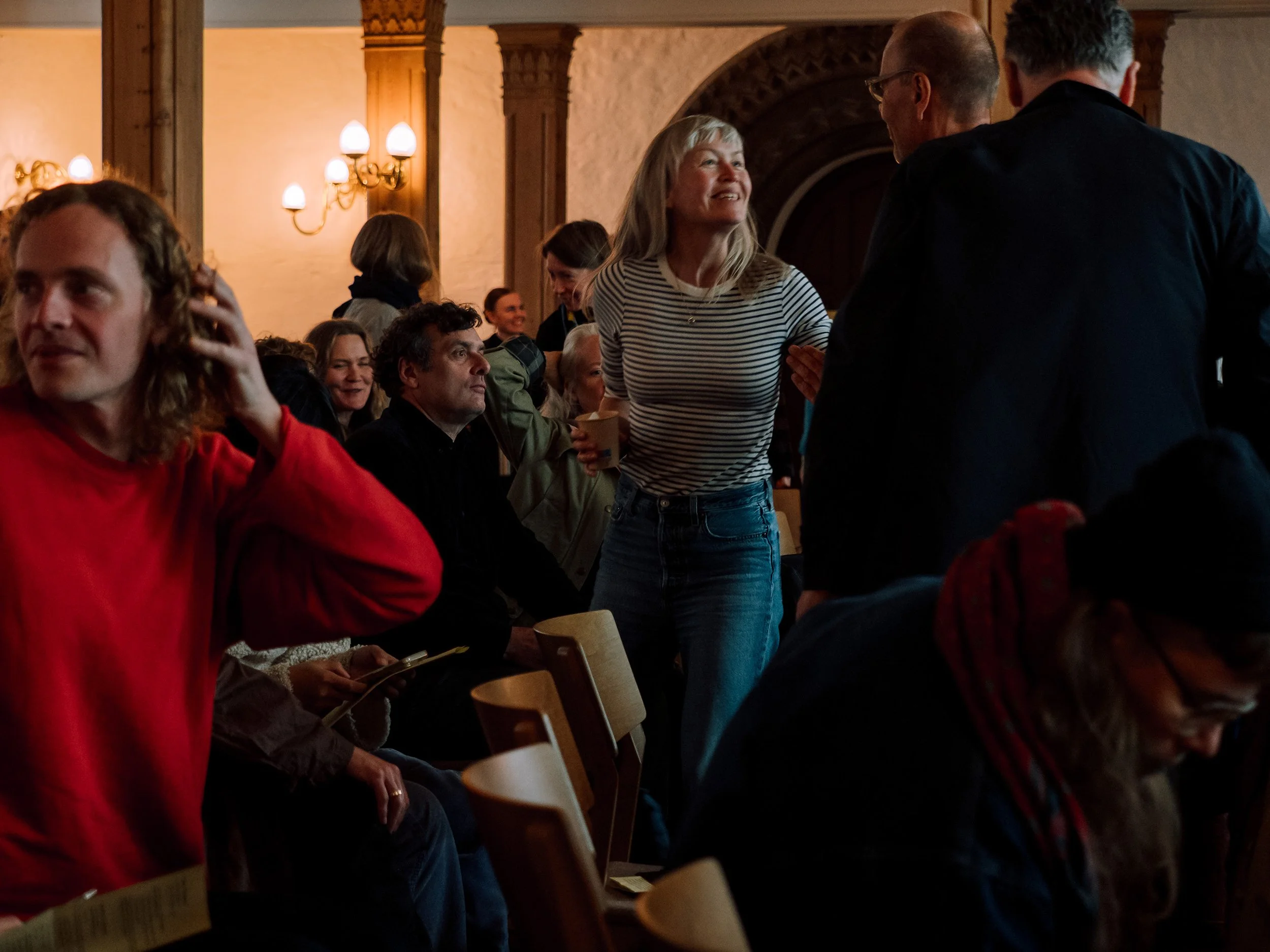
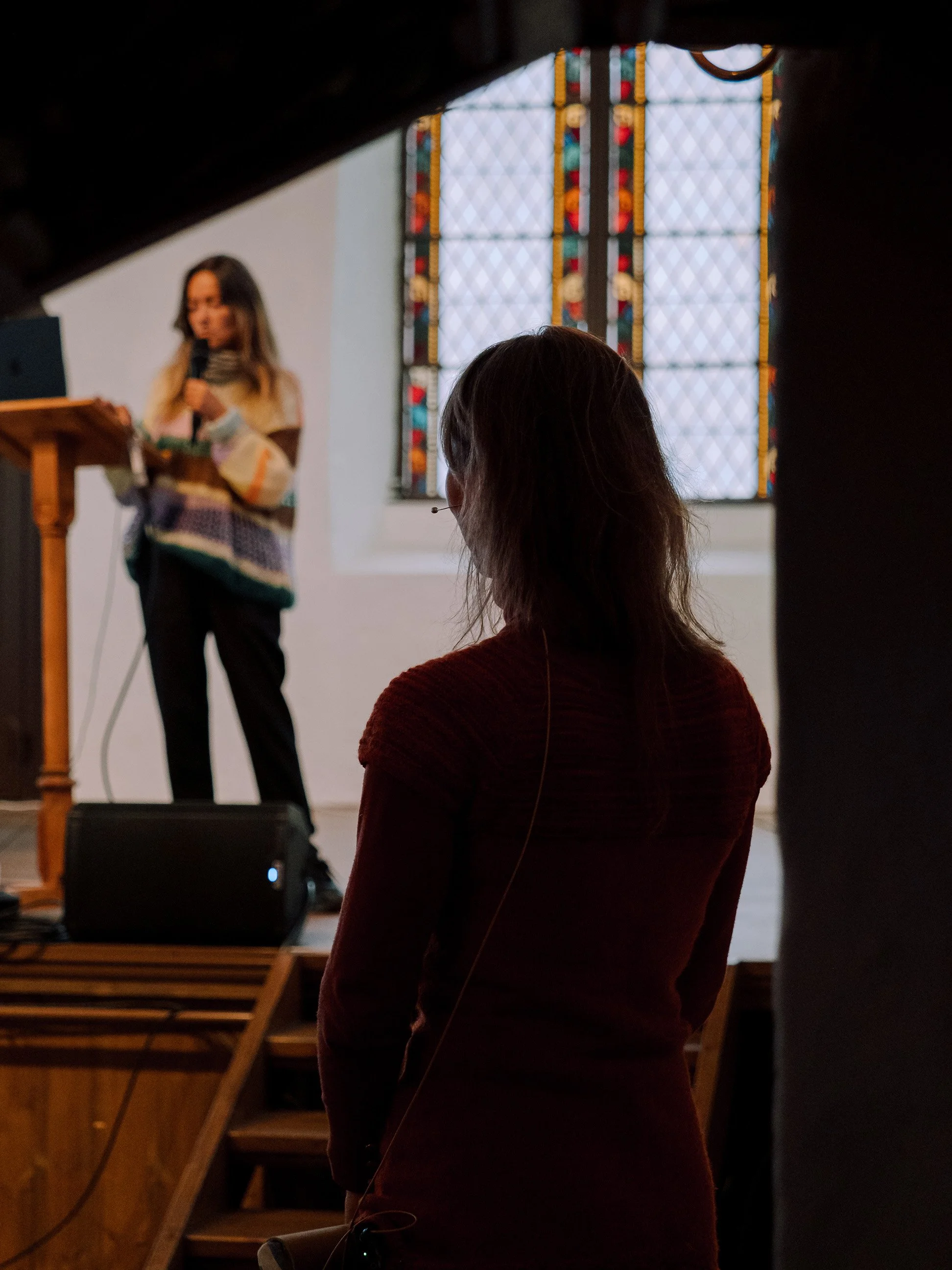
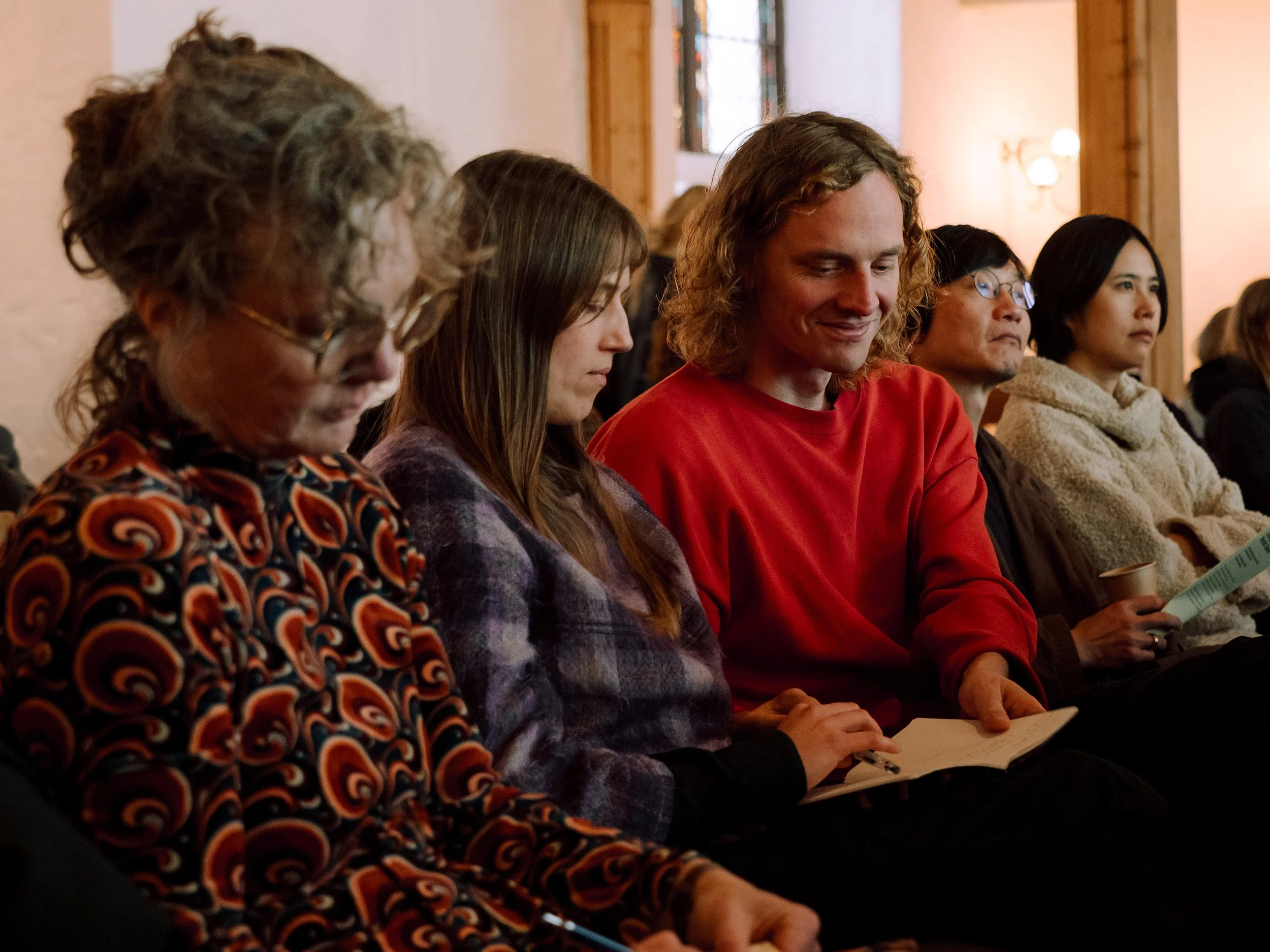
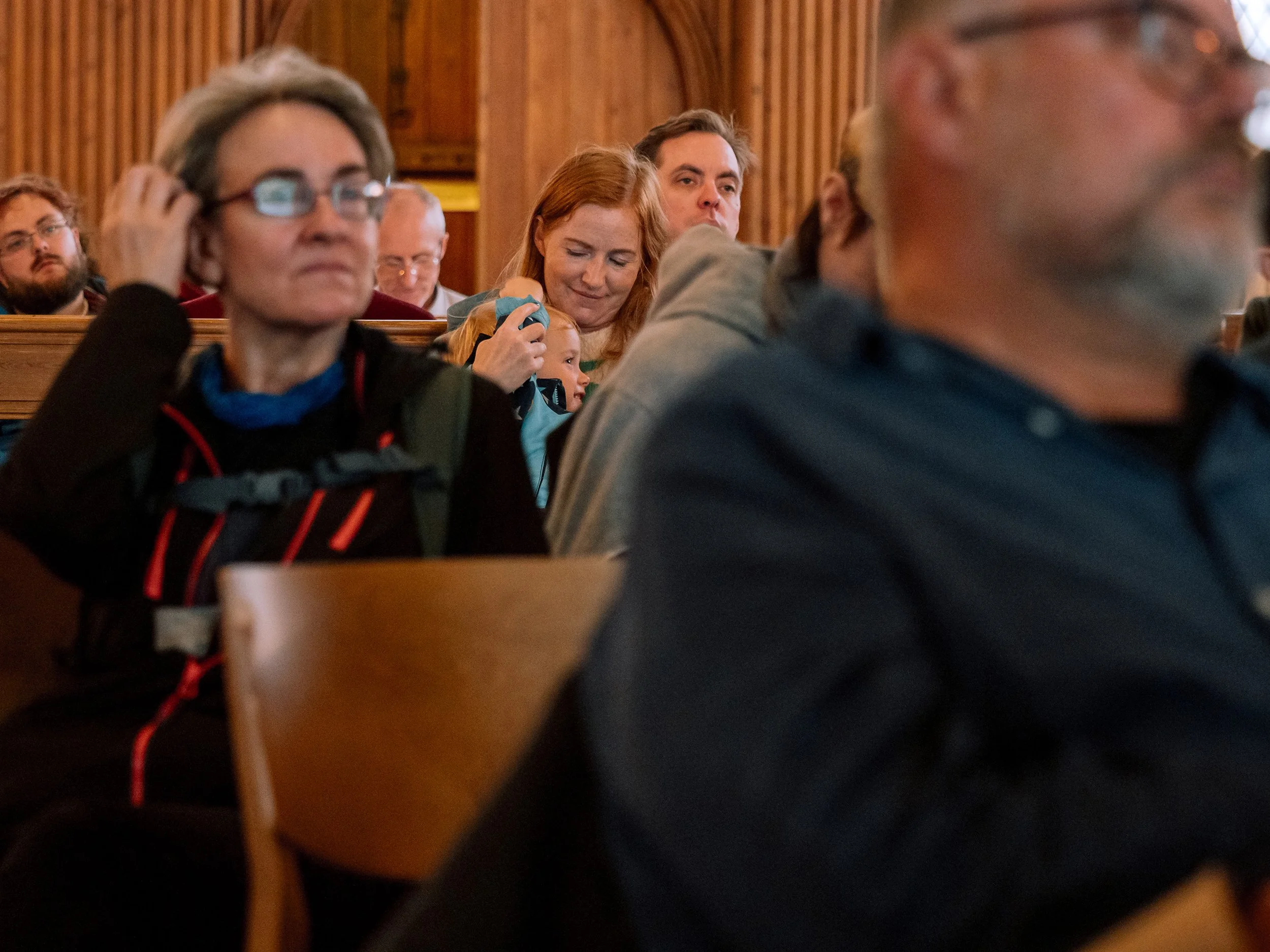
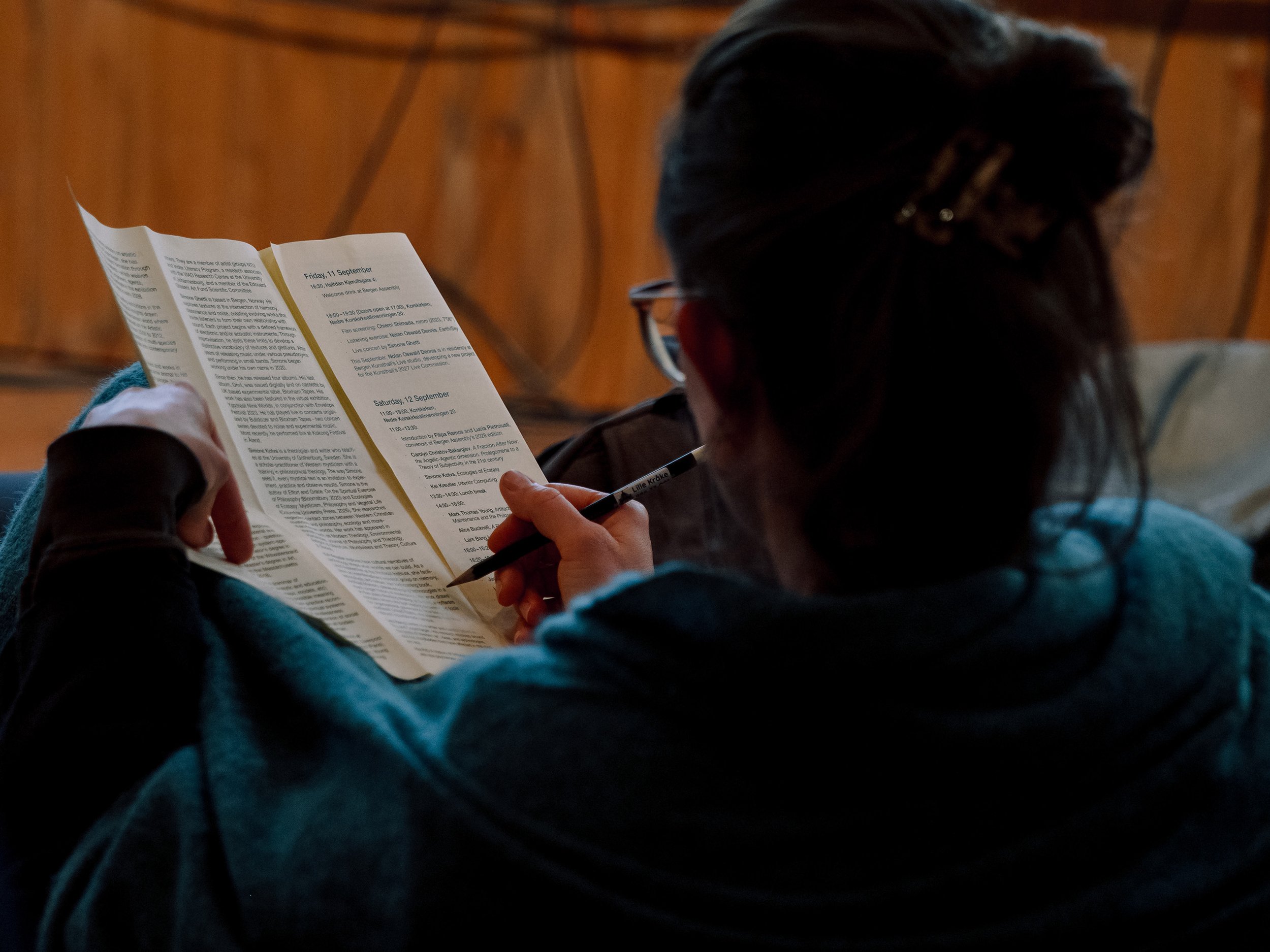
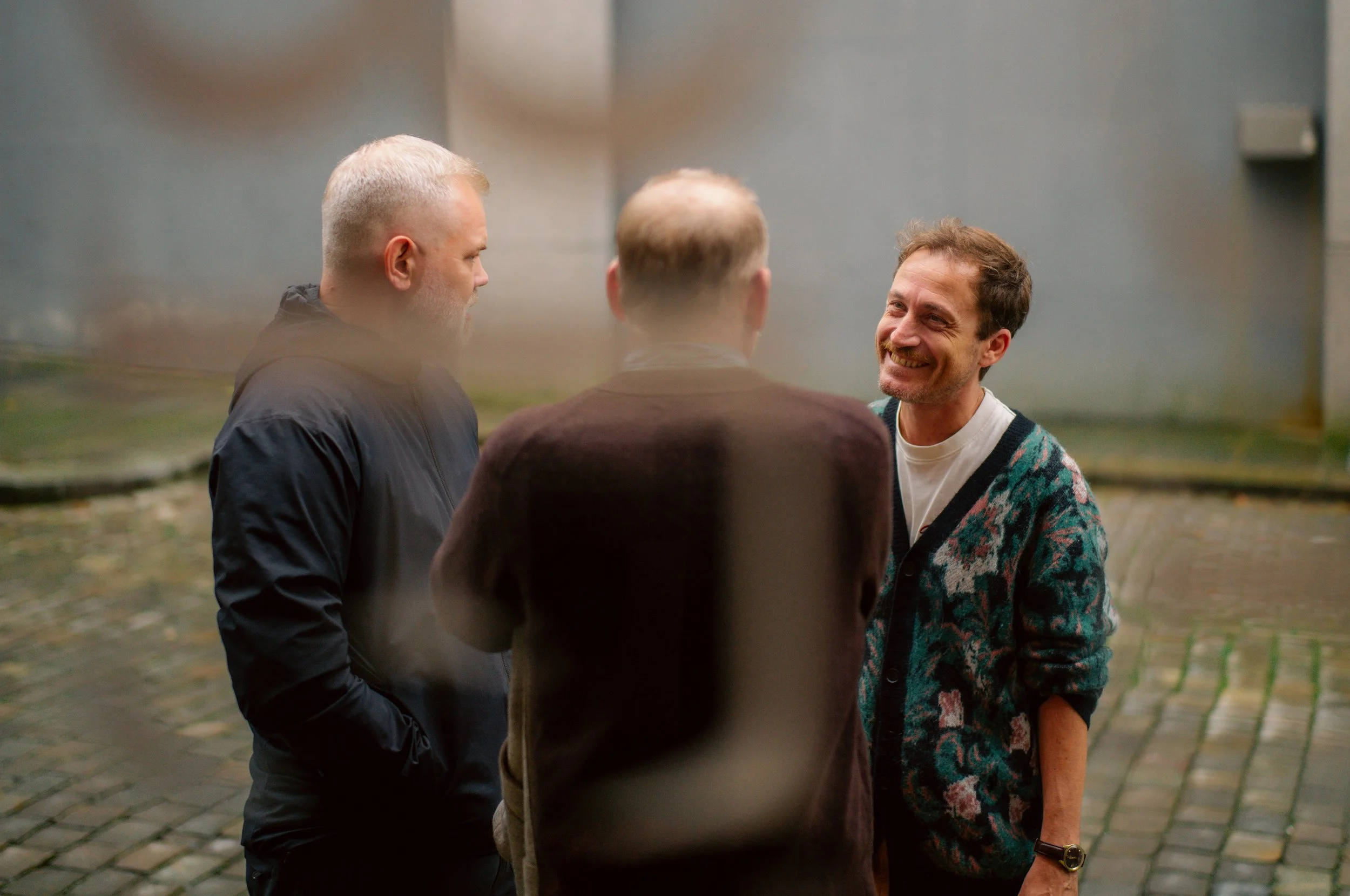
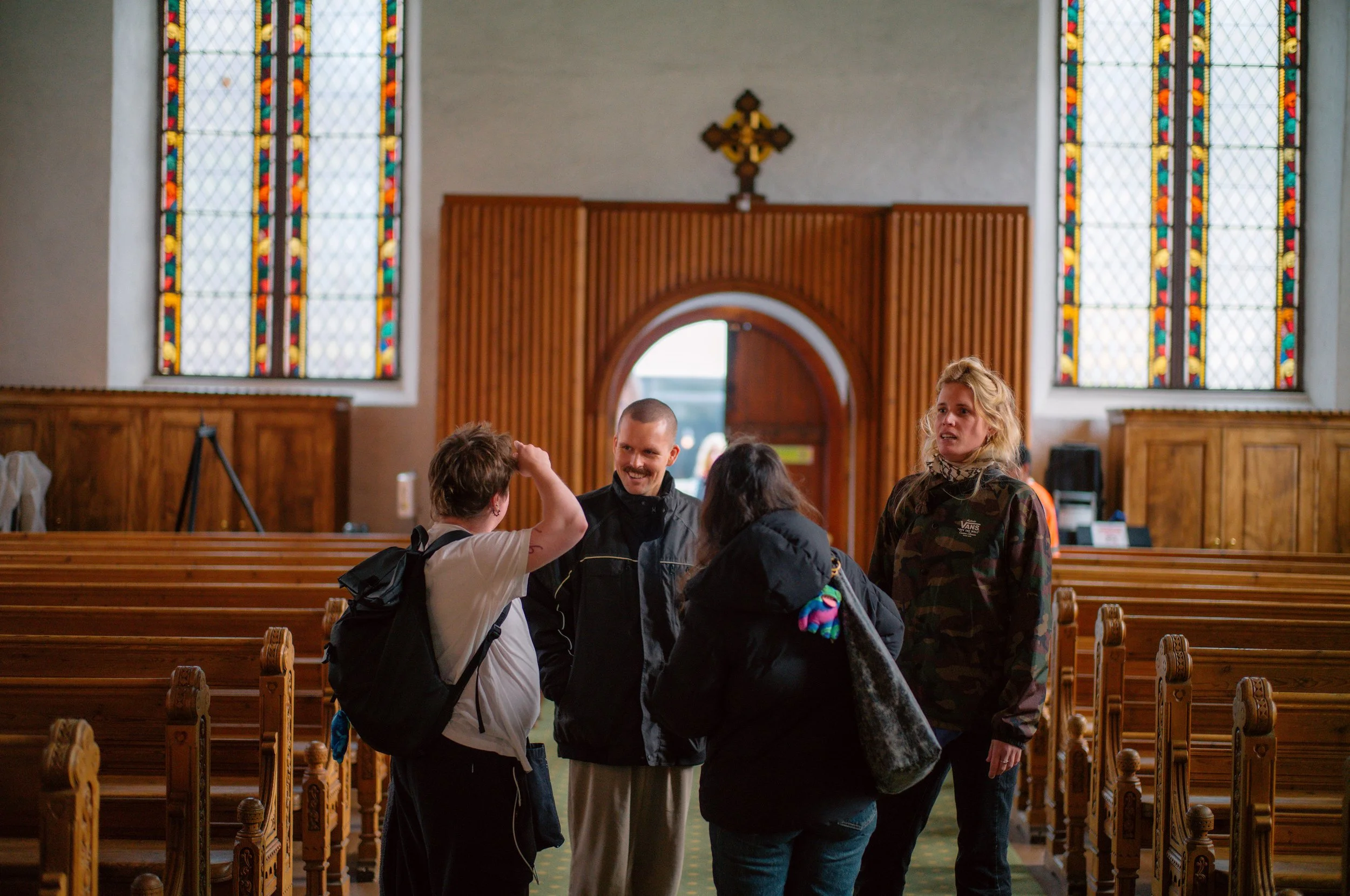
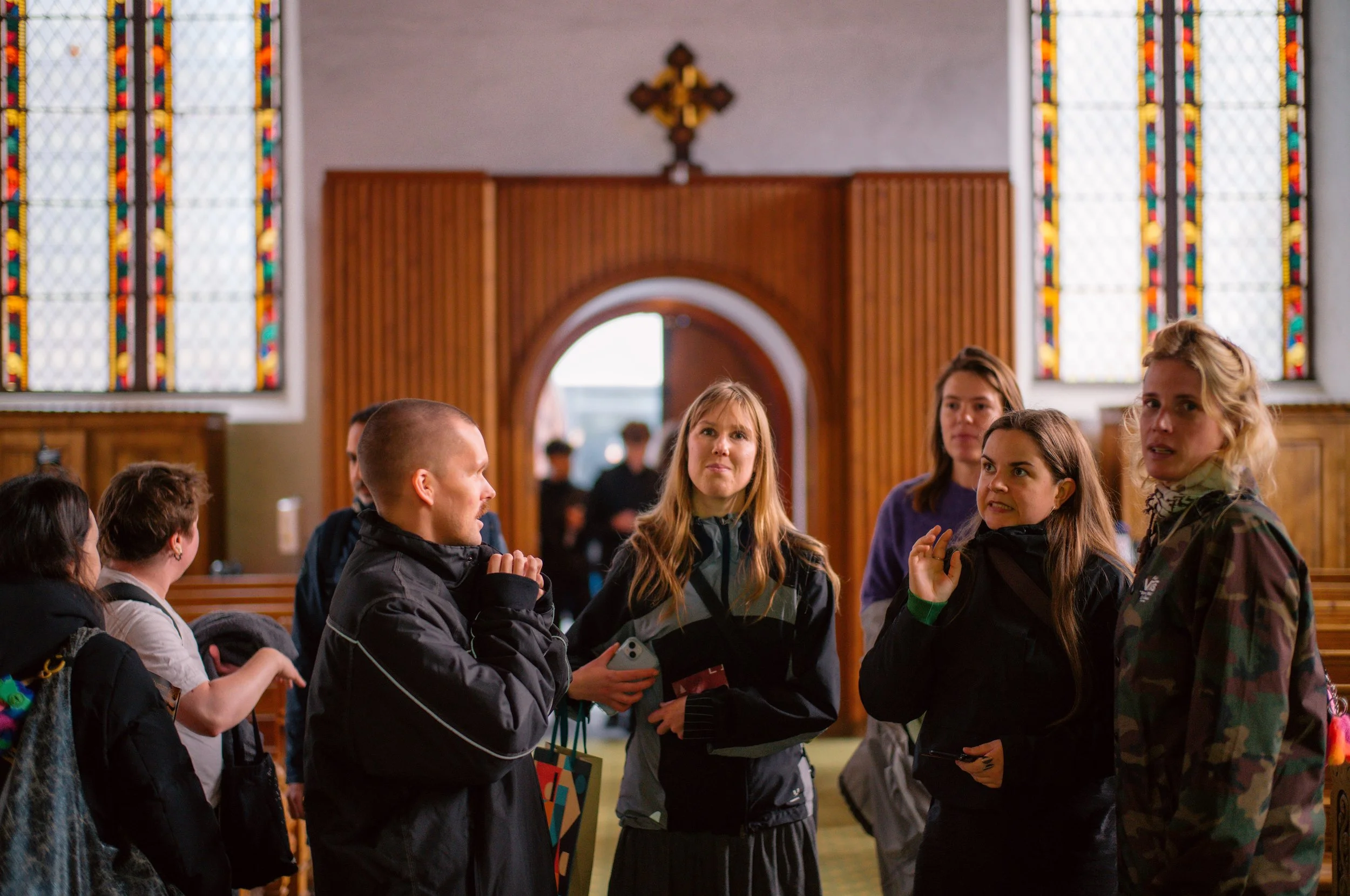
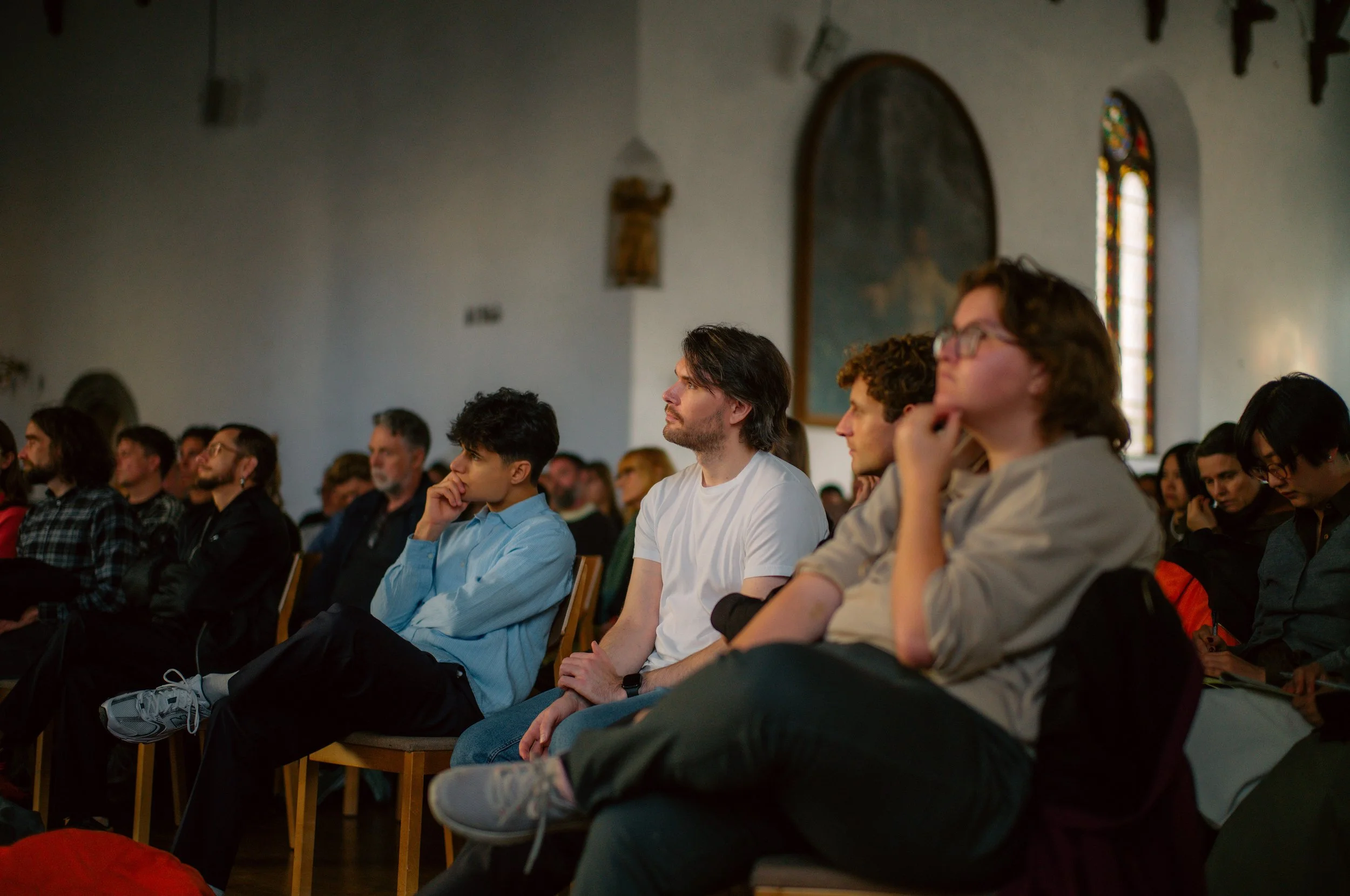
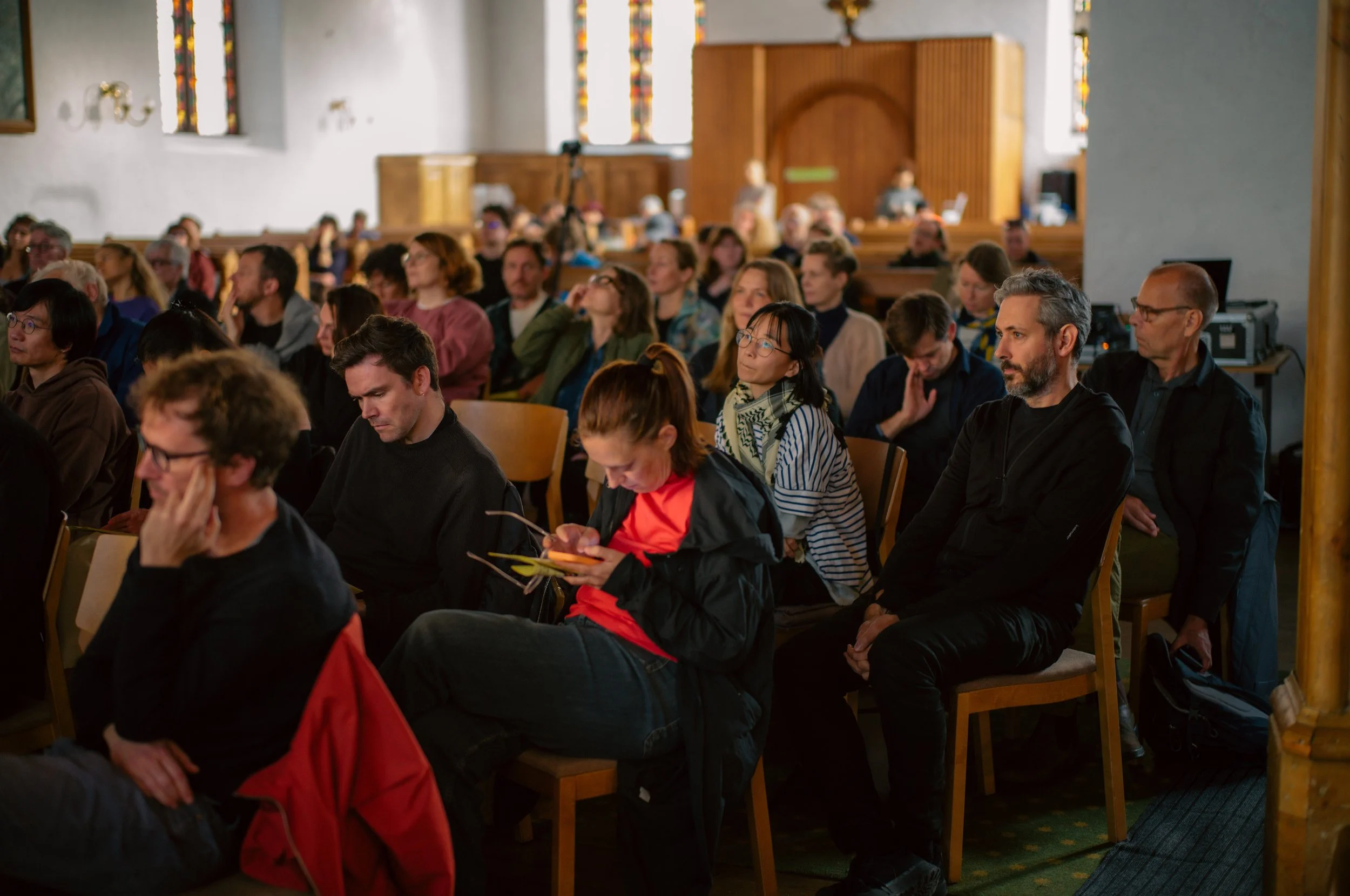
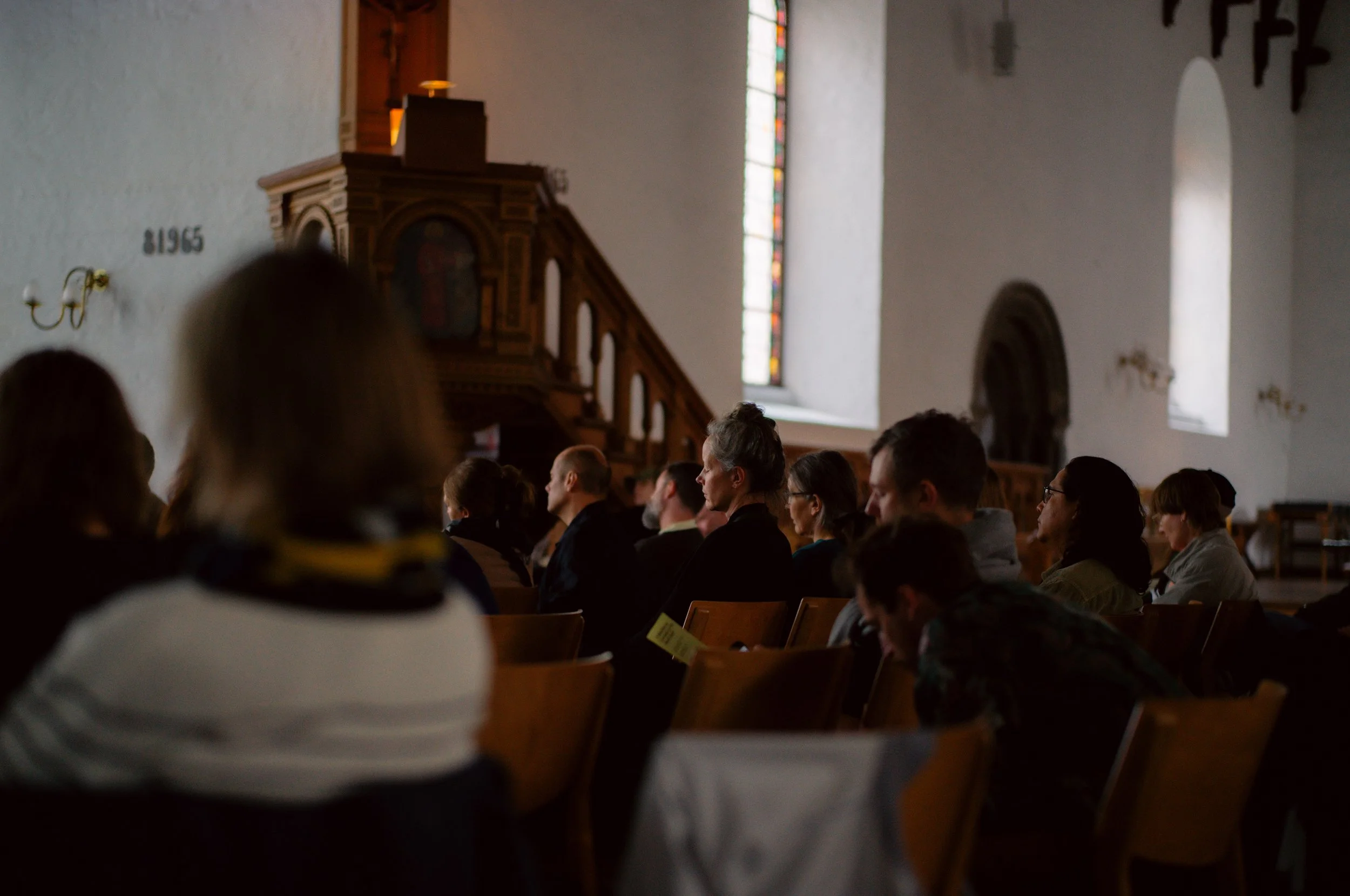
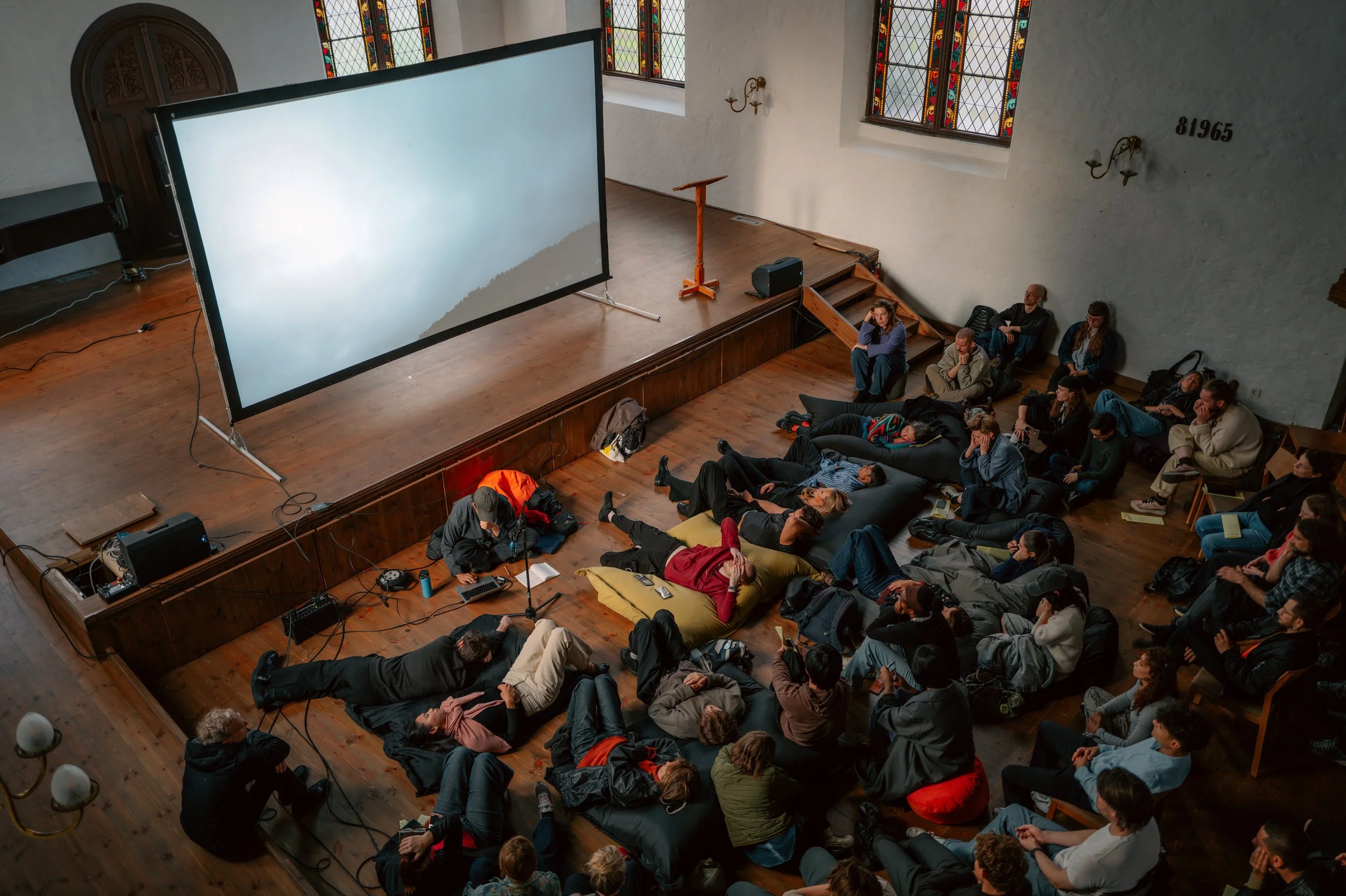
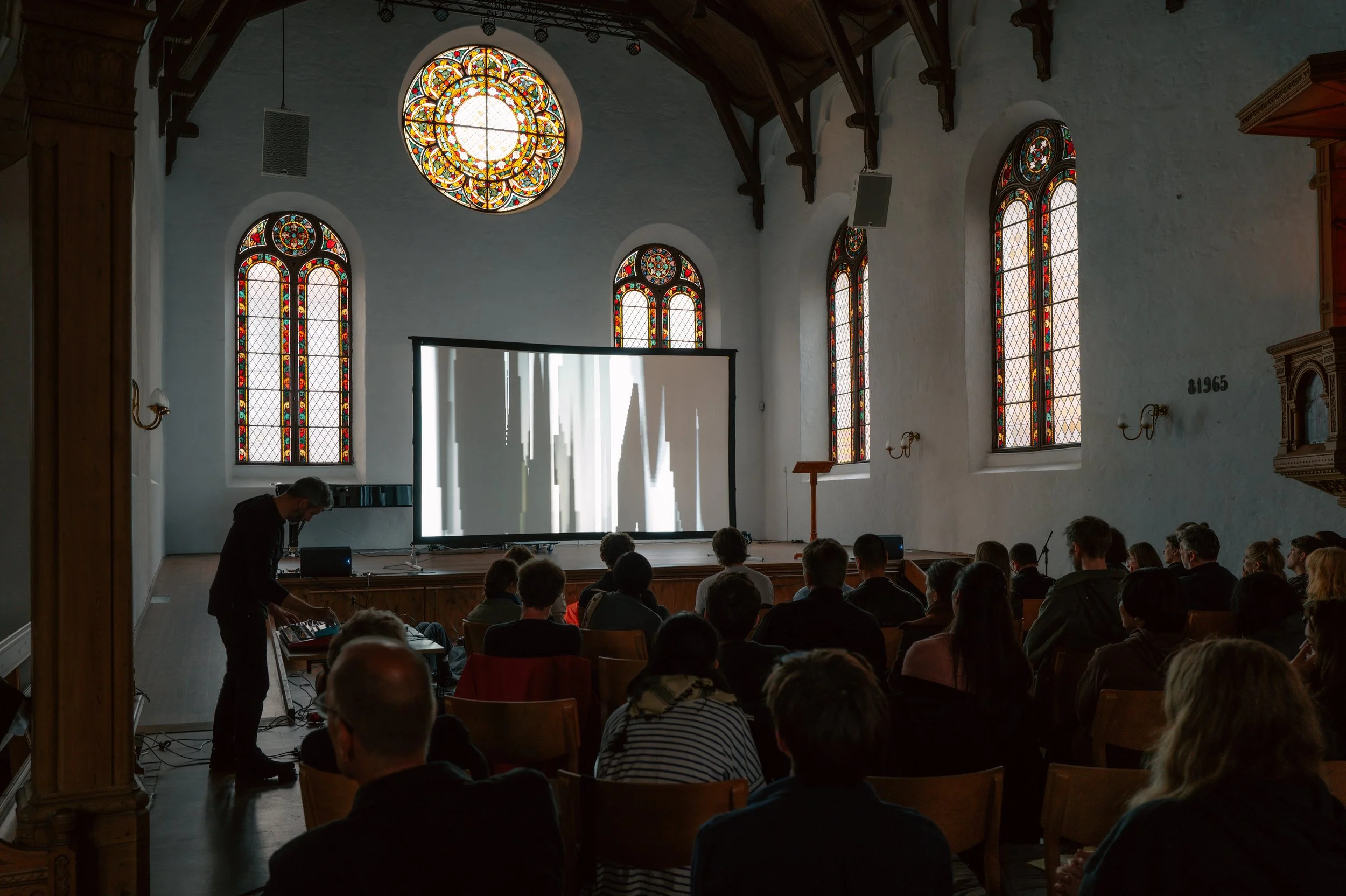
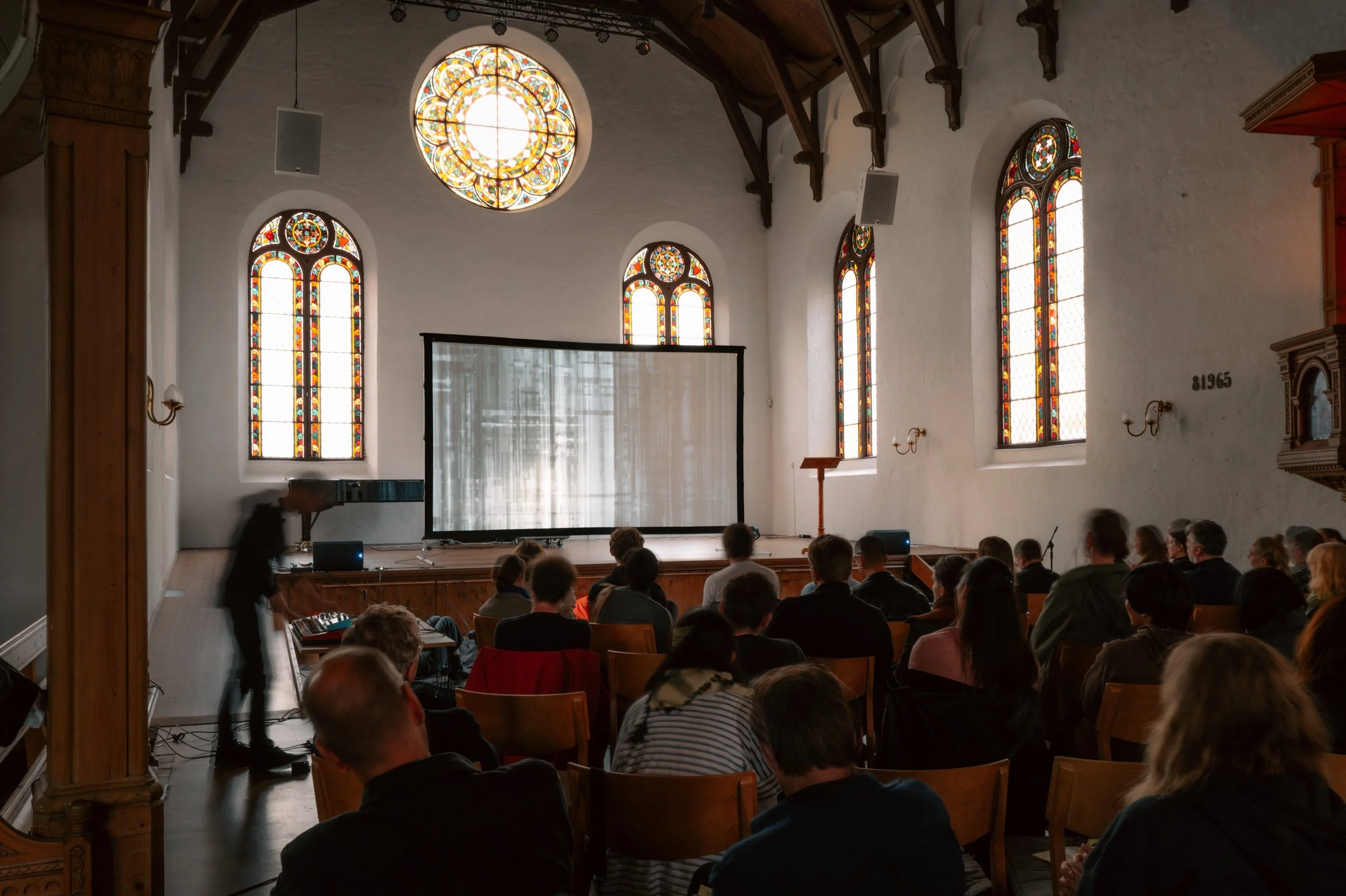
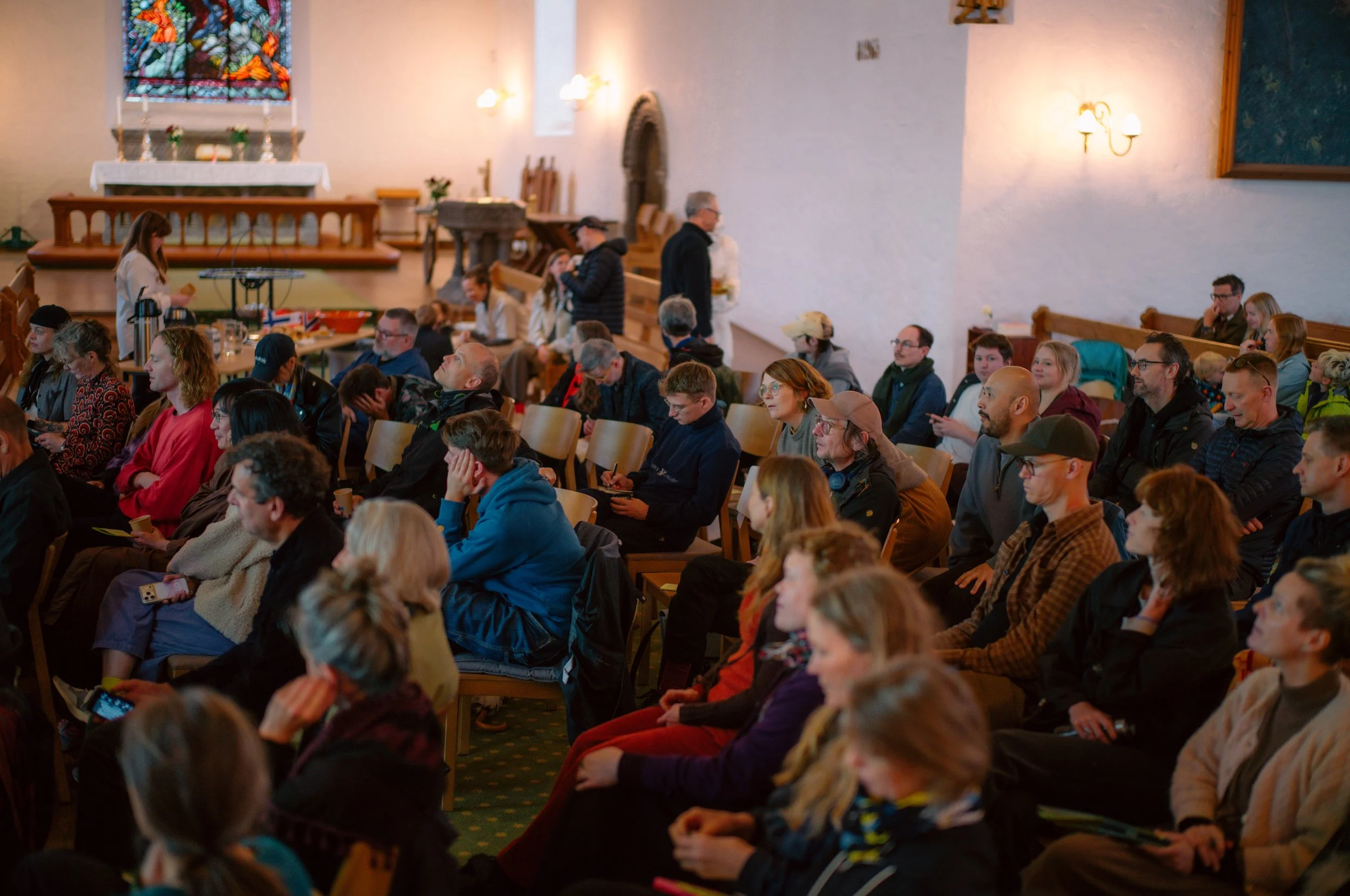
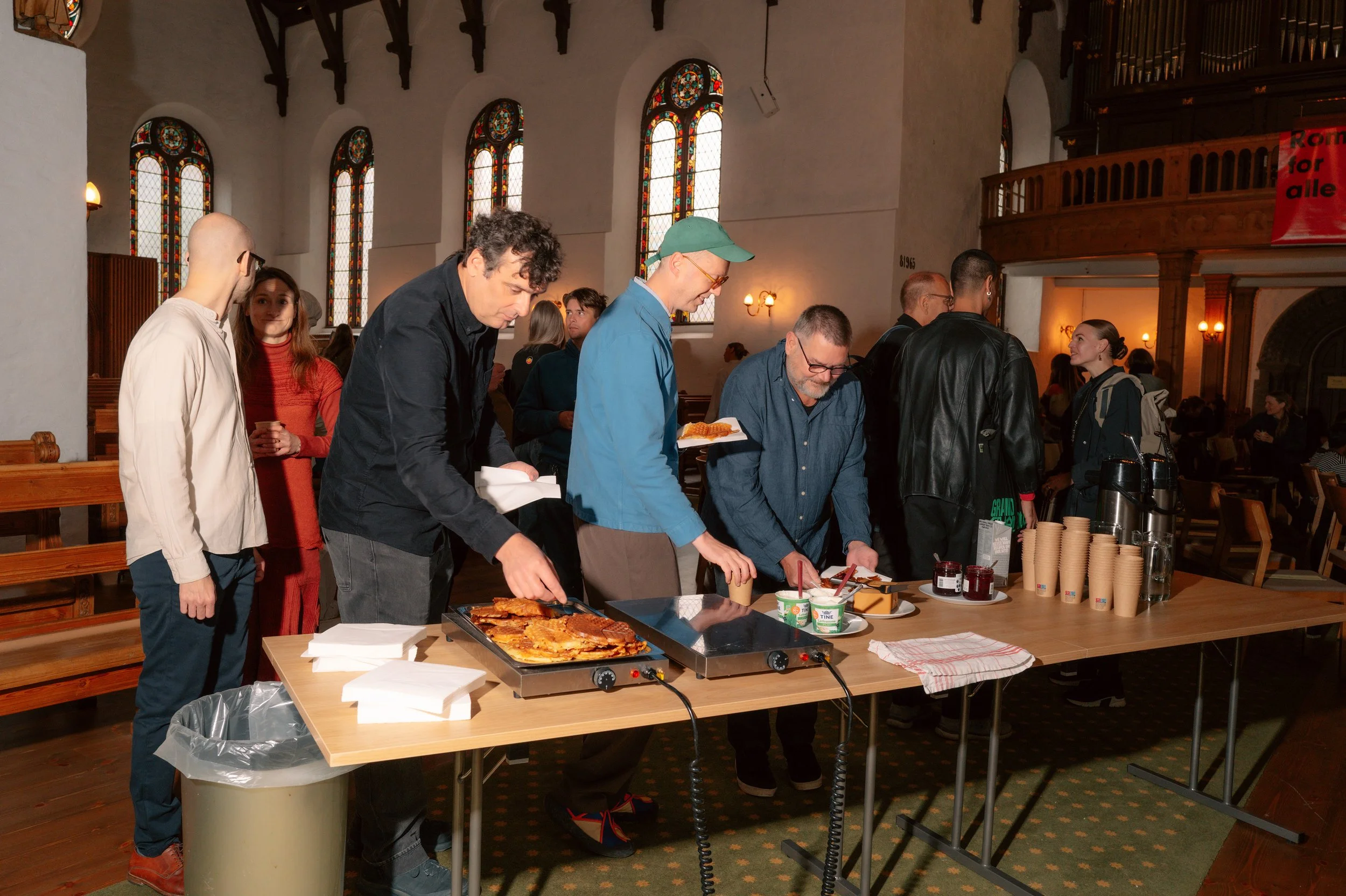
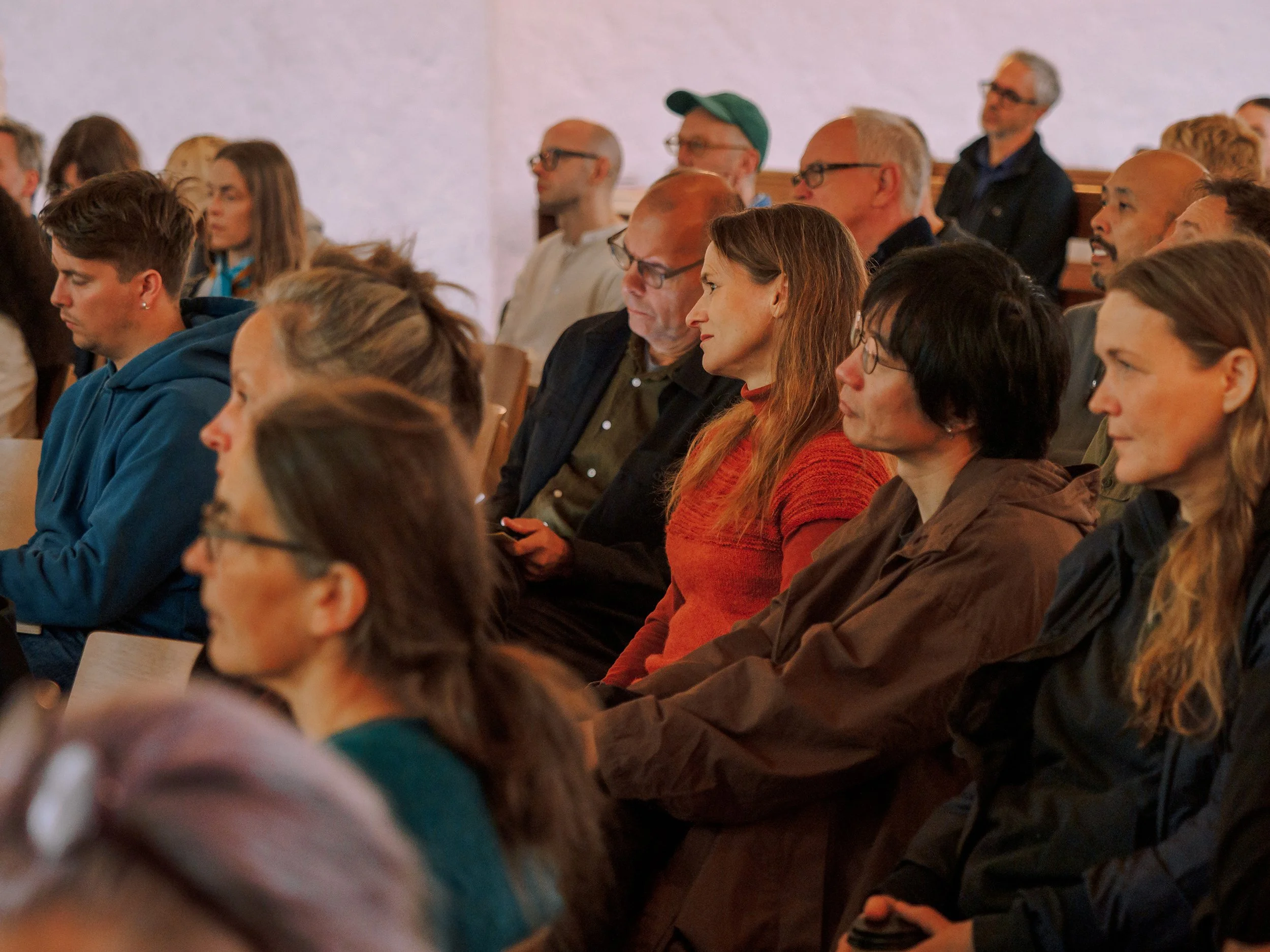
Two years before its sixth edition, Bergen Assembly began by bringing people together to think about what it might become. Convened by Lucia Pietroiusti and Filipa Ramos, A Machine as Complex as the World Itself gathered artists, scientists, musicians and audiences at Korskirken on 11–12 September 2026. The event opened a public research process through which Bergen Assembly 2028 will take shape.
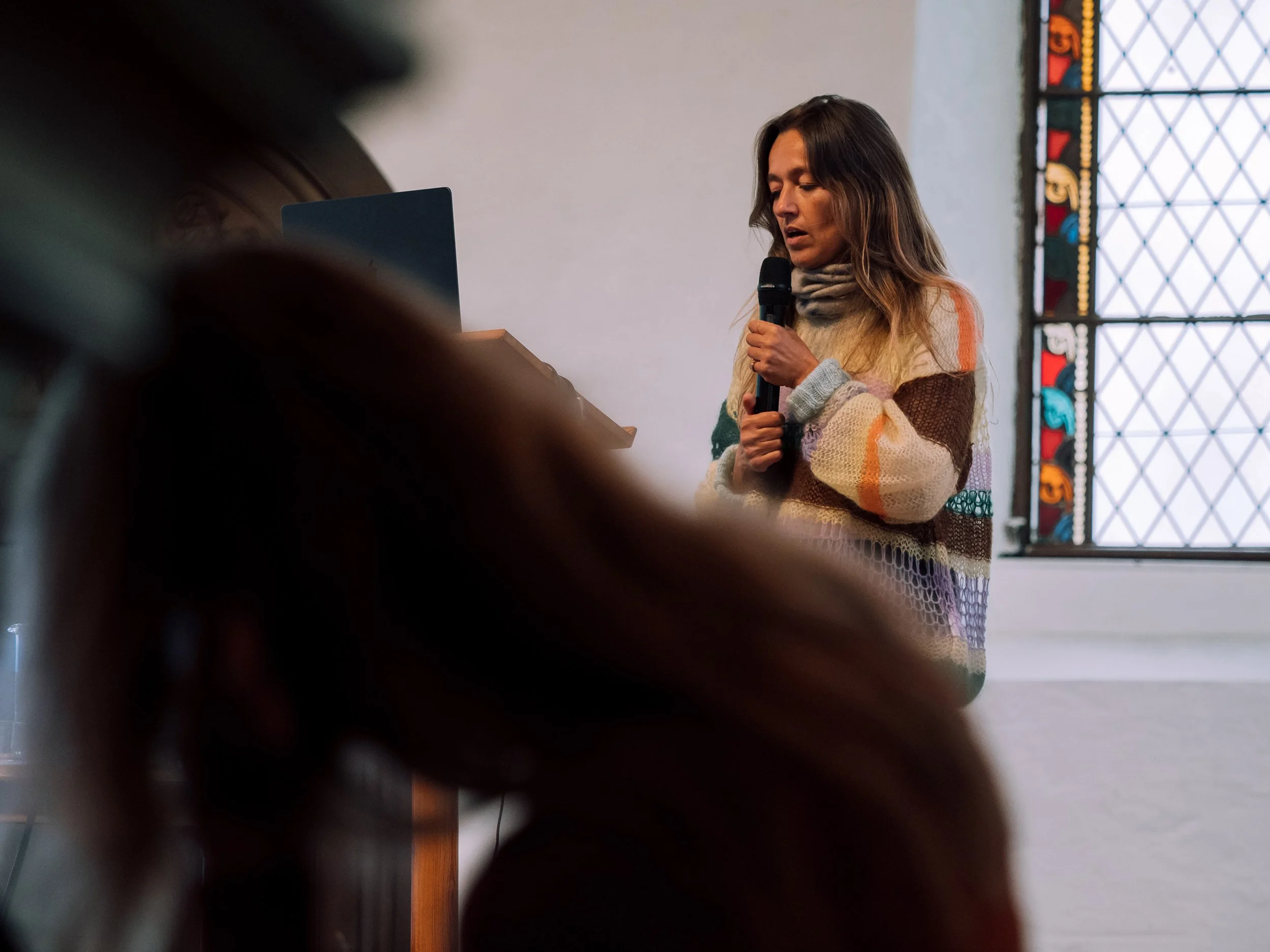
In their opening remarks, Ramos and Pietroiusti suggested that gathering could itself be understood as a technology: a means of producing relationships, testing ideas and allowing encounters to change the direction of a project. The question was how technologies shape us, including those we practise without necessarily recognising them as technologies. Their discussion moved between computation and ordinary skills—mending, fermenting, working with materials—before extending beyond the human. Nests, webs and biological networks unsettled the assumption that technological invention begins with us. Humans, Ramos suggested, may have arrived late in the history of technology and might leave it early.
The gathering’s title introduced a related paradox. A machine capable of reproducing the world in all its complexity would become indistinguishable from what it sought to model. Recalling a conversation about competing models of extreme weather, Pietroiusti described prediction as a process in which uncertainty persists beneath the apparent coherence of a result. In Bergen, a city whose history is closely connected to weather forecasting, this question acquired a particular resonance. The convenors’ longstanding engagement with art and ecology also prompted a pointed observation: why do we so readily attribute agency to a machine with a persuasive human voice, while struggling to recognise it in a plant or forest? Perhaps the beings we manufacture seem easier to comprehend than those on which our existence depends.
Across these opening reflections, artificial intelligence met animal consciousness, practical knowledge met mysticism, and the desire to predict encountered the limits of understanding. These exchanges offered a way into the forthcoming Assembly: an inquiry whose form would emerge through the very relationships it set in motion.
Curated and hosted by Lucia Pietroiusti and Filipa Ramos, Convenors of Bergen Assembly 2028
Lucia Pietroiusti stewards research and experimentation in art, ecology, and systems. She is Head of Research & Emergence at Hartwig Museum, Amsterdam, opening in 2028; and the curator of the 6th Autostrada Biennale (Prizren, Kosovo, 2027). She founded Serpentine’s General Ecology project (2018-2025); and curated Sun & Sea by Rugile Barzdžiukaitė, Vaiva Grainytė and Lina Lapelytė (58th Venice Biennale and tour, 2019-2025). Pietroiusti is Chair of the Board of Trustees at Forma, London.
Filipa Ramos, PhD, is a writer and curator whose long-term research investigates art's relationship to ecology. She is particularly interested in animals and time-based media. Ramos teaches at the Art Institute at the FHNW Academy of Art and Design, Basel and is Curator of the 2027 edition of LIAF. Her most recent book, The Artist as Ecologist (2025), discusses the ways in which contemporary artists embrace environmentalism.
Making Room for the Unforeseen
Carolyn Christov-Bakargiev — A Fraction After Now: the Angelic-Agentic dimension
Prolegomena to a Theory of Subjectivity in the 21st Century
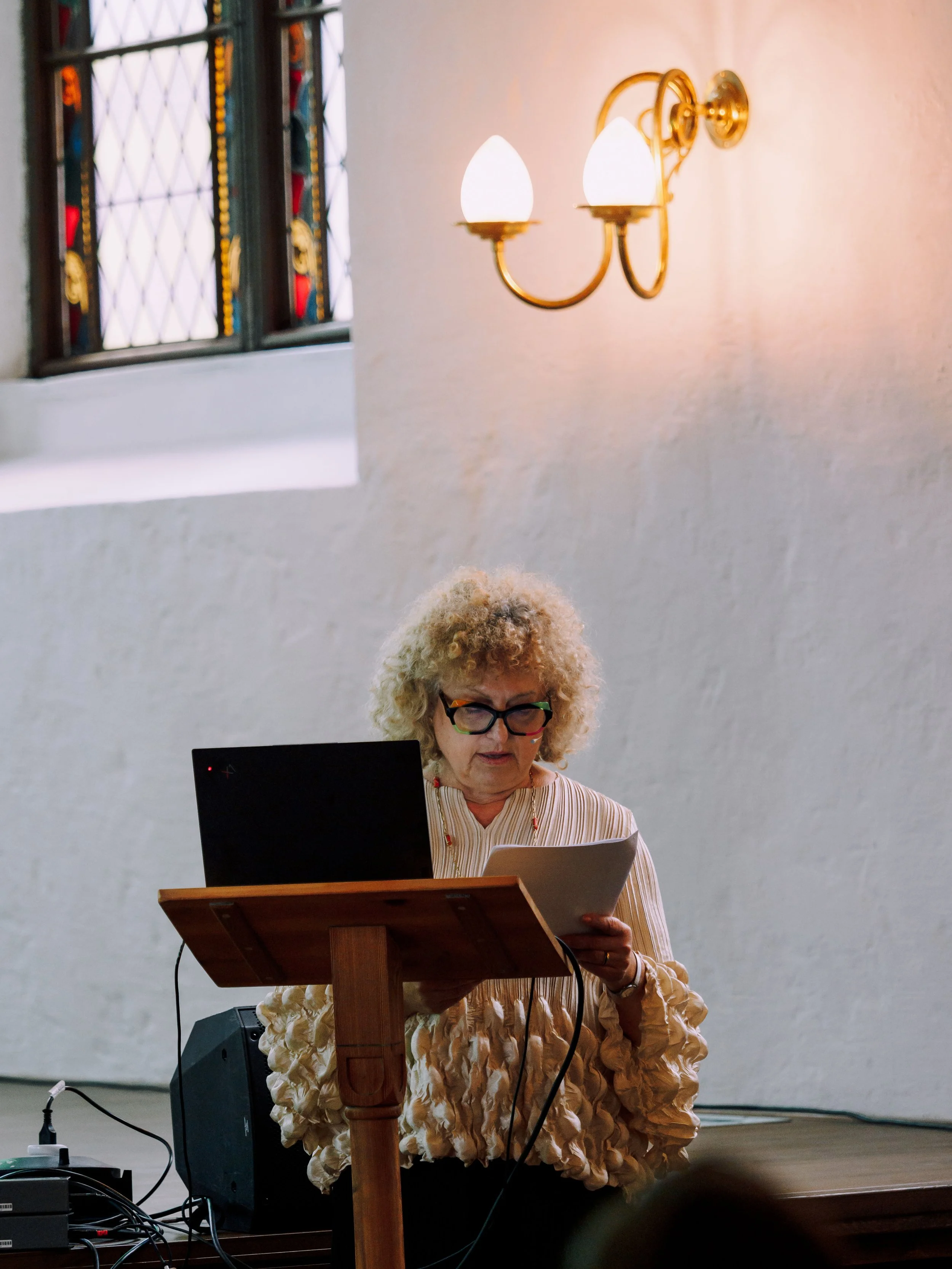
Carolyn Christov-Bakargiev / Photo: Stian Servoss
The distinctive contribution of Carolyn Christov-Bakargiev’s A Fraction After Now: the Angelic-Agentic dimension. Prolegomena to a Theory of Subjectivity in the 21st century is its shift from what artificial intelligence can do to what kinds of people we become through using it. At a moment when AI systems increasingly execute tasks on our behalf, her lecture asks what happens to the interval in which we hesitate, interpret and discover what we want. Its strongest proposition is that the capacity to receive something unforeseen may become as important to freedom as the capacity to act.
Her distinction between the angelic and the agentic gives this question an unusual art-historical form. In the Annunciation, a message interrupts Mary’s activity and transforms her situation before she fully understands it. The computational agent, by contrast, operates towards an outcome. These figures allow Christov-Bakargiev to distinguish an encounter that changes its recipient from a procedure that transforms its inputs. The value of this comparison lies in making receptivity—a capacity easily overlooked in accounts of intelligence centred on performance—philosophically consequential.
This perspective gains urgency as AI moves from answering questions to carrying out extended sequences of actions. Research on deployed agents already examines how much autonomy users grant them and when human intervention occurs. Against this development, the lecture raises a further question: what happens when deciding what deserves our attention also becomes something we delegate?
Its sharpest insight concerns prediction. A system that anticipates behaviour can help produce the behaviour it predicts. Suggested words and recommended images enter the present before we have formulated an intention. Christov-Bakargiev’s “fraction after now” describes the pressure this places on experience: the present becomes crowded with probable next steps. What deserves attention here is the possibility that convenience gradually reduces opportunities to encounter our own uncertainty.
Her emphasis on embodiment gives this argument substance. Grief, fatigue or an allergic reaction changes the conditions under which thinking occurs. Fluent descriptions of these states do not, by themselves, establish that a system experiences them. Yet she also rejects the fantasy of an originally complete human being corrupted by technology. The question becomes which capacities we cultivate through delegation and which we cease to exercise. A 2025 survey of knowledge workers connects this concern to reported reductions in critical-thinking effort, although it does not establish lasting cognitive decline.
The lecture’s most valuable proposal emerges through Gormley’s hollow sculptures and Simone Weil’s account of attention: preserve room for what has not already been specified. Its categorical statements about machine interiority remain contestable; its broader insight does not depend on settling them. For artists, the practical implication is substantial. Artistic freedom includes protecting the time and attention through which an unexpected encounter can alter a work’s direction—and the person making it.
The Work of Receptivity
Simone Kotva — Ecologies of Ecstasy
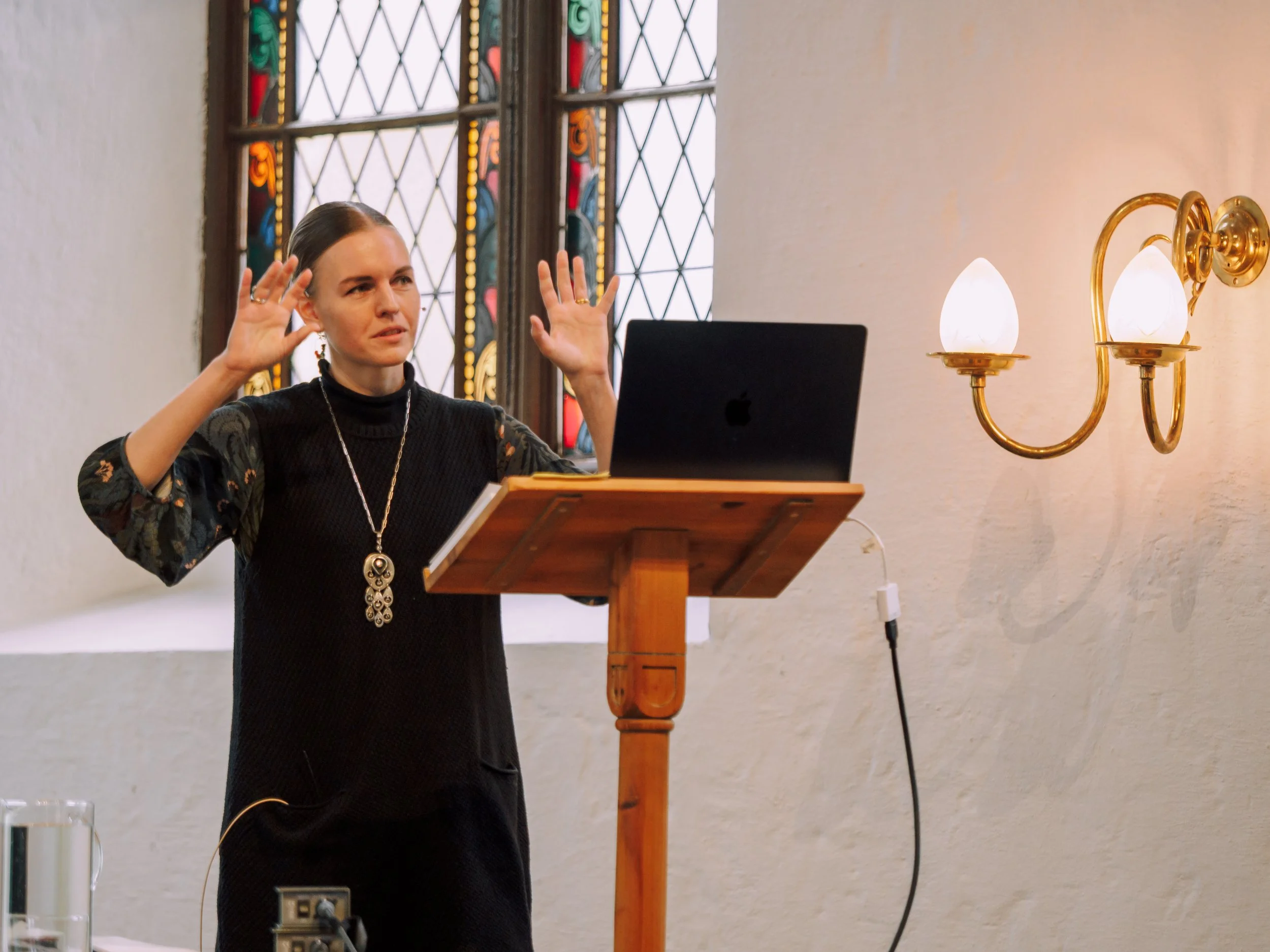
Simone Kotva / Photo: Stian Servoss
Theologian and writer Simone Kotva approaches mystical texts as invitations to experiment: to practise what they propose and attend to what happens. Teaching at the University of Gothenburg, Sweden, she combines philosophical theology with the lived practice of Western mysticism, exploring its connections with ecology and more-than-human life. Her books, Effort and Grace (2020) and Ecologies of Ecstasy (2026), bring these concerns into conversation.
Her lecture at the gathering towards Bergen Assembly 2028 left me, once again, with much to say. Something in her account stirred my experience as an artist in a peculiar way, touching on questions I have approached through practice but have not always found words for.
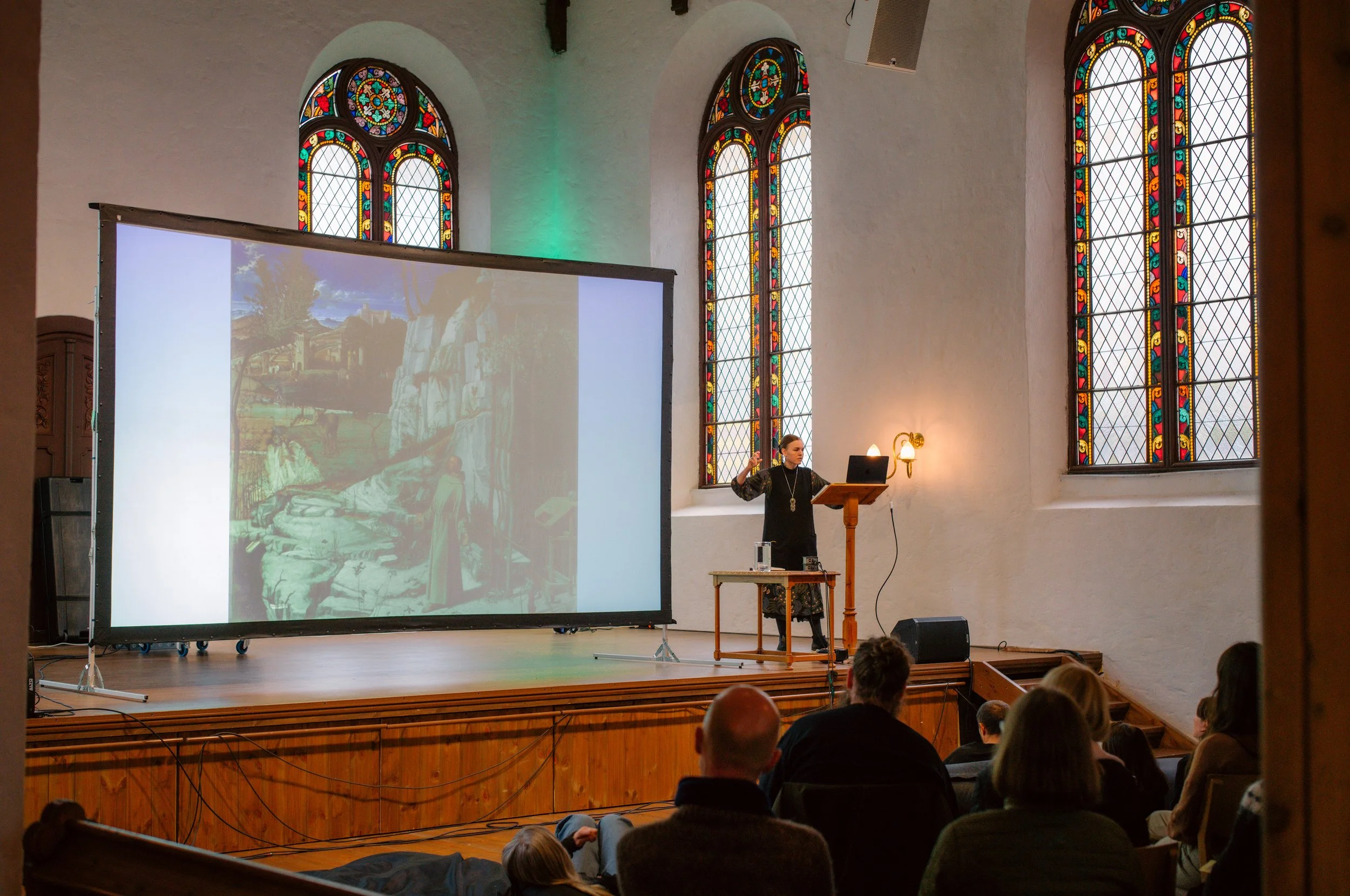
Simone Kotva began with a small permission: if her listeners drifted away from her words, they could stay with the painting. A single image of Saint Francis by Giovanni Bellini accompanied her lecture at the gathering towards Bergen Assembly 2028. The invitation quietly enacted her subject. Attention could wander, settle elsewhere and remain involved. The image offered another route into the thinking.
Kotva’s reading displaced the saint from the centre of his own revelation. Francis receives light, but so do the rocks, the tree and the animals around him. Without a visibly depicted angel to monopolise the event, the surrounding world becomes a participant. Ecstasy, in this account, belongs to a community of creatures. What initially appears to be an exceptional human experience opens onto a condition shared with other forms of life.
This was the lecture’s most striking proposition: ecstasy might name something foundational about existence. Returning to its sense of standing outside oneself, Kotva connected it with growth and displacement. A growing organism continually exceeds its previous form. Contemplative practice, she suggested, can make us attentive to movements already occurring within our bodies. Spiritual technique becomes a deliberate cultivation of receptivity, a way of relaxing into processes we ordinarily overlook.
Her description of mystical experience as a return to bodily sensation gave the argument an unexpected intimacy. The world remains where it was; our capacity to encounter it changes. She spoke of sensory awakening, of an erotic intensity that need not be sexual, and of feeling plant-like in a state of apparent passivity. Here, receptivity had activity of its own. The plant opening towards light offered an image of attention that did not depend on command or control.
The move towards plant science was suggestive, although less conclusive. Kotva found parallels between descriptions of contemplative awareness and accounts of sensing without conceptual reflection. She acknowledged that similar structures do not establish identical experiences. This qualification matters: a resemblance between vocabularies cannot settle whether plants possess subjective awareness. The comparison is most useful as an invitation to question why intelligence is so readily measured against human cognition.
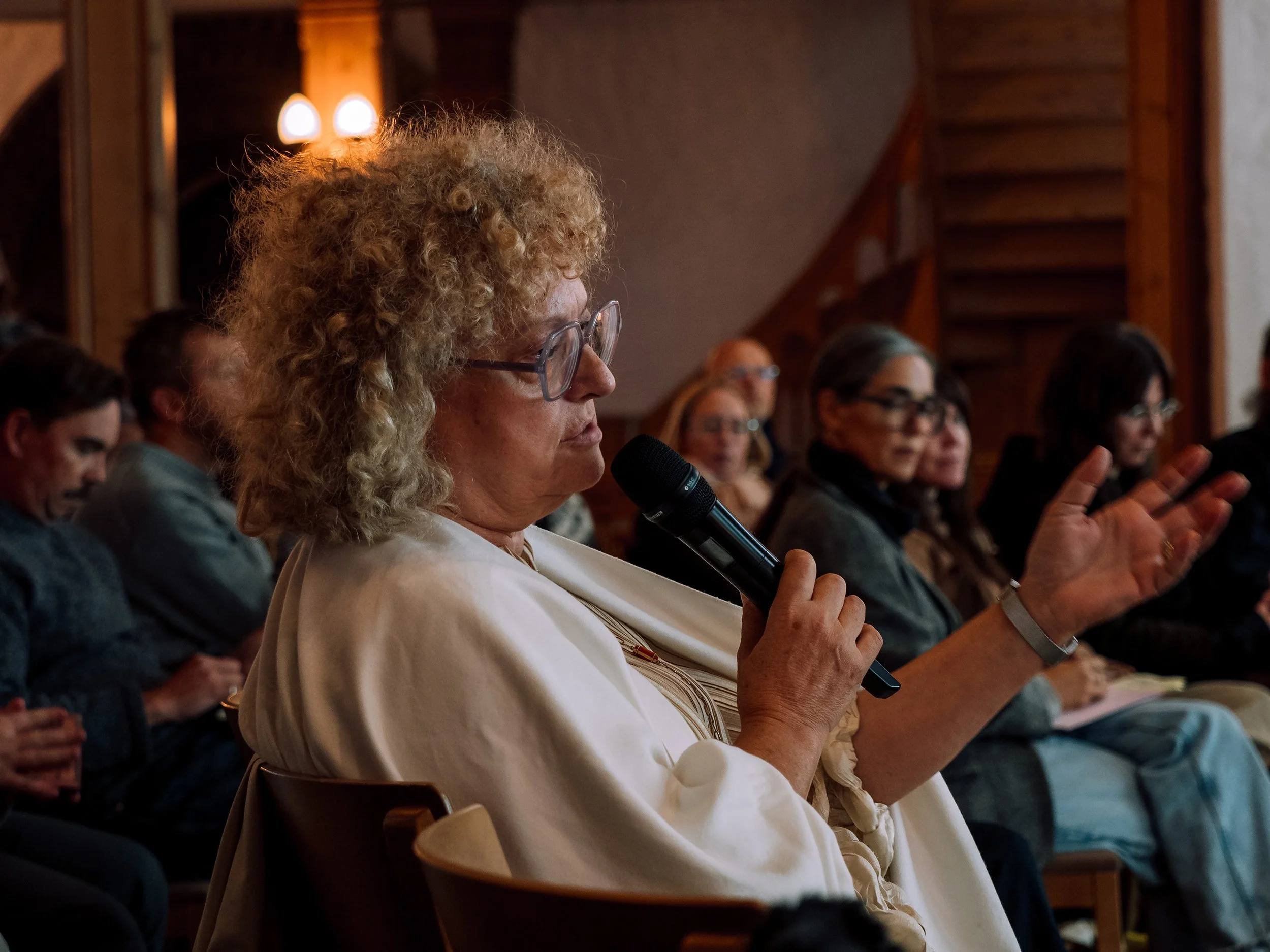
The discussion sharpened when a question from the audience asked how an individual’s contemplative practice could benefit the nonhuman world. Kotva’s answer placed cultivated attention beneath ecological action, as a capacity on which sustained responsiveness depends. Her further emphasis on pleasure made this more than an appeal to duty: joyful involvement might sustain changes in how we live and consume. The unresolved step is how such inward cultivation becomes collective practice. Yet the lecture left a compelling question for a gathering concerned with technology: what use are increasingly powerful instruments if we neglect the habits through which we notice, value and respond to what surrounds us?
Building the Capacity to Act
James Bridle — We Build to Learn, We Learn to Build
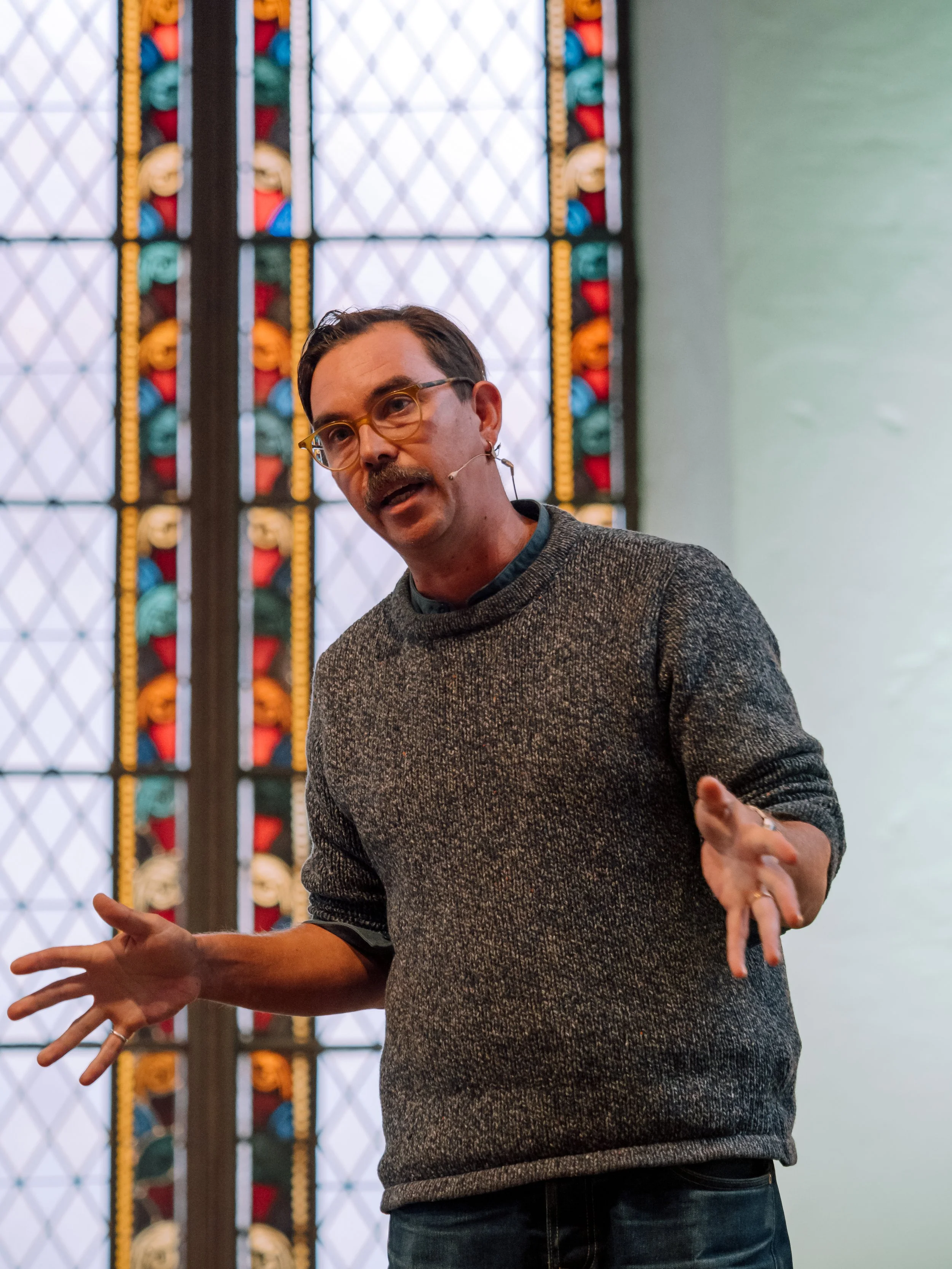
James Bridle / Photo: Astrid Olsson
James Bridle is a writer, artist and carpenter, and an established author whose work also reaches Romanian readers through Polirom’s Feluri de a fi. Dincolo de inteligența umană. Their books include New Dark Age (2018), on technology’s cultural effects, and Ways of Being (2022), on more-than-human intelligence. Their internationally exhibited artistic practice now intersects with life on a Mediterranean island: self-built housing, community energy and water management inform a forthcoming book about learning to build in uncertain times.
In We Build to Learn, We Learn to Build, presented at the gathering towards Bergen Assembly 2028, these concerns acquired the texture of everyday encounters: a lionfish, wildfire smoke, a flooded garden. Bridle’s most daring proposition emerged from revising their own belief that humans should leave the Earth alone. In landscapes shaped by millennia of cultivation, withdrawal can also mean abandoning care. Responsibility, they suggested, requires learning how to participate in environments already transformed by human activity. Their encounter with the lionfish made coexistence an uncomfortable, practical question rather than an abstract ecological ideal.
Making things became a means of recovering the ability to act. Bridle described how assembling a simple cooler and learning to connect solar panels lessened the paralysis they associated with climate anxiety. The effect was both material and personal: an intervention changed their surroundings and made further action imaginable. Their phrase ‘works that work’ named an artistic ambition to intervene directly in the processes a work addresses. The artwork becomes an occasion for learning, testing and sharing a capacity.
This argument gained political force through community energy. Producing electricity collectively also redistributes power over infrastructure and the decisions it enables. In Bridle’s account, people who begin by seeking lower bills can acquire a shared purpose extending beyond energy. Building thus becomes a form of collective organisation, with technical knowledge developing alongside relationships of trust.
Their house offered the clearest example of knowledge rooted in place. Learning from older buildings, Bridle began using washed-up seagrass as insulation. That material encounter developed into attention to living seagrass meadows, local surveys and efforts to prevent damage from boat anchoring. Construction generated obligations towards an organism. Their criticism of exhibitions presenting sustainable materials as competing miracle solutions followed directly: the transferable lesson is how people learn from local materials and histories, not the discovery of a universally saving substance.
The lecture’s credibility rested partly on its admitted failures: a solar setup broke; a dew collector rarely worked in the island’s dry conditions. These limits made experimentation a way of discovering what a place permits. Small projects cannot alone resolve structural crises, but Bridle offered something more useful than a promise of rescue: practical ways to turn apprehension into shared competence. Building changes what people know, whom they depend on and what they believe they can do together.
Ecstasy Without a Guaranteed Destination
Lars Bang Larsen — Ecstasy Zones in the Real
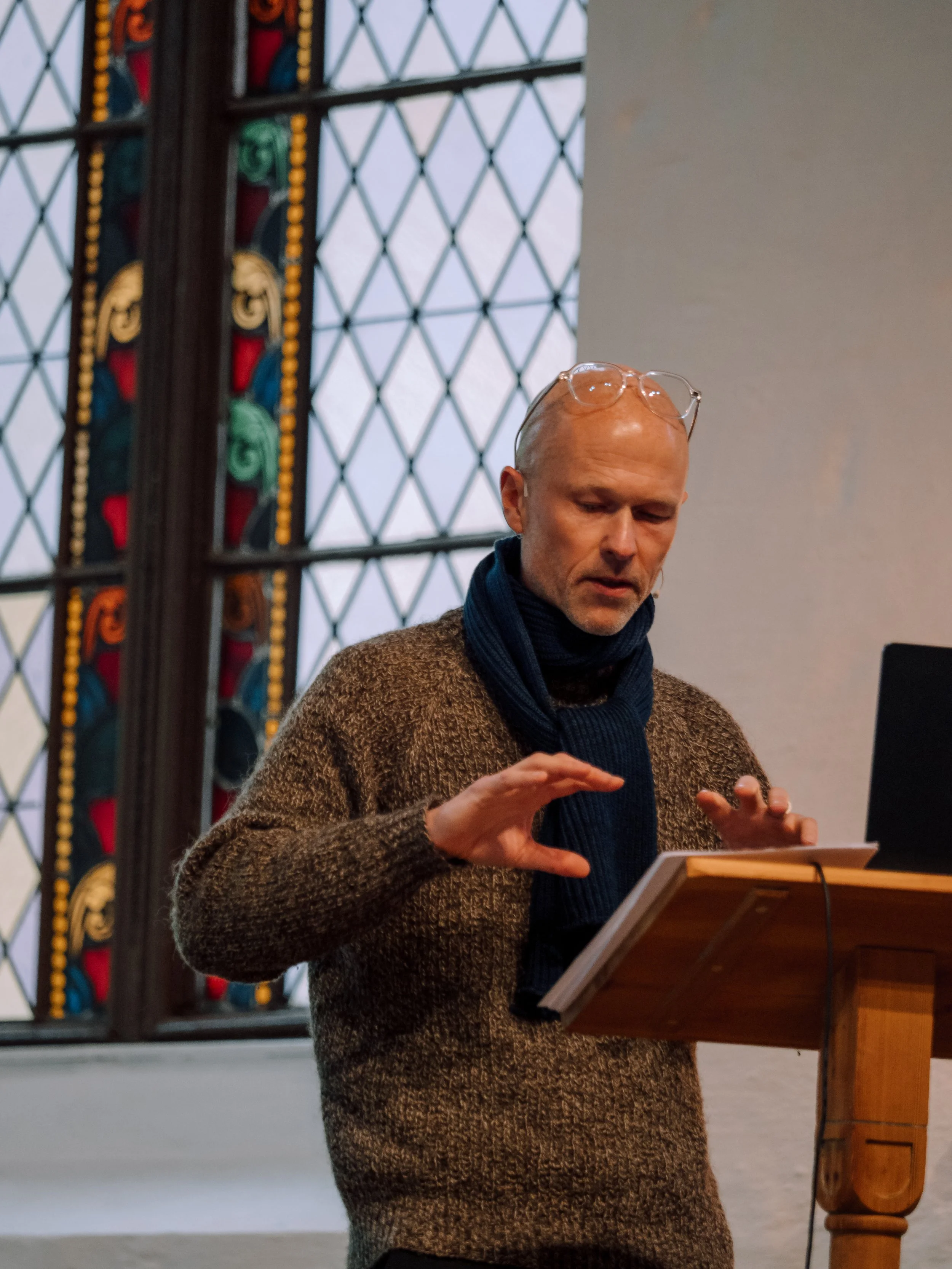
Lars Bang Larsen / Photo: Astrid Olsson
Lars Bang Larsen is a writer and curator based in Thy and Copenhagen whose research examines the limits of Western art, ideas and technologies, and the mindbodies they have shaped. His curatorial work includes the 32nd Bienal de São Paulo (2016), Mud Muses: A Rant About Technology (2019) and Vibeke Tandberg’s They Live (2026). Publications include The Model (2010), Networks (2015) and Arte y norma (2016). His doctoral research, A History of Irritated Material (2011), explored psychedelia’s movement through neo-avant-garde art, informing his inquiry into the possibility of a politics of ecstasy.
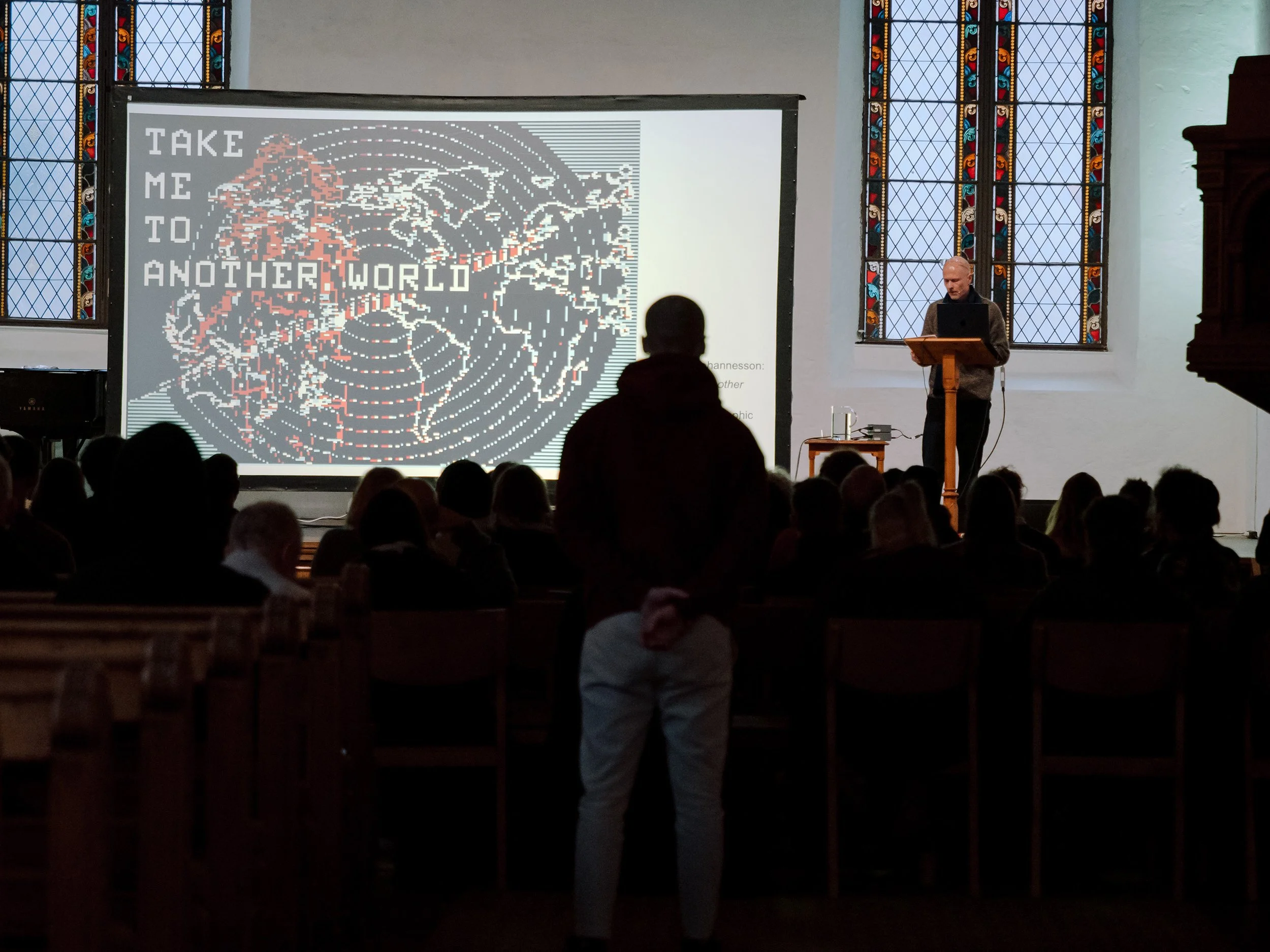
In the available closing section of Ecstasy Zones in the Real, Larsen approached ecstasy through an understated invitation in Charlotte Johannesson’s computer graphics: ‘Take me to another world.’ The request promises no destination or safe return. Its force lies in accepting that departure might also transform the person who departs. An encounter with another world unsettles the subject’s assumed place within this one.
This quiet displacement gives ecstasy a significance beyond spectacle or heightened sensation. Larsen described a passage through silences and voids, where familiar coordinates no longer guarantee orientation. Johannesson’s transition from weaving to personal computing also complicated technology’s role: a new machine could interrupt habitual ways of working and open possibilities of perception and expression. Technology becomes a potential occasion for estrangement, without guaranteeing emancipation.
The historical stakes emerge through the exhaustion of countercultural dreams. Larsen read Johannesson’s earlier weaving as registering bewilderment after the promises of the 1960s had encountered continuing injustice and commercial appropriation. What kind of hope survives when dreaming and imagining lose their political force? His answer remained deliberately tentative. Art might sustain a willingness to be displaced without supplying a finished utopia. Ecstasy here allows an uncertain relation to the real to persist beyond the collapse of familiar promises.
The ensuing discussion exposed a productive contradiction: exhibitions attract people seeking transformation, yet ecstatic experience resists representation and institutional control. Larsen acknowledged that expectations of art retain metaphysical dimensions, including the desire to be profoundly affected. His response left room for modest forms of solace and receptivity alongside dramatic transcendence. An exhibition can make space for an encounter whose consequences it cannot prescribe.
The most consequential qualification concerned politics. Ecstasy has no automatically liberating outcome. Responding to a question about its emancipatory and destructive possibilities, Larsen insisted on the importance of the body, location and historical situation. His expanded reading of psychedelic ‘set and setting’ moved from individual mindset to social and ecological conditions. This is the report’s strongest takeaway: intensity alone cannot establish an experience’s political value. What matters is who undergoes it, under which conditions, and what relations it makes possible. Ecstasy remains worth considering precisely where it unsettles certainty without becoming another promise of guaranteed transformation.
Learning to Inhabit Thought
Kei Kreutler — Interior Computing
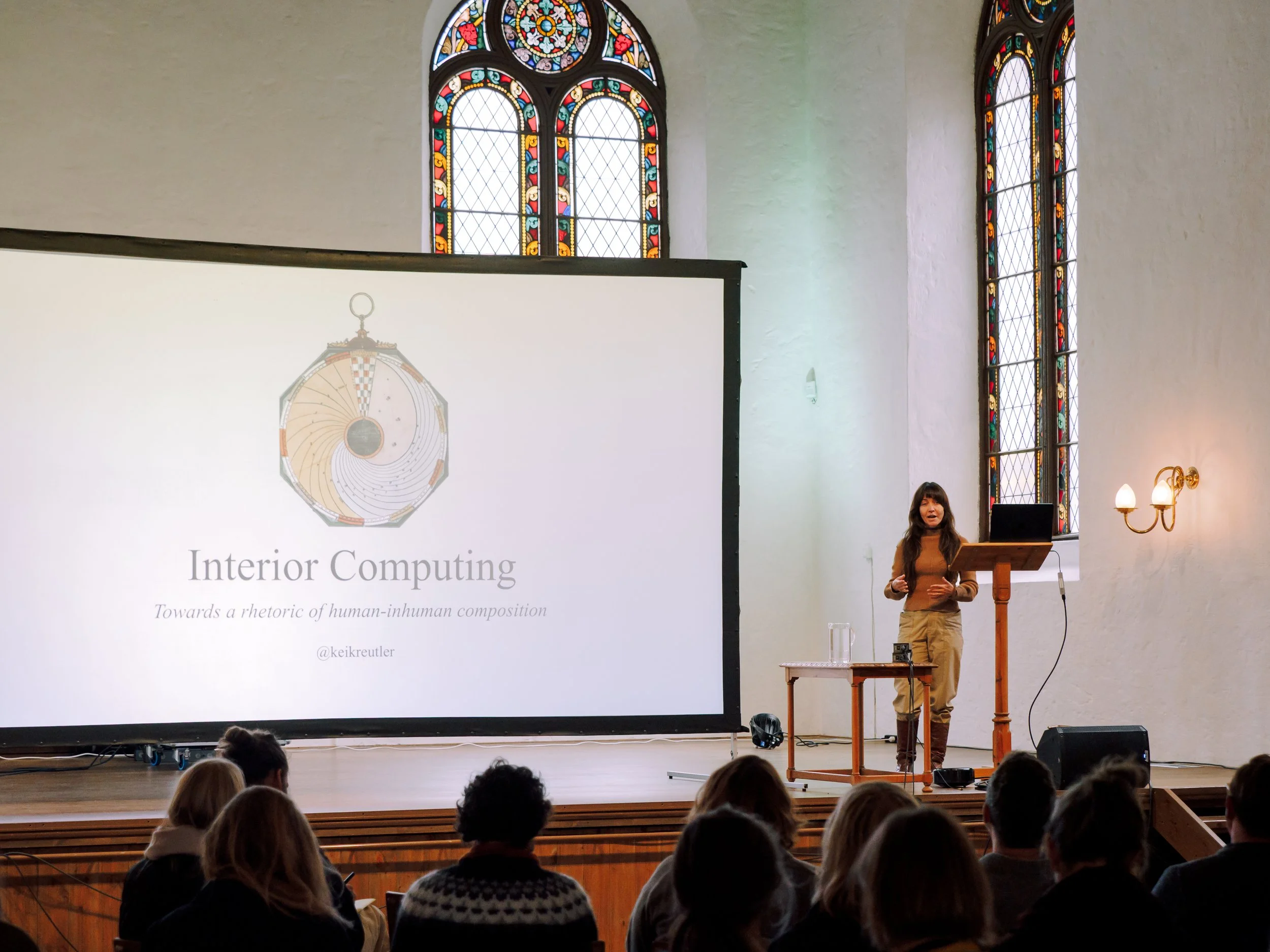
Kei Kreutler / Photo: Stian Servoss
Writer and researcher Kei Kreutler’s Interior Computing approached artificial intelligence through an unexpected historical companion: the medieval arts of memory. Beginning with a monk who encounters a dragon at the threshold of his monastery, the lecture asked how remembered images acquire enough force to organise lived experience. The story introduced its central concern: memory is a practice through which people compose thoughts, orient themselves and inhabit worlds. Possessing data does not, in itself, accomplish any of these things.
Kreutler’s account of memoria and inventio challenged the familiar association of memory with passive storage. In the traditions she discussed, remembering supplied material for invention. A memorised text became available for movement, recombination and interpretation. The monastery itself supported this activity through architecture, images and routines. Thinking emerged through a relationship between an interior practice and an organised environment. The lecture’s strongest historical insight was that technologies of thought include the spaces and habits that make certain forms of attention possible.
Her distinction between topography and topology carried this argument towards computation. A topographic map records positions and distances; a topological one foregrounds connections and possible routes. Kreutler used this difference to describe composition as finding a way through associations. She then proposed a comparison with navigating the relational structures of language models. The analogy offered a vocabulary for orientation within systems whose operations exceed an individual’s capacity to survey them completely.
This was also the lecture’s boldest and most delicate move. Comparing neural networks with mnemonic practices can make unfamiliar computational processes approachable, but it does not make them equivalent to human recollection or establish machine subjectivity. Kreutler’s question about interiority as topology suggested a way to discuss structured relations without presuming an experiencing self inside the machine. Her examples of steering model outputs made the stakes tangible: changing which associations are emphasised can alter the character and direction of what is produced.
The political argument followed from this account of composition. If thought develops through its environments, the organisation and ownership of those environments matter. Kreutler asked what happens when corporate systems assemble vast inventories of cultural material and enter classrooms and everyday life without equally developed practices for engaging with them. Their influence extends beyond supplying answers to shaping which associations become available, persuasive or habitual.
Crucially, she resisted a simple story of technology emptying a previously self-contained mind. Human interior life has always formed through encounters with texts, tools, organisms and surroundings. The task is therefore to cultivate more deliberate relations with the systems through which we think. The lecture’s distinctive contribution was to treat AI interaction as a cultural practice requiring education, judgment and attention. Its historical comparisons are most compelling as questions to work with: what are we rehearsing when we use these systems, and what kinds of thought are those rehearsals making possible?
When the Sky Answers Back
Marcus Coates — An Unsolicited Dialogue with the Sky
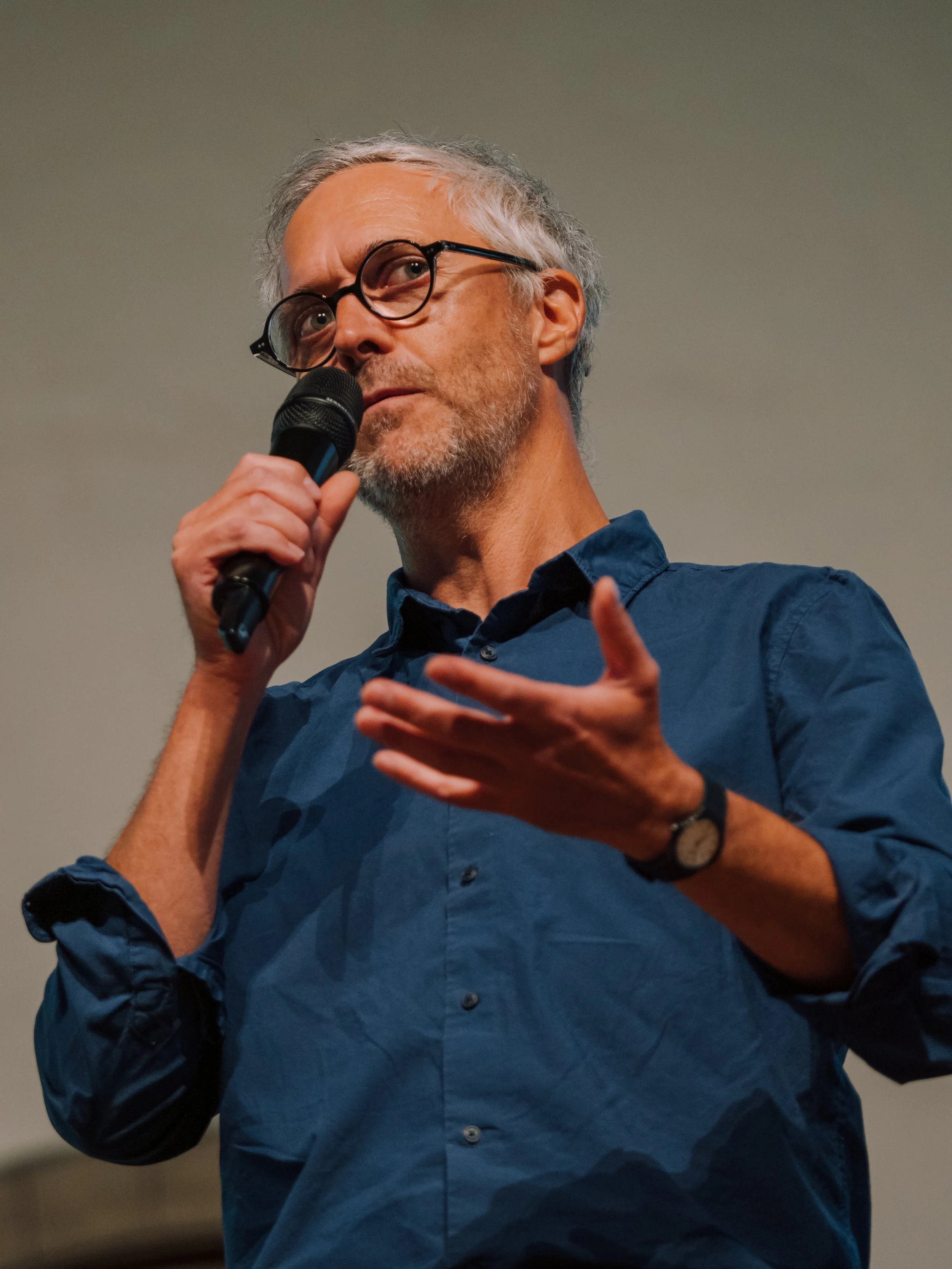
Marcus Coates / Photo: Astrid Olsson
Marcus Coates is an artist and amateur naturalist who lives and works in London. Through performances driven by radical empathy, he tests how far we can understand others, across communities and species. His collaborators include ornithologists, psychiatrists and palliative care consultants. Artist in Residence at King’s College, Cambridge, in 2025/26, and a former Visiting Fellow at Jesus College, Oxford, he brings social and ecological concerns into encounters that are often as unsettling as they are funny.
For months, a man stops at an upstairs window before bed and apologises to the sky. He cannot quite explain why. Then, one evening, the sky answers. “You’re the one talking to me, mate. Who do you think I am?” With this wonderfully abrasive reversal, Coates’s An Unsolicited Dialogue with the Sky brought the gathering towards Bergen Assembly 2028 to a playful close. A private ritual becomes an argument with the atmosphere.
The first difficulty is the voice. Why should the sky sound like a swearing Cockney? Because anything softer, it explains, would be dismissed as “new age shit.” Coates makes the joke cut both ways: the narrator wants contact with something beyond himself, but objects when it fails to sound suitably profound. The sky refuses personhood, yet must borrow a human voice to be heard. Beneath the banter lies a disquieting question: how much of what we call listening is simply waiting for the world to confirm our expectations?
Then the conversation enters the body. Sound is “moving air,” the sky explains, and “air is me.” Breathing draws the apparent outside into lungs, blood and thought. What seemed remote is already intimate. A bird breathes; the air circulates; the man breathes too. The performance’s boldest proposition arrives with blunt simplicity: “You’re you and you’re not you. You’re everything and you’re nothing.” Individuality and ecological dependence must somehow be held together. The sky is overhead, but the speaker cannot stand outside it.
Still, he wants evidence. Clouds resembling a dog prove underwhelming; the snow that once saved him from a school test was a “total coincidence.” The sky has no miracles to dispense. It answered because his apology asked for nothing, yet he keeps trying to extract a guarantee. Finally, climate anxiety breaks through the comedy: “Are we going to be okay?” This time, there is no reply.
That silence gives the ending its force. Coates offers no planetary thumbs-up, no reassurance that attention will purchase survival. Instead, the nightly ritual changes. At the window, the man now says “thank you.” Gratitude arrives without certainty. The performance makes this small alteration feel consequential: an encounter begins when the world stops behaving like a service that owes us answers. The sky’s last gift is a different way of addressing what keeps us alive.
The Manual for Superfluous Motions
Lua Vollaard
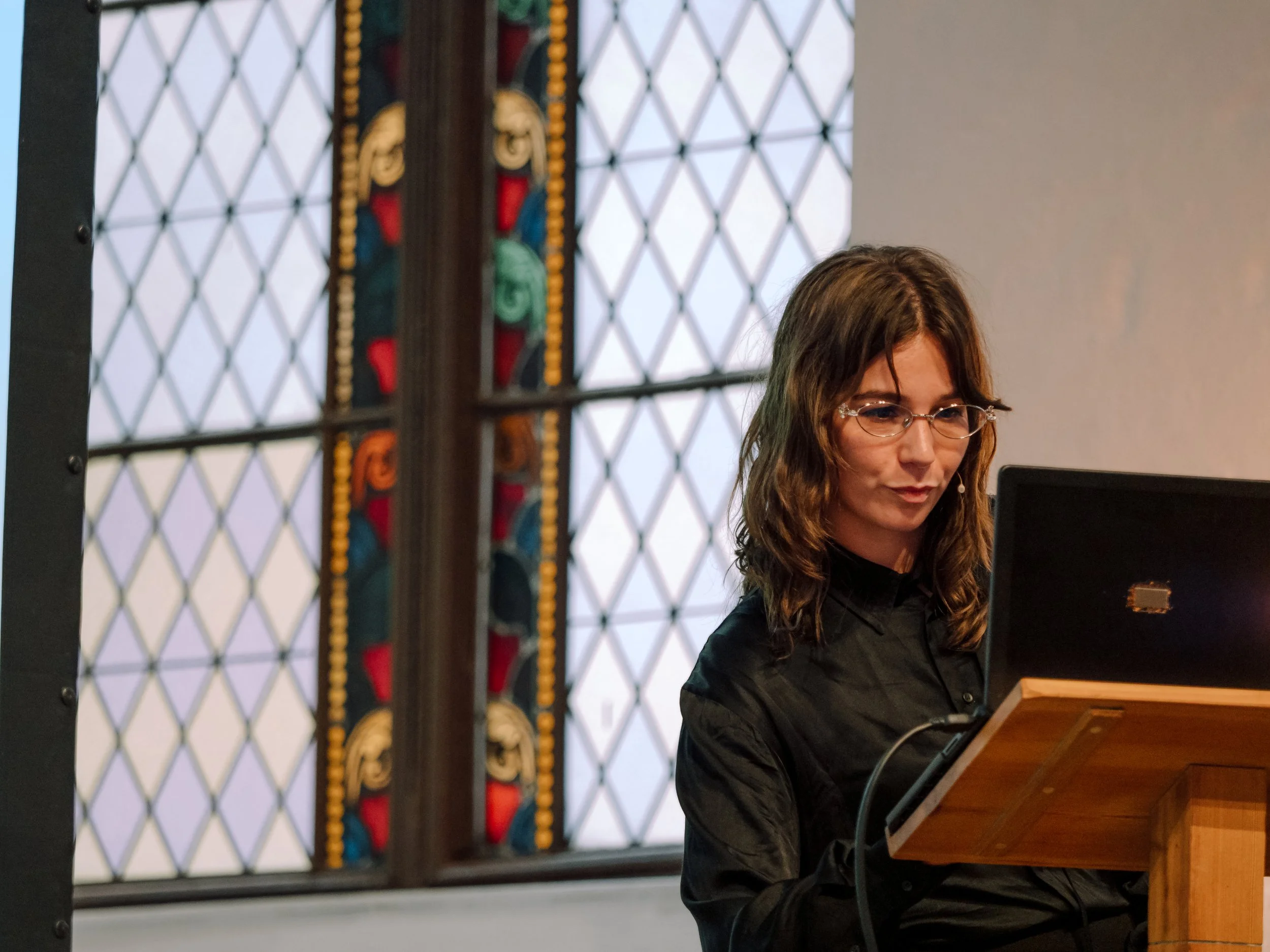
Lua Vollaard / Photo: Astrid Olsson
A discussion of microchip manufacturing begins, unexpectedly, with the Virgin Mary. In the opening account of Lua Vollaard’s lecture-performance, divine grace streams from Mary’s fingers in golden threads. These become a provocative visual counterpart to the wires connecting electronic components. Delivered in a Protestant church, the comparison brings religious imagery into contact with the supposedly secular language of technological progress.
Vollaard’s central argument is that computing has a material history inseparable from women’s labour. Behind the promise of automation stand hands trained to weave, assemble and connect. The account moves through semiconductor factories and the stitching of Apollo’s core rope memory, showing how employers recruited dexterity associated with domestic work into industrial production. The apparent weightlessness of information depends on repetitive bodily effort.
The strongest insight concerns what technological images allow us to see. Corporate representations of luminous, almost miraculous fabrication can conceal the workers and conditions that make production possible. Vollaard’s connection between religious iconography and technological publicity invites scrutiny of how industry manufactures belief alongside machines.
The takeaway is a necessary change of focus: to understand computing, look at the fingertips as well as the finished device. The history of digital intelligence is also a history of whose skill becomes invisible once it has been incorporated into a machine.
Feeling and Foreseeing
Ellen Viste
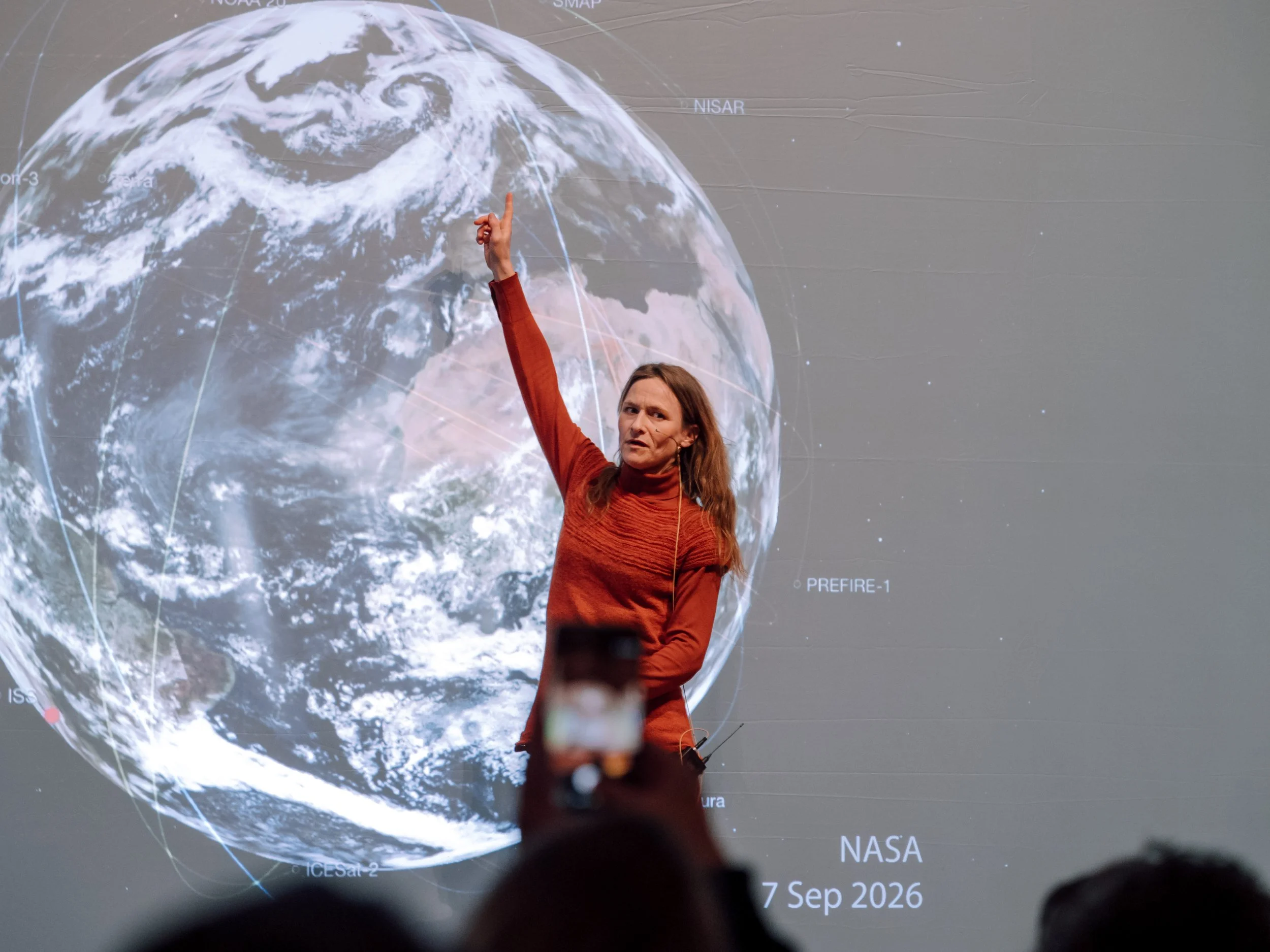
Ellen Viste / Photo: Astrid Olsson
Ellen Viste brings an apparently unreliable witness to her lecture: her favourite thermometer. Its mercury column has separated, leaving it responsive to temperature but disconnected from the scale it is supposed to follow. It remains beautiful, she explains, even if its numbers no longer tell her whether the room is warm. The object turns an abstract question about scientific knowledge into something immediately graspable: what makes a measurement meaningful?
Viste’s main argument is that feeling, measuring and predicting are connected practices, each requiring interpretation. We experience temperature through our bodies, but we also learn to feel through numbers. Ten degrees suggests a jacket; other values acquire associations through habit and public discussion. A scale makes sensation communicable, provided we share its conventions and trust its instruments.
Her account of the Bergen School of Meteorology extends this argument. Before powerful computers could solve forecasting equations, meteorologists plotted observations and drew connections. Maps and physical models helped make moving air intelligible. Drawing was part of scientific discovery.
The lecture’s sharpest proposition comes towards its conclusion: a prediction describes what happens within a constructed model, whose relevance depends on how well it represents the phenomenon under investigation. Simplification is unavoidable; choosing what to preserve is decisive.
What stayed with me is how to judge a model by its fitness for a particular question. Viste makes uncertainty practical: useful forecasts require an understanding of what instruments measure, what models omit, and where interpretation enters.
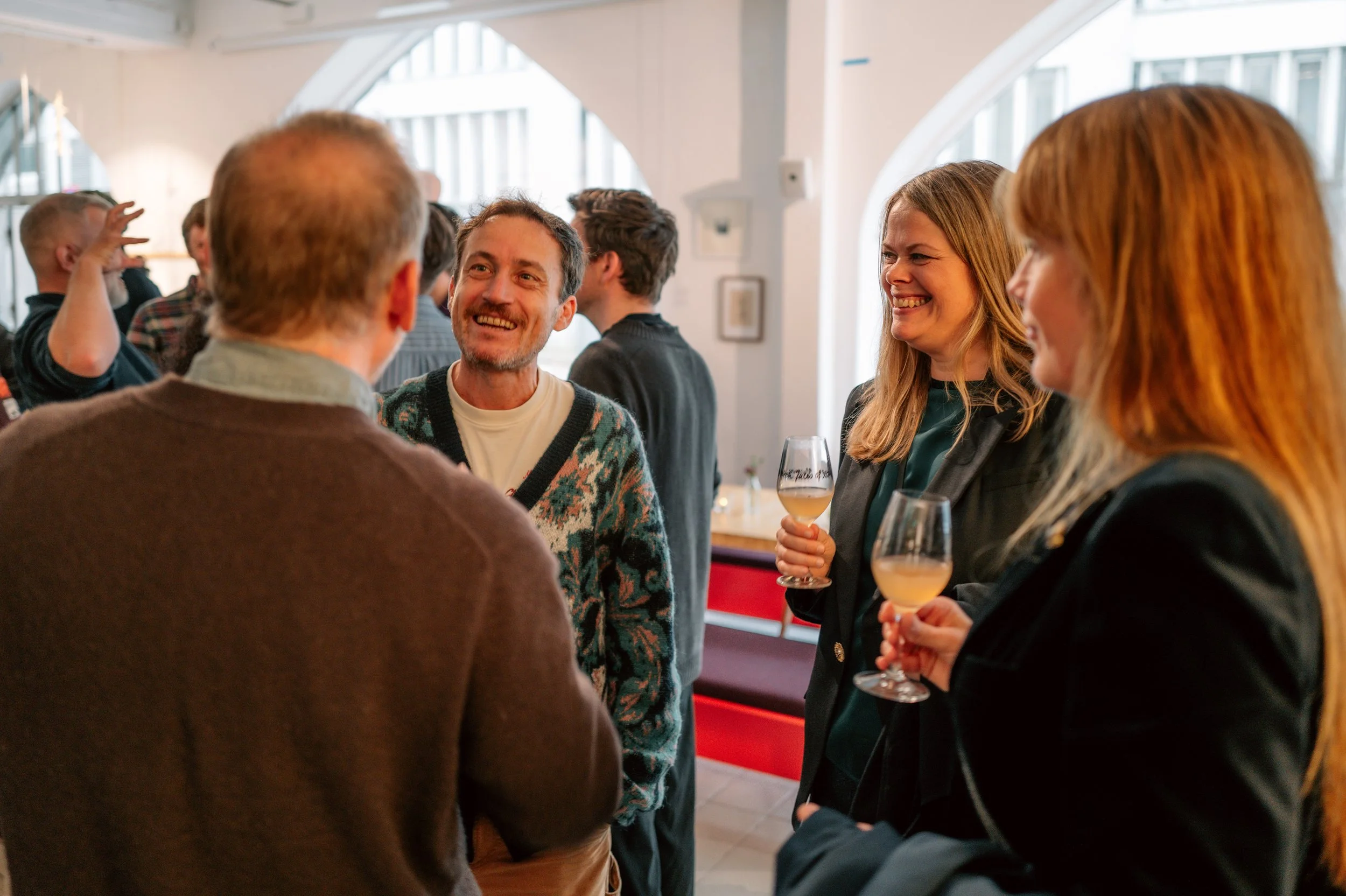
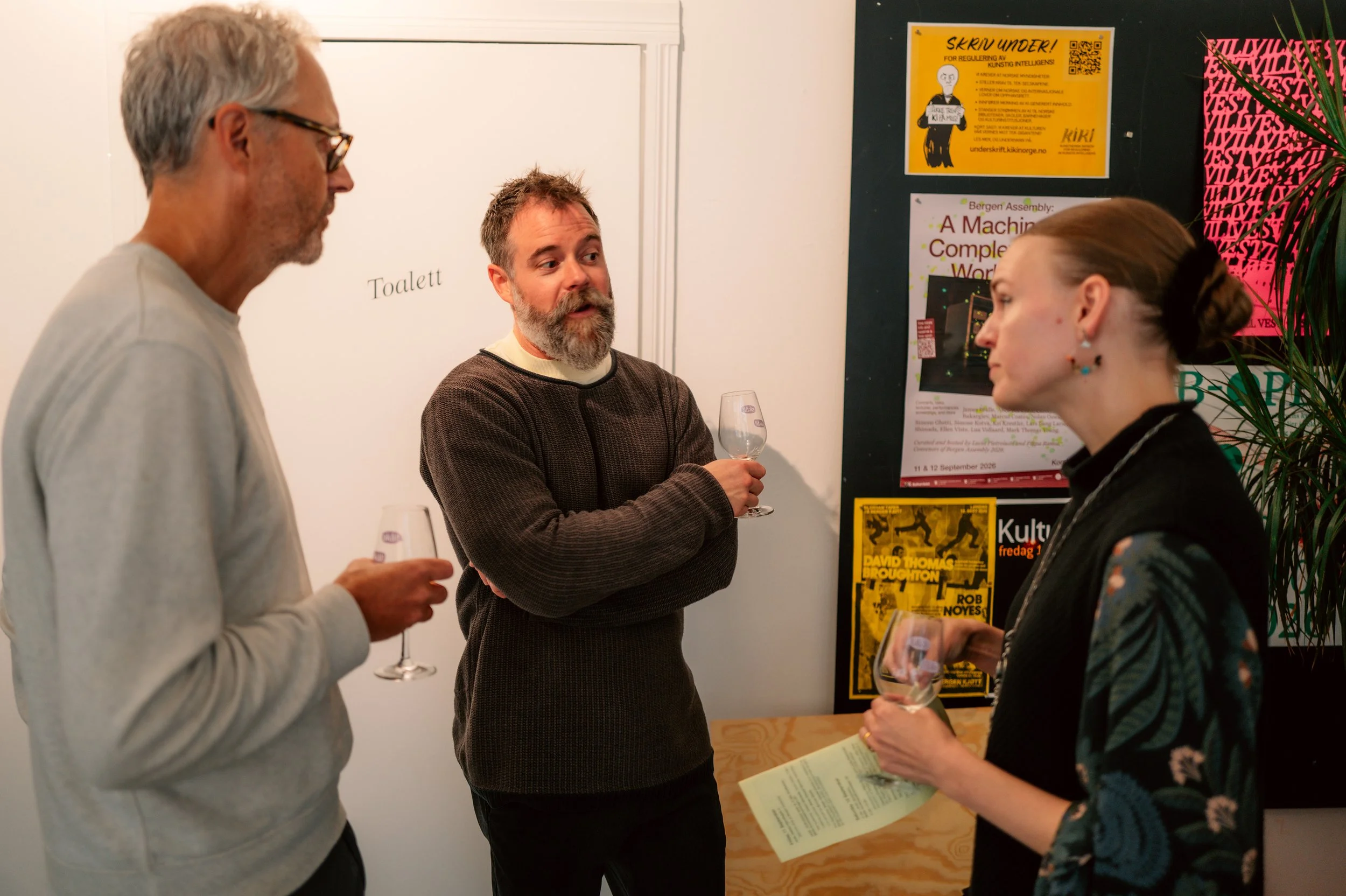
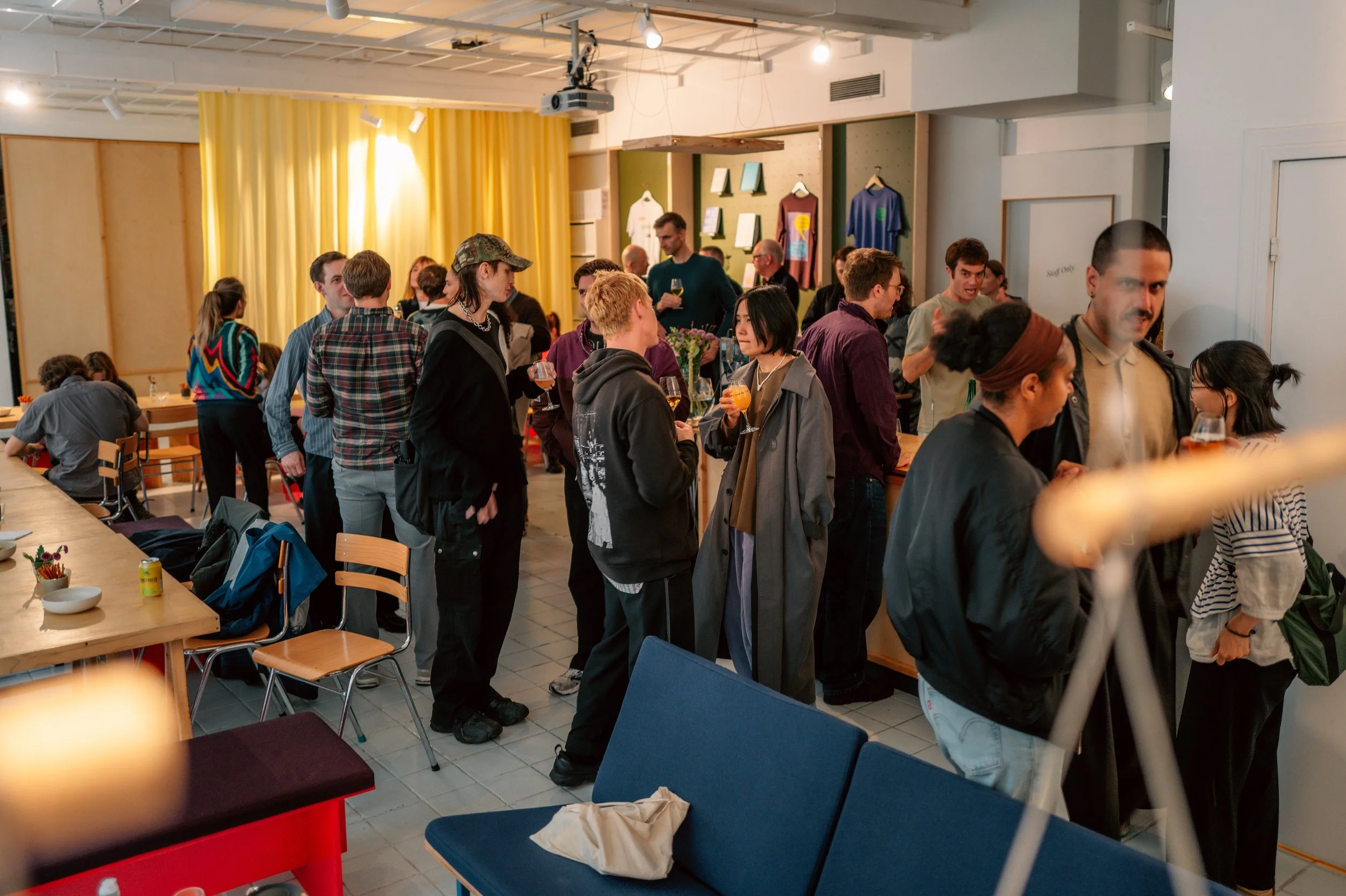
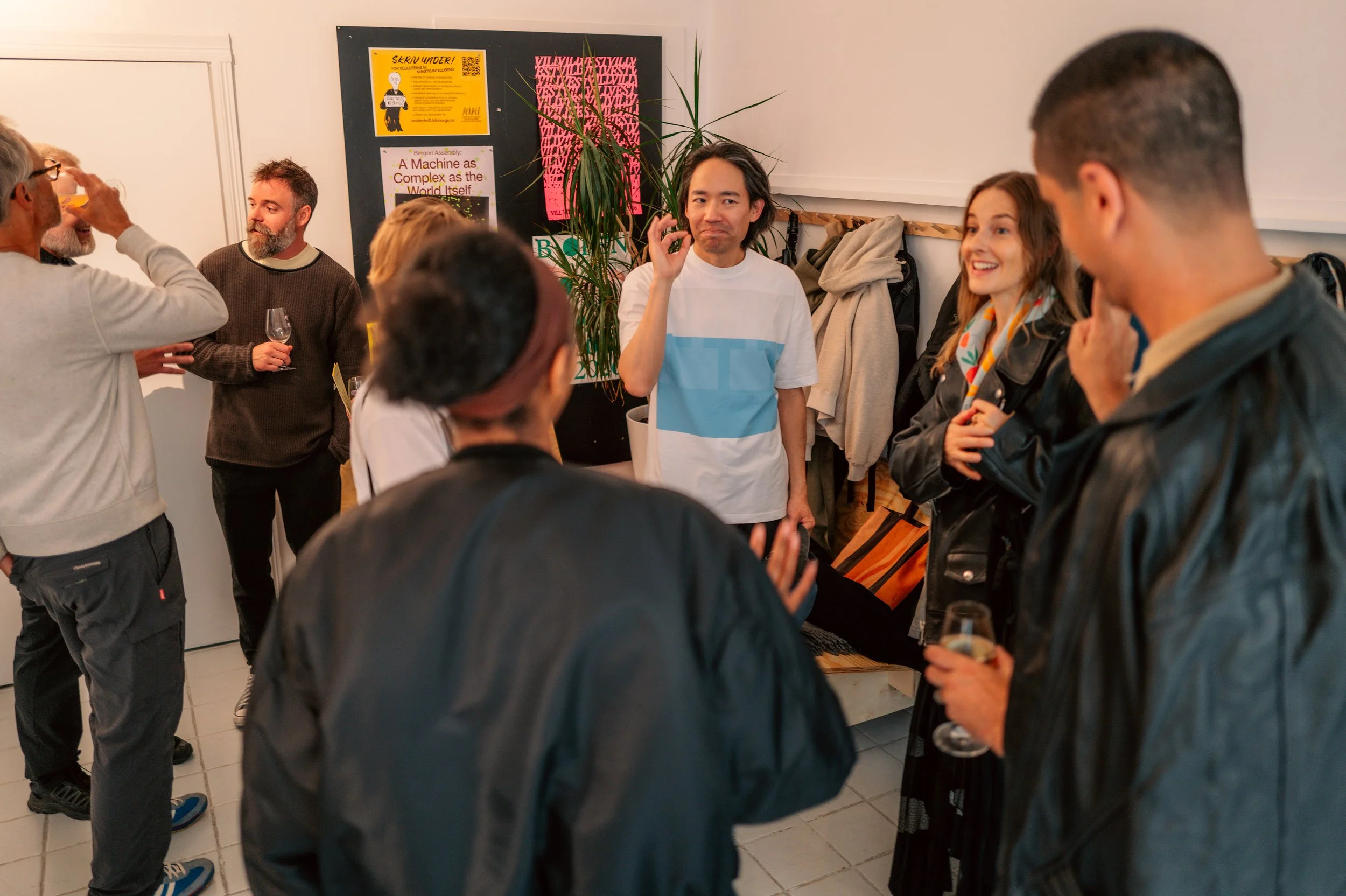
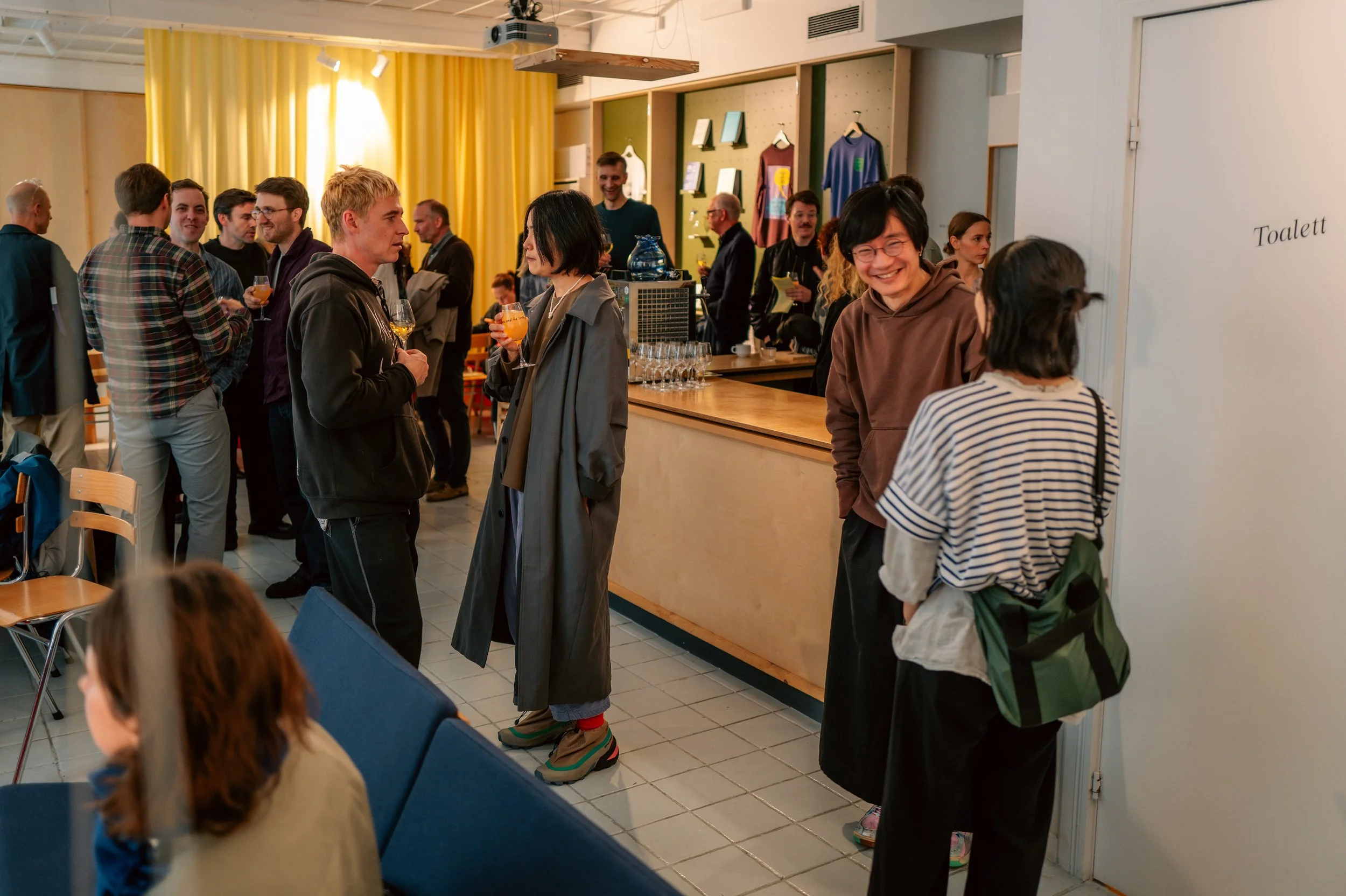
As the gathering came to a close, what stayed with me wasn’t a single idea or moment, but a quiet sense that something had begun—slowly, tentatively, and with real care. A Machine as Complex as the World Itself didn’t try to offer answers or a polished preview of Bergen Assembly 2028. Instead, it opened a space for listening, wondering, and sitting with uncertainty. If these two days showed anything, it’s that the next Assembly will grow from conversations that are still unfolding, shaped by the people who showed up, the city that held them, and the many ways we try to understand the worlds we move through.
With: James Bridle, Alice Bucknell, Carolyn Christov-Bakargiev, Marcus Coates, Nolan Oswald Dennis, Simone Ghetti, Simone Kotva, Kei Kreutler, Lars Bang Larsen, Chiemi Shimada, Ellen Viste, Lua Vollaard, Mark Thomas Young
We would like to thank Arash Shahali and the Norwegian Embassy in Bucharest for their trust and support in making this coverage possible.
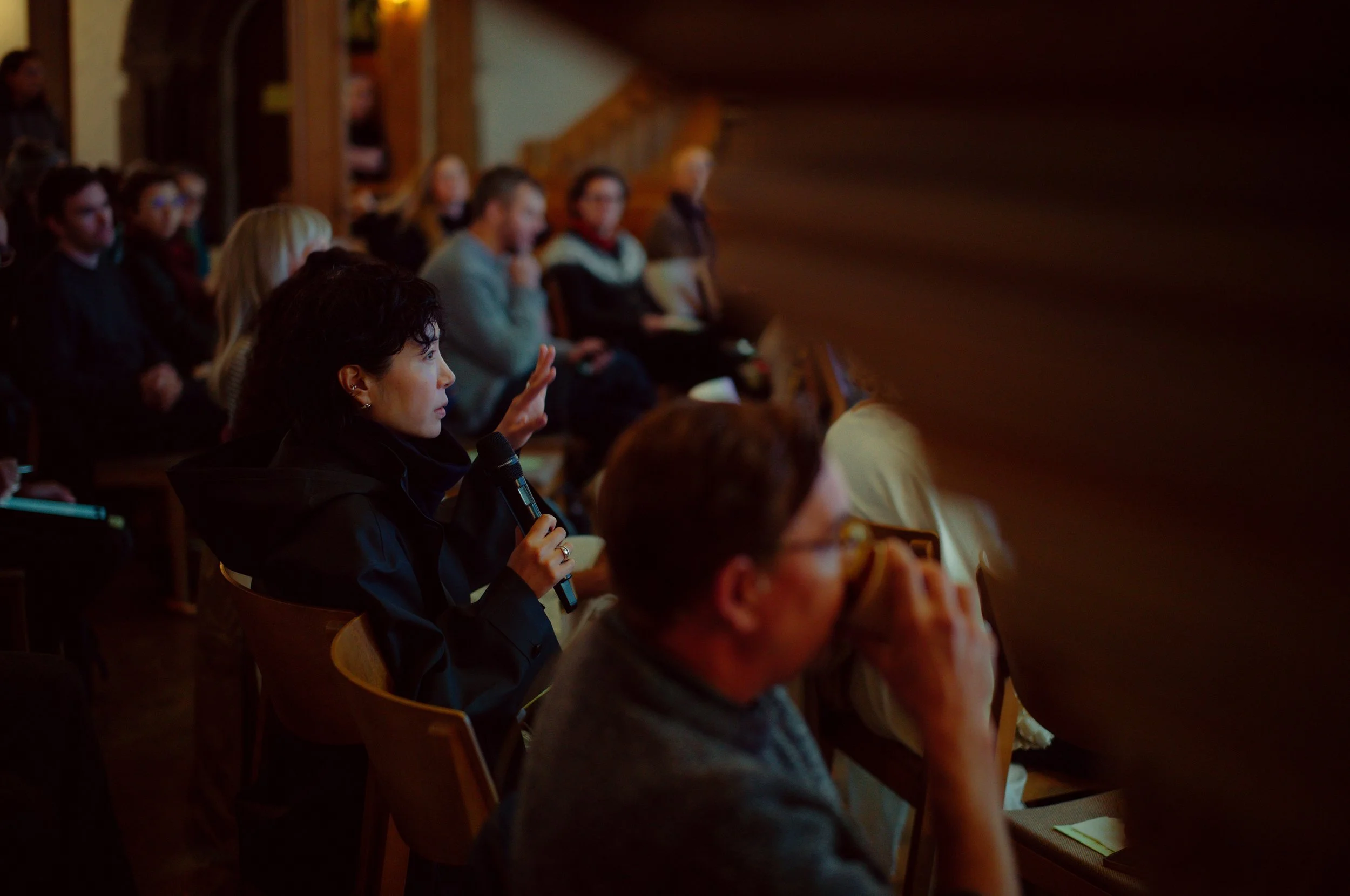
Photos by Stian Servoss