

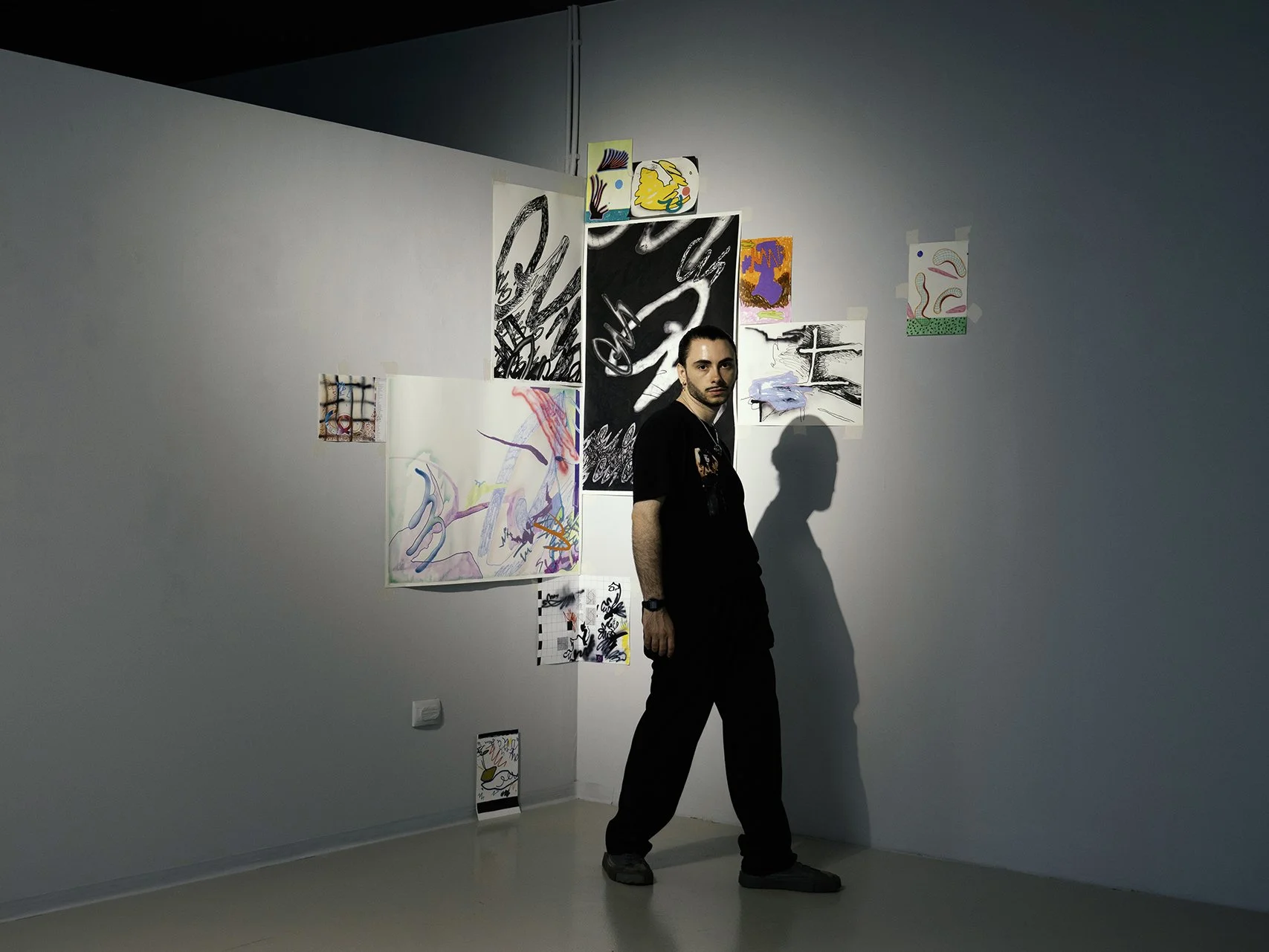
What We Lost, Yet Ultimately Regained: Ciprian Ciobanu and the Trace Before Meaning
Using Ciprian Ciobanu's installation 024130925 as its point of departure, this essay explores how ordinary marks, writing tools, and acts of testing become reflections on memory, scale, hesitation, and the trace that exists before meaning.
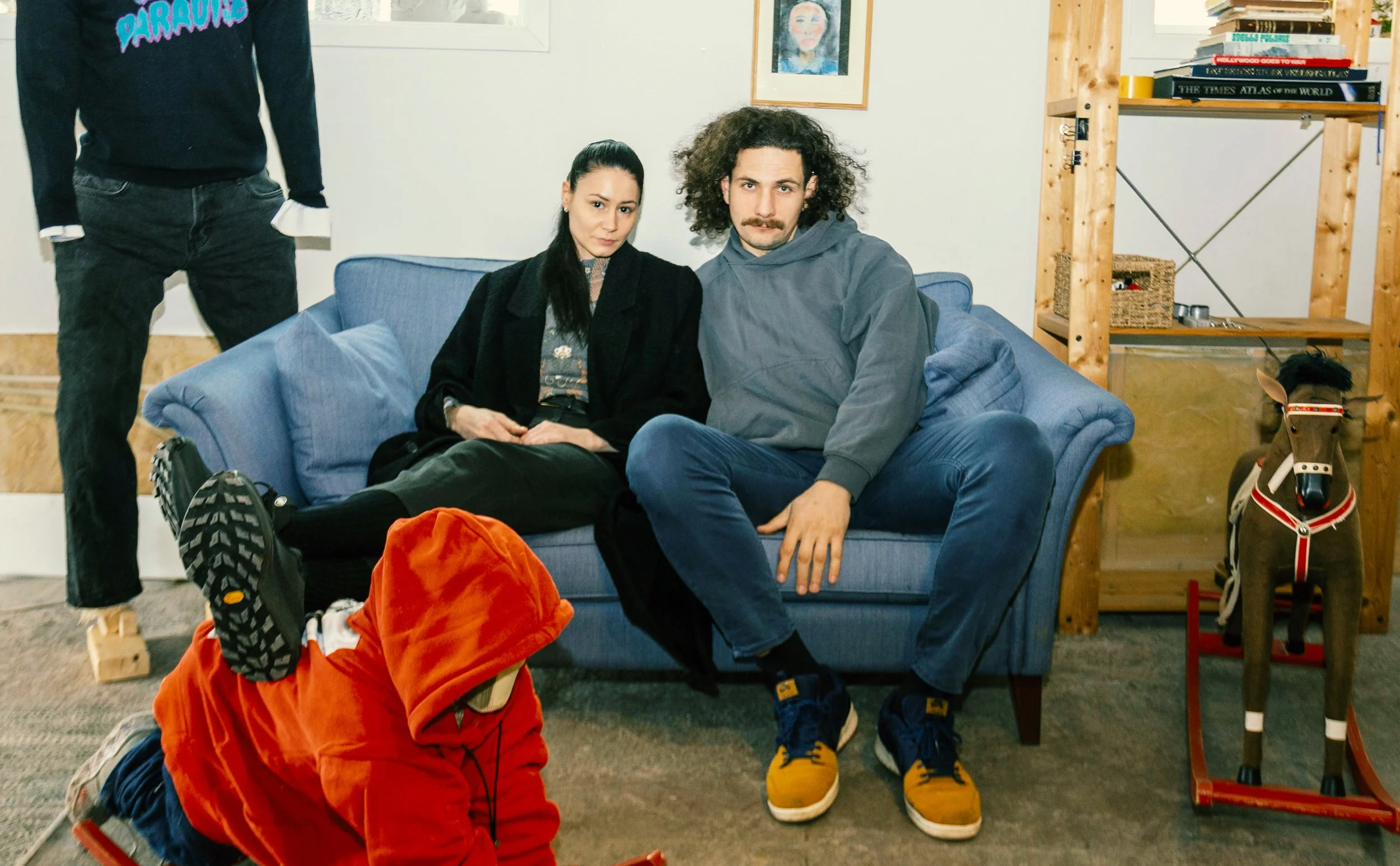
ANTIFON
Exhibiting as part of ANTIFON, SABA (Silvia Amancei & Bogdan Armanu) explore through video essays the relationship between art, politics, precarity, love, and the possibility of a shared future. Moving between anger and tenderness, critique and hope, their works imagine resistance through fragility, closeness, and the radical capacity to love.
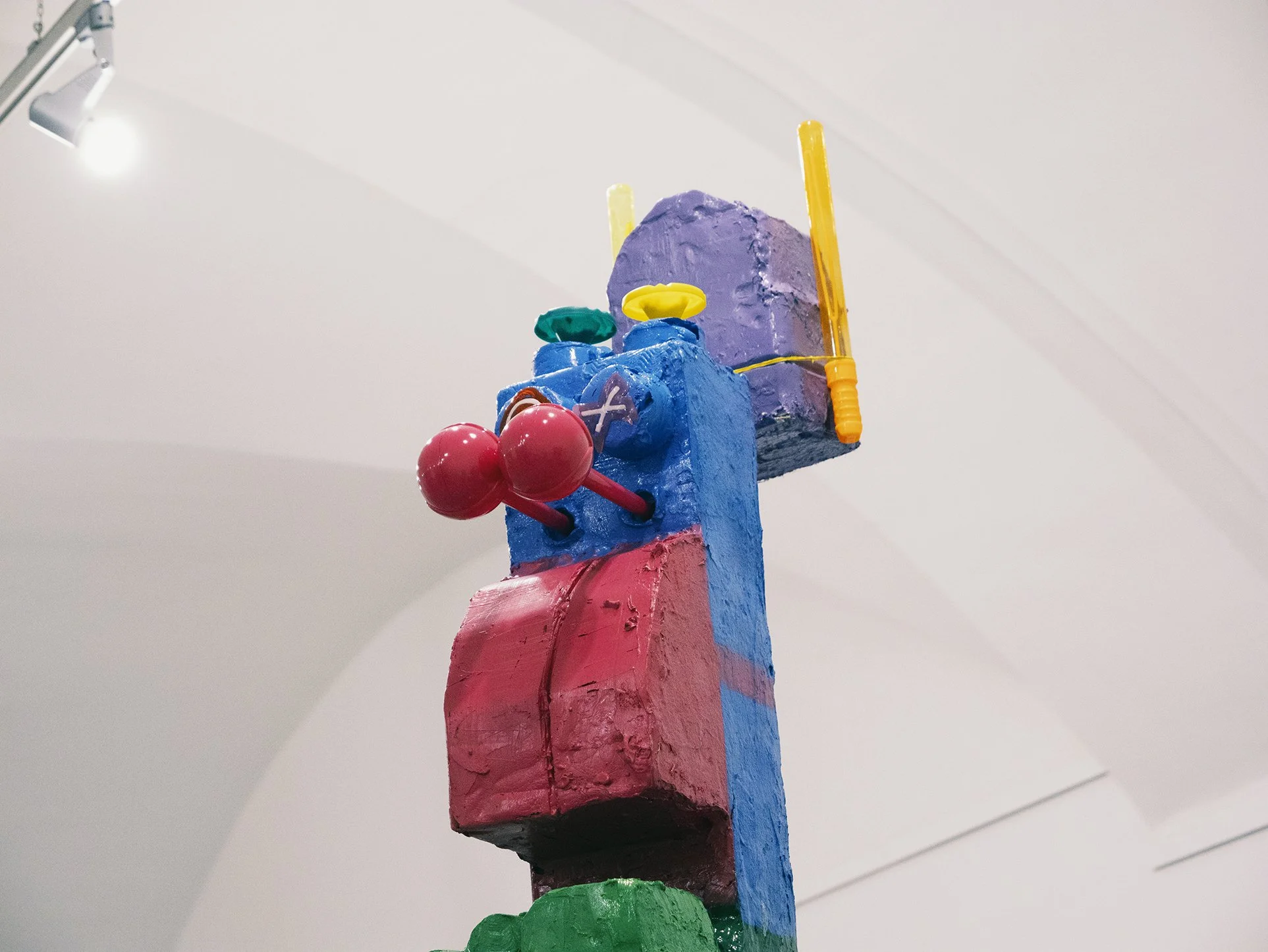
As It Always Was - re-establishing an institution that marked generations - Brukenthal Contemporary Art Museum
“In an increasing number of places around the world, art institutions, cafés, industrial spaces, or private venues are becoming platforms for contemporary art. The Brukenthal Museum proposes an exhibition format aimed at engaging with artists who live and work in Sibiu—artists who are seeking to rethink and reclaim their opportunities. Rigid formality transforms into a forum that incites dialogue. Politically polished versions are abandoned in favor of margins and prophecies.” (Liviana Dan)
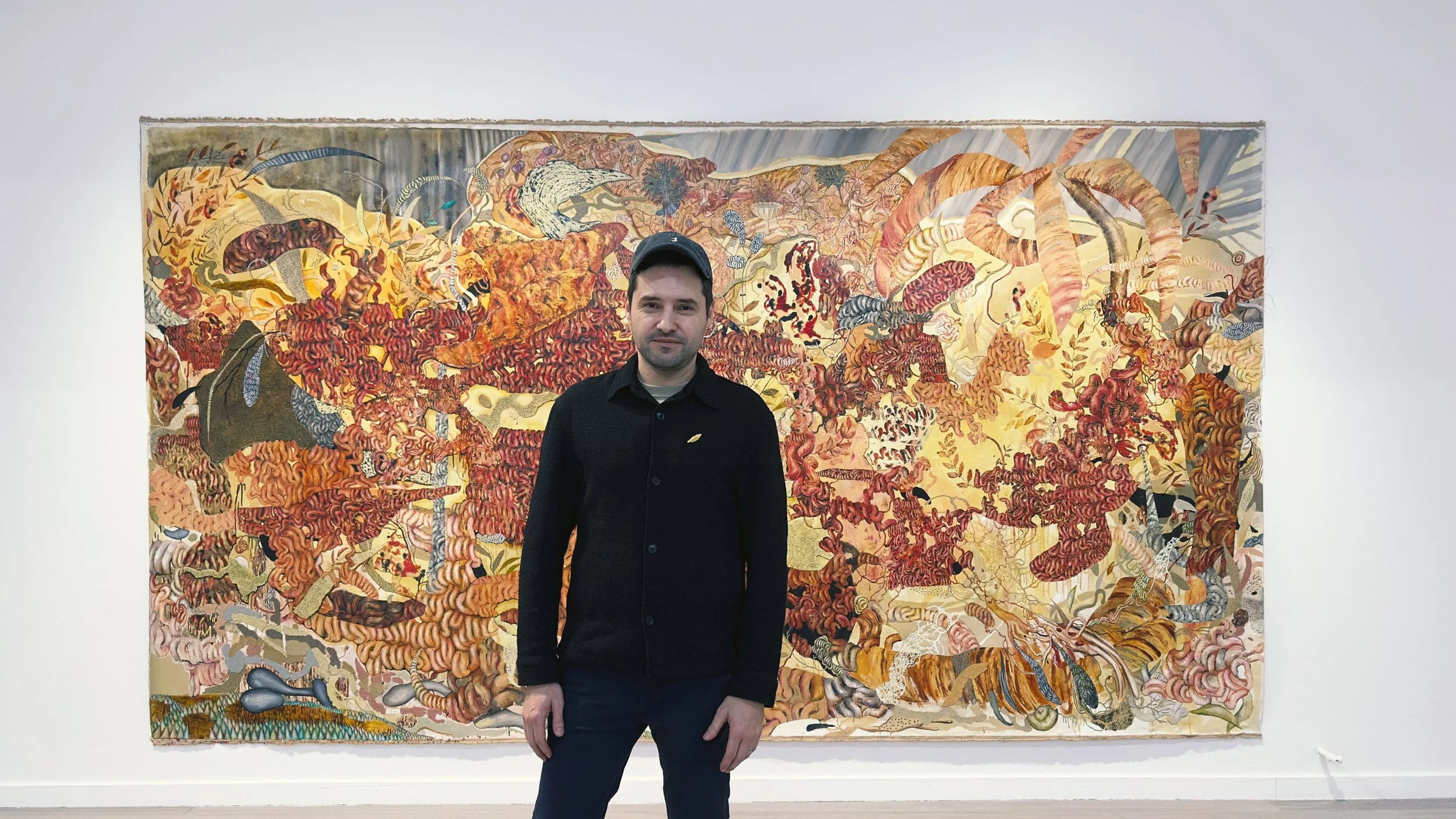
When painting demands too much
Where closeness becomes vertigo and looking turns into labour—an exhibition that tests the limits of attention, devotion, and the exhausted eye.

Liliana Mercioiu Popa at META Spatiu
Expoziția „The deepest are the stars” a Lilianei Mercioiu Popa, prezentată la META Spațiu, transformă covorul tradițional oltenesc într-o hartă poetică a relației dintre om și cosmos. Artista reinterpretează motive geometrice transmise din generație în generație prin instrumente digitale precum automatele celulare, explorând convergența dintre memorie colectivă, știință și intuiție ancestrală. Țesătura devine metaforă cosmică, un spațiu unde tradiția, tehnologia și contemplarea vizuală se întâlnesc. Expoziția, susținută de Universitatea Politehnica Timișoara și Facultatea de Arte și Design – UVT, reafirmă abordarea multidisciplinară și experimentală a artistei.

Beyond the New Fair struggle
The Land of Fire exhibition, curated by Cosmin Costinaș, Mona Vătămanu, and Florin Tudor, revisits overlooked facets of Romania’s colonial past, opening conversations about memory, responsibility, and identity. Through multiple perspectives, it addresses themes such as resistance, complicity, the exploitation of Romani people, and shifting notions of power, urging viewers to reconsider how history continues to shape the present.

Marco Ferrari, Abelardo Gil-Fournier, and Jussi Parikka on distance, proximity, and elemental media
Lumi is a visual essay by Abelardo Gil-Fournier and Jussi Parikka that explores snow, light, and landscape through a speculative synthetic intelligence trained on historical photographic datasets. Blending scientific imaging with climate fiction, the work imagines an AI that travels across time, reinterpreting past and future landscapes as part of a hypothetical restoration project. In conversation with Marco Ferrari, the artists reflect on how technological mediation—from early surveying to satellite imaging—shapes our perception of terrain, revealing landscape as a dynamic interplay between natural forces, human presence, and machine vision.

transmediale 2025: (near) near but — far
transmediale’s 38th edition, (near) near but — far, examined how digital systems shape our desire for closeness, revealing the intimacies we gain and lose through algorithmic interaction. Opening on 30 January 2025 at silent green and continuing at HKW, the festival unfolded through talks, screenings, performances, and workshops. Curated by Ben Evans James and Elise Misao Hunchuck with an expanded programming team, this edition reconsidered how technology might foster more meaningful forms of connection.
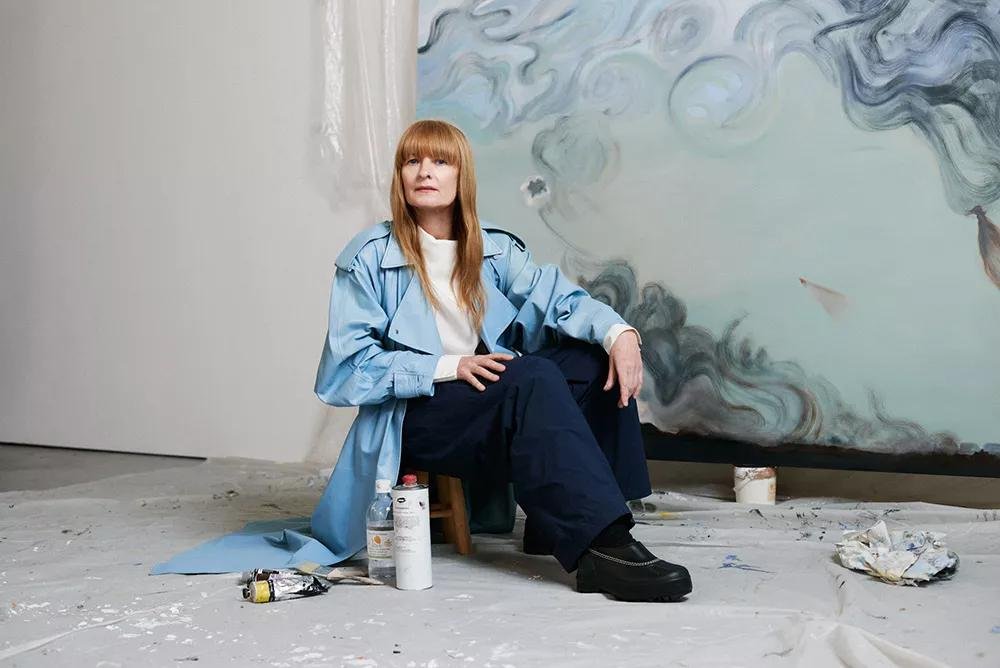
The Truthless Times — Goshka Macuga for Miu Miu
Polish artist Goshka Macuga’s collaboration with Miu Miu for the Spring–Summer 2025 show turned the runway into a fictional printing press for The Truthless Times, a newspaper of provocative headlines that blurred fact and fiction. Known for exploring authorship and information systems, Macuga extended themes from her earlier “Tales and Tellers” project with Miu Miu. Her set design framed Miuccia Prada’s collection of hybrid classic–experimental silhouettes, while the collaboration as a whole questioned truth, media, and the narratives shaping contemporary perception.

The Tides of Art and Ecology: Exploring Submerged Narratives in Timișoara
META Spațiu Art Gallery in Timișoara opened Submerged Narratives of the Danube and Oslo Fjord – Eco-cultural Tides on January 31, presenting an interdisciplinary exhibition that blends art, environmental research, and cultural history. Curated by Mirela Stoeac-Vlăduți, the show concludes a Romanian–Norwegian collaboration in which artists Marina Oprea, Alex Mirutziu, Cosmin Haiaș, Kristin Bergaust, and Alexis Parra explored the ecological and cultural resonances between the Danube Gorge and the Oslo Fjord. Through works addressing memory, environmental fragility, and water as a carrier of histories, the exhibition reveals the deep, often hidden connections between these two significant landscapes.

Romanian film director Mihai Dragolea at Taifas - Balkan film and culture festival
Romanian filmmaker Mihai Dragolea previews his forthcoming documentary on the Romanian forest mafia—a project built on perilous field recordings that expose criminal networks and systemic corruption. Known for his advocacy for environmental and animal justice, Dragolea also recently premiered his short film Brisca (2024) at Timișoara’s Taifas Balkan Film and Culture Festival, recounting the haunting 1957 tale of Maria Beluș and the wolf believed by locals to be a werewolf.

The heart is the vital center of the artist - notes on the 'It’s all in your vivid imagination' exhibition by the artist Cătălin Marius Petrișor Heresanu
Parte a unei „generații excesive”, după cum se autodefinește, Cătălin Marius Petrișor Heresanu se distanțează radical de colegii săi prin refuzul de a fetișiza cotidianul sau de a căuta sensuri simbolice imediate. Deranjat de așteptarea capitalistă de a „găsi o idee” în orice lucrare, artistul propune alte direcții în expoziția sa personală It’s all in your vivid imagination de la Elizabeth Xi Bauer (8 decembrie – 20 ianuarie 2024): abstracționism spiritual, romantism pragmatic și introspecție poetică.

59th Venice Biennale
This edition of the Biennale foregrounds politically charged practices, with many artists emphasizing ideology, identity, and activism. The overall tone feels didactic, reinforcing structures it aims to critique by temporarily “granting” visibility to marginalized voices. Echoing earlier curatorial frameworks, the exhibition underscores themes of sovereignty and lived experience while rewarding works tied to explicit political claims, including notable presentations by Great Britain, the United States, France, and others. Running from 23 April to 27 November 2022, the Biennale ultimately highlights how deeply contemporary art remains entangled with questions of race, power, and representation.

Robert G. Elekes and Dumitru Fanfarov

Catinca Mălaimare

Răzvan Țupa

Adina Mocanu

Ana Tecar

Sibi-Bogdan Teodorescu
