

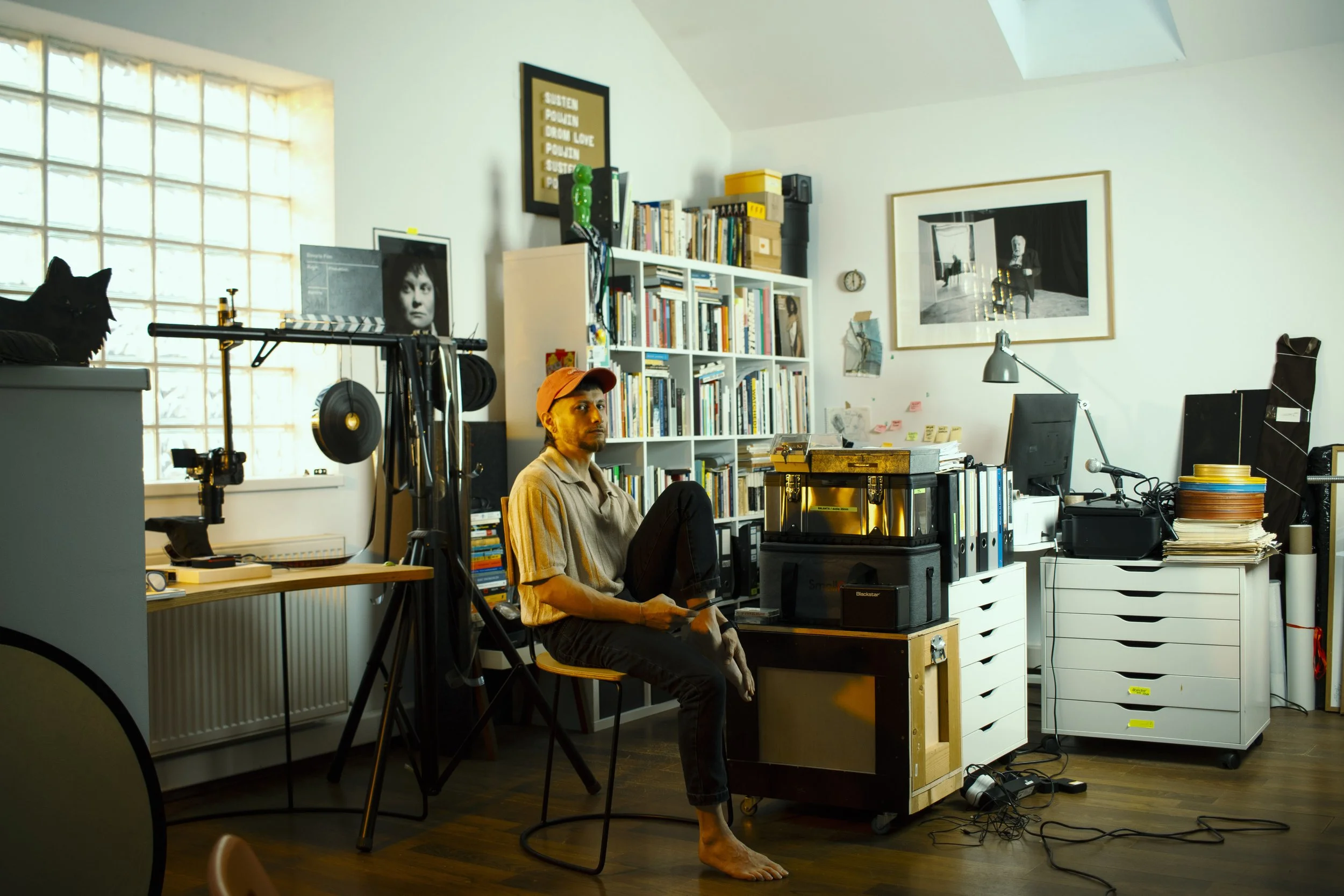
Dear Clarity
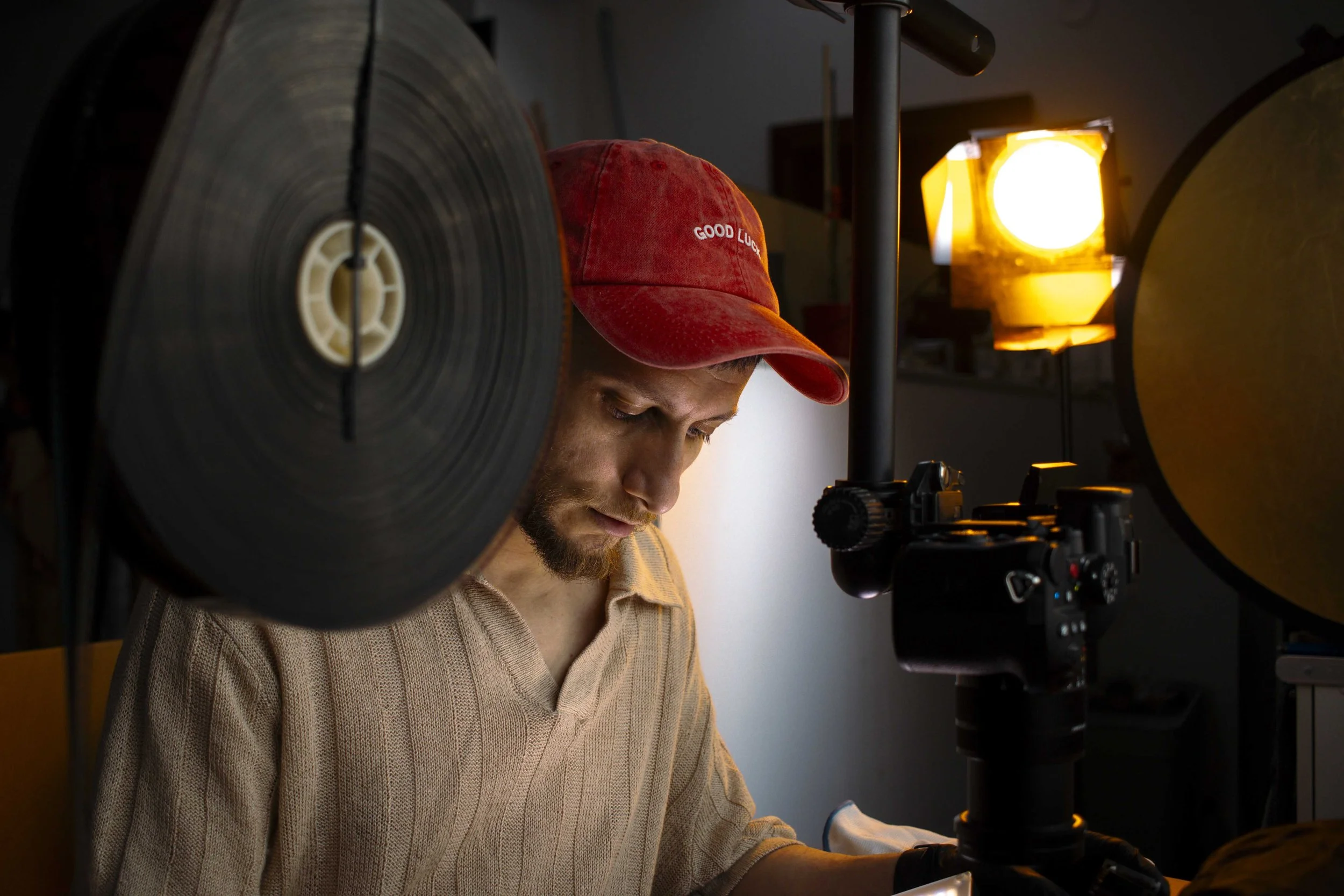
An interactive seminar on video art, performance, and non-fiction film, held at the Faculty of Theatre and Film, Babeș-Bolyai University, tracing the medium’s evolution from early portable video to contemporary hybrid practices combining body, image, text, autobiography, and found footage. Together with filmmaker Mihai Dragolea, I also addressed themes connected to my doctoral research at the Faculty of Arts and Design, West University of Timișoara, focused on the image and cinema of Lucian Pintilie.
On March 31, at 10:00, in Room 18, the public is invited to a meeting with visual artist Alex Mirutziu, conceived as a reflection on responsibility in artistic practice and on the ways in which an artist positions their practice in the world today.
Born in Sibiu in 1981, Alex Mirutziu creates technologies of ephemeral reciprocity. Through film, sculpture, and performance, the artist confronts the antagonism between desire and its fulfilment. In his work, he employs strategies of reuse, deterritorialisation, and disruption of the bodily apparatus in order to identify the crisis of the lived body, prompting the human imagination to alter reality. His projects begin from the premise of identity as both a problem and a task of transgression. The artist frequently addresses the difficulty of dying through the concept of “un-selfing,” understood as an individual responsibility.
The discussion at FTT proposes a reflection on responsibility in artistic practice and on how an artist positions their practice in the world today. In a context in which it is no longer enough simply to produce works or to call oneself an artist, it becomes essential to understand how a relationship between thought, body, and artistic gesture is constructed as part of a living process.
Art does not have to explain everything, nor does it need to be fully translatable into words; sometimes, the force of a work lies precisely in what remains unsaid. A powerful work does not close meaning down, but opens it up. This leads to one of the questions guiding the meeting: does art have an obligation to be clear, or should it instead sustain a productive tension between what appears and what disappears from the field of perception?
At the same time, artistic practice can be understood as an exercise and a process, rather than merely as a final object. More important than the finished product is the trajectory that makes it possible: the emergence of an idea, the way it is metabolised, transmitted, and reconfigured over time. We will not discuss systems or formulas, but rather working tactics and the ways in which an artistic practice is built through observation, adaptation, and direct experience.
RO
Pe 31 martie, de la ora 10:00, în sala 18, publicul este invitat la o întâlnire cu artistul vizual Alex Mirutziu, în cadrul căreia ne propunem o reflecție asupra responsabilității în practica artistică și asupra modului în care un artist își poziționează practica în lume astăzi.
Născut în 1981 la Sibiu, Alex Mirutziu creează tehnologii ale reciprocității efemere. Prin filmele, sculpturile și performance-urile sale, artistul se confruntă cu antagonismul dintre dorință și satisfacerea acesteia. În lucrările sale, artistul folosește tehnologii ale reutilizării, deteritorializării și tulburării dispozitivului corporal pentru a identifica criza corpului trăit, motivând imaginarul uman să modifice realitatea. În proiectele sale, premisa este aceea a identității ca problemă și sarcină de transgresare. Artistul abordează adesea tema dificultății de a muri, prin conceptul ‘un-selfing’ înțeles ca o responsabilitate a individului.
În discuția de la FTT ne propunem o reflecție asupra responsabilității în practica artistică și asupra modului în care un artist își poziționează practica în lume astăzi. Într-un context în care nu mai este suficient să produci lucrări sau să te numești artist, devine esențial să înțelegi cum se construiește o relație între gândire, corp și gest artistic, ca parte a unui proces viu. Arta nu trebuie să explice totul și nici să se lase tradusă integral în cuvinte; uneori, forța unei lucrări stă tocmai în ceea ce rămâne nespus. O lucrare puternică nu închide sensul, ci îl deschide. De aici și întrebarea care poate ghida această întâlnire: are arta obligația de a fi clară sau, dimpotrivă, de a menține o tensiune fertilă între ceea ce apare și ceea ce dispare din câmpul percepției? În același timp, practica artistică poate fi înțeleasă ca exercițiu și proces, nu doar ca obiect final. Mai important decât produsul este parcursul care îl face posibil: apariția unei idei, modul în care aceasta este metabolizată, transmisă și reconfigurată în timp. Nu vom vorbi despre sisteme sau rețete, ci despre tactici de lucru și despre felul în care o practică artistică se construiește prin observație, adaptare și experiență directă.